


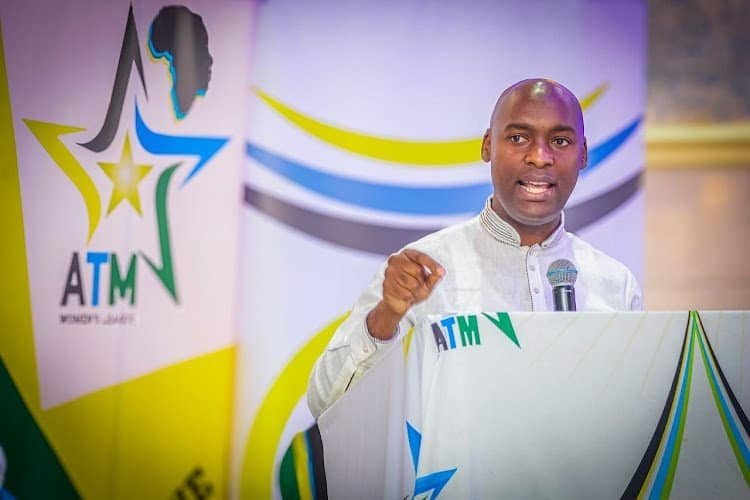
The African Transformation Movement (ATM) has called on Public Protector Kholeka Gcaleka to urgently investigate what it alleges is a calculated abuse of state power by Police Minister Senzo Mchunu, in connection with the sudden collapse of a specialised police unit investigating politically motivated killings.
ATM Member of Parliament Vuyo Zungula has submitted a formal complaint to Gcaleka, requesting a full-scale probe into the Minister’s alleged interference in criminal investigations and unlawful disbanding of the Political Killings Task Team – a unit credited with major breakthroughs in tackling political assassinations across KwaZulu-Natal and other hotspots.
The complaint follows explosive allegations by KwaZulu-Natal Police Commissioner, Lieutenant General Nhlanhla Mkhwanazi, who on Sunday revealed during a public briefing that Minister Mchunu directly ordered the dismantling of the task team on 31 December 2024. According to Mkhwanazi, the instruction came just days after critical ballistic evidence linked confiscated firearms to multiple political killings.
“The disbandment of the team, especially after such a breakthrough, cannot be dismissed as administrative,” Zungula wrote in his letter. “It points to deliberate obstruction of justice and protection of politically connected suspects.”
ATM describes the incident as “one of the most flagrant episodes of executive misconduct in democratic South Africa’s history.”


According to the party, Mkhwanazi has evidence—including WhatsApp chats, voice notes, intercepted communications, financial documents, and internal SAPS reports—showing a coordinated effort to derail investigations into political killings, protect criminal syndicates, and undermine state accountability.
Over 120 politically sensitive dockets were allegedly removed from active investigation and remain dormant at SAPS headquarters.
Two civilian figures are at the centre of the allegations: North West businessman Brown Mogotsi and murder-accused contractor Vusimuzi “CAT” Matlala. Mkhwanazi claims Mogotsi—described as a close associate of the Minister—was instrumental in operational interference, despite holding no official police role.
In March 2025, Mchunu told Parliament he did not know Mogotsi. However, an audio recording has since surfaced in which the Minister refers to Mogotsi as a “comrade.” ATM says the contradiction may constitute misleading Parliament—an offence under the Powers and Privileges Act.
Meanwhile, Matlala, who is facing murder charges and was awarded a R360 million SAPS contract, is also said to have played a role in plotting the task team’s removal. Cellphone data reportedly shows communication between Matlala, Mogotsi and the Minister, discussing strategies to “resolve” the task team issue.


ATM has requested the Public Protector investigate the following:
- Whether Mchunu violated the Executive Ethics Code by using public office for personal or political gain.
- Whether he misled Parliament about his ties to Mogotsi.
- His relationship with Mogotsi and Matlala, particularly around procurement and SAPS interference.
- The legality of the task team’s disbandment and its impact on pending investigations.
- Testimony and evidence in Mkhwanazi’s possession, under oath.
Before its shutdown, the Political Killings Task Team had recorded 436 arrests, 128 convictions, the recovery of 156 firearms—55 linked to political murders—and the arrests of 35 police officers implicated in obstructing justice.
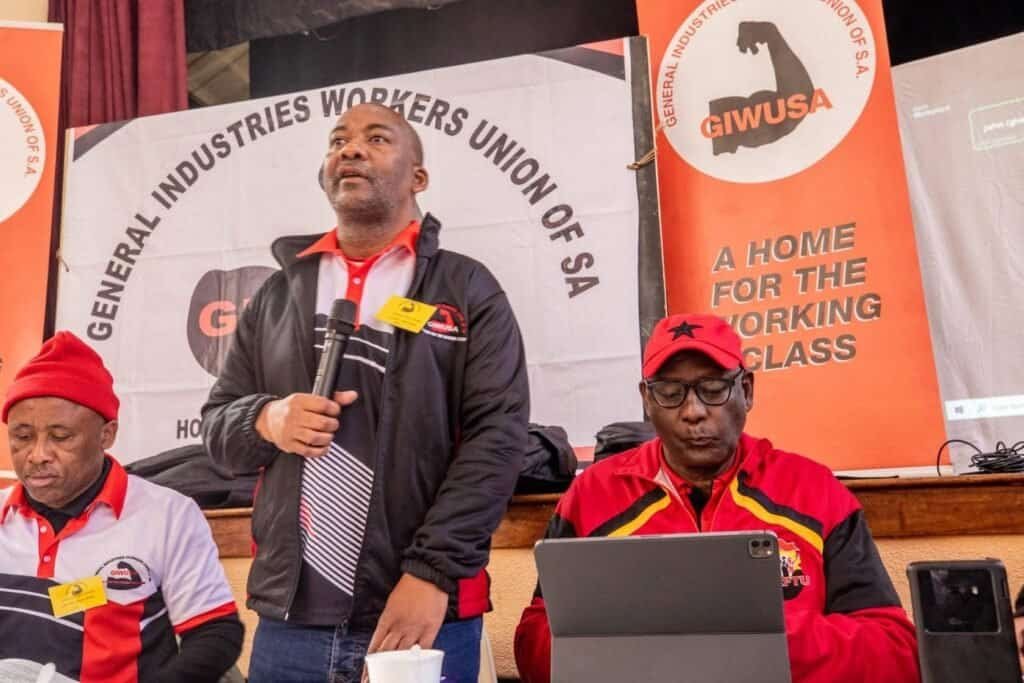
Civil society has responded with growing alarm. The General Industries Workers Union of South Africa (GIWUSA) described the revelations as “a grim confirmation” of what the working class experiences daily—policing marked by impunity for elites and brutality against the poor.
“This isn’t about a few bad apples,” said GIWUSA president Mametlwe Sebei. “It’s about a rotten system, where the police operate as a uniformed mafia force. These allegations show SAPS is no longer a law enforcement agency—it’s a power structure protecting political criminals.”
GIWUSA is calling for Mchunu’s immediate suspension, the release of all evidence from the task team, and an independent, worker-led inquiry. The union is also advocating for the creation of democratically elected community defence committees.
“This is a structural crisis,” Sebei said. “Until we take power away from corrupt politicians and restore it to communities, police violence and impunity will continue.”

In response to the escalating scrutiny, SAPS national spokesperson Brigadier Athlenda Mathe said daily crime-fighting operations continue across the country, and that the National Commissioner, General Fannie Masemola, will announce an Acting Divisional Commissioner for Crime Intelligence this week.
“Our constitutional mandate to prevent, combat and investigate crime remains intact,” said Mathe. “The men and women in blue remain hard at work at every corner of this country to serve and protect all people living in South Africa.”
Mathe added that a full media briefing would be held soon to provide updates. Minister Mchunu has denied the allegations.
While the Public Protector has yet to formally respond to ATM’s request, the issue is gaining traction in both political and civil society circles. Opposition parties are expected to weigh in this week, and legal analysts warn that failing to act decisively could further erode public confidence in the rule of law.
South Africa has seen a sharp rise in political killings over the last decade, particularly in KwaZulu-Natal, where factionalism and tender-linked violence remain endemic. The task team had been one of the few coordinated efforts to address this entrenched problem.
“The nation looks to your office not only as a constitutional body, but as a custodian of accountability and ethical governance,” Zungula concluded in his letter to Gcaleka. “We trust you will treat this matter with the urgency and seriousness it demands.”
This is a developing story. Updates to follow as responses are received from the Public Protector, the Presidency, and Parliament.

