


African youth must uproot the continent’s colonial legacy and reclaim their intellectual sovereignty, said Sindisiwe Chikunga, South Africa’s Minister in the Presidency for Women, Youth and Persons with Disabilities.
Speaking at the recent 7th Pan African Youth Forum in Durban, Chikuga said colonialism had damaged the continent’s institutions, economies and self-perceptions.
She delivered a keynote address at the August 25 gathering, hosted by the University of South Africa (Unisa), in collaboration with the Association of Technical Universities and Polytechnics in Africa (ATUPA). ATUPA is a premier continental association that serves as a platform for institutions dedicated to delivering technical, vocational, and technological education (TVET) and training in Africa.
Its core mission is to promote excellence in hands-on, practical teaching and applied research, as well as advocate for the critical role of TVET in the continent’s socio-economic development. Other speakers included Unisa’s Vice Chancellor and Principal, Professor Puleng LenKabula.
Reclaiming Africa’s intellectual sovereignty
Chikunga challenged African youth to reclaim their intellectual sovereignty, saying they could transform the structures that held them back. The minister added that doing so would help build a just, digital and sustainable Africa.

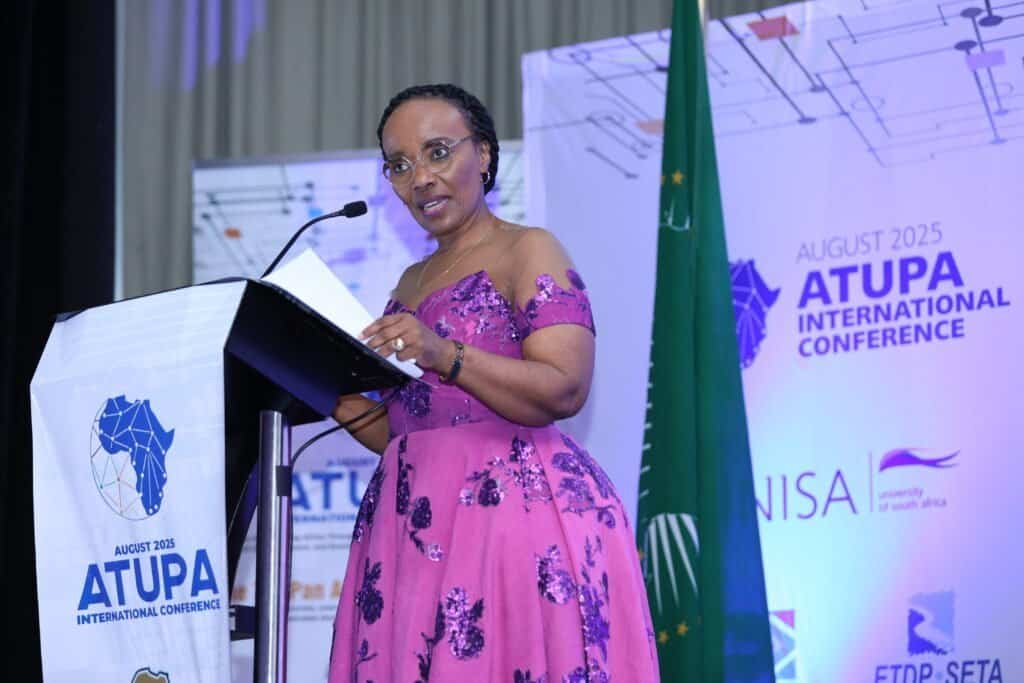
Chikunga further stated that Africa’s struggles are not only about economics but also about other hindrances.
“They encompass identity, direction and power – this additionally includes how we think about ourselves and regard our history and culture. Therefore, to unlock the promise of the African Union’s Agenda 2063, we must think anew what the era of colonialism did to our institutions, economies and self-perceptions, and begin building the Africa we want and reclaim our intellectual sovereignty,” Chikunga said.
The Pan African Youth Forum brought together young African minds to collaborate on innovative, tech-driven solutions to leapfrog Africa’s digital divide. It was held under the theme, “Innovate, lead and thrive: Empowering Africa’s youth for sustainable development and digital transformation.”
Chikunga praised the forum’s theme, saying it boldly expressed the right mindset that Africa’s youth must embrace the 21st century. She said this would help the continent thrive in a world that fully embraces digital innovation, automation, and artificial intelligence.
“Innovation, transformation and sustainability must serve as tools of liberation, rooted in Pan-African history,” the minister maintained.
Chikunga remarked that Africa’s youthful population presented a significant opportunity. Citing the United Nations’ projected figures, Chikunga said Africa has the youngest population in the world, with over 400 million people aged 13 to 35, and with one in three young people globally projected to be African by 2030.
She added: “Therefore, the continent’s demographic dividend can be harnessed. This opportunity is poised to be leveraged by expanding the African Continental Free Trade Area (AfCFTA) to unlock new trade possibilities and foster economic growth, promote Africa-centric development programmes, and fast-track Africa’s digital aspirations.”
Committed to the renewal of Africa’s development
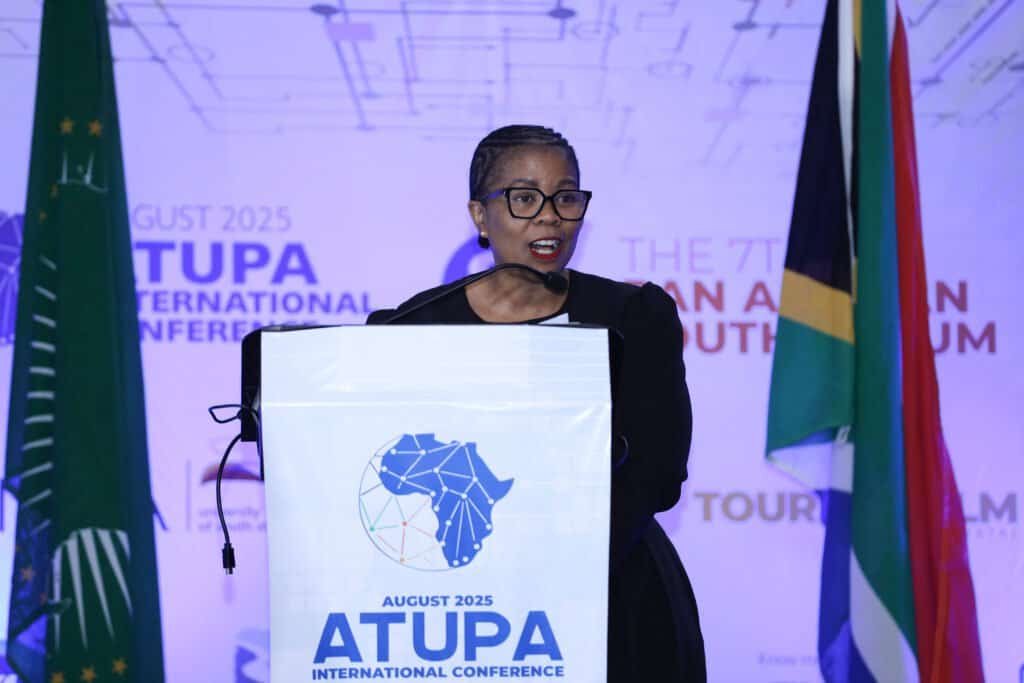
Addressing the same gathering, LenkaBula said that the forum allowed African youth to reflect and find solutions to their challenges.
“Recent statistics from the World Bank said that over 400 million young people worldwide lack the skills they need in employment, entrepreneurship, and active participation in society. This figure requires sustainable action plans from governments, businesspeople, industry, institutions of higher learning, and other social partners in society,” LenKabula said.
However, the Unisa Vice Chancellor cautioned that automation and artificial intelligence (AI) could displace over 90 million jobs by 2030. This was because “they require entirely different skillsets, while on the other hand, our education and training system is grappling with the quality and pace of the ever-evolving technology.”
LenKabula stressed that most African youth complete their qualifications without being adequately equipped with foundational, digital, and transversal skills, which are required to thrive in the modern world. She said marginalised groups such as girls, rural youth, refugees, and persons with disabilities face even steeper barriers to access quality education, training, and opportunities.


Noting that without comprehensive reforms in Africa’s education systems, LenKabula said the digital divide threatened to deepen and further exacerbate existing inequalities.
“Whereas Africa is the least developed region of the world,” LenKabula said, “it does not mean that its development trajectory must be eluded by the opportunities that the 21st century and the fourth industrial revolution affords. Therefore, Africa can leapfrog the divide and reclaim its civilisations and intellectual futures.”
Serious about Africa’s development
LenKabula reminded the youth that Africa’s Agenda 2063 enjoined them to work toward strategic goals of well-educated citizens and a skills revolution underpinned by science, technology and innovations – aligned with the United Nations’ Sustainable Development Goals.
“I truly believe that the Youth Forum and ATUPA are fully aligned with and seek to advance these strategic goals and show the rest of the world that we are serious about Africa’s renewal and sustainable development,” She said.

