


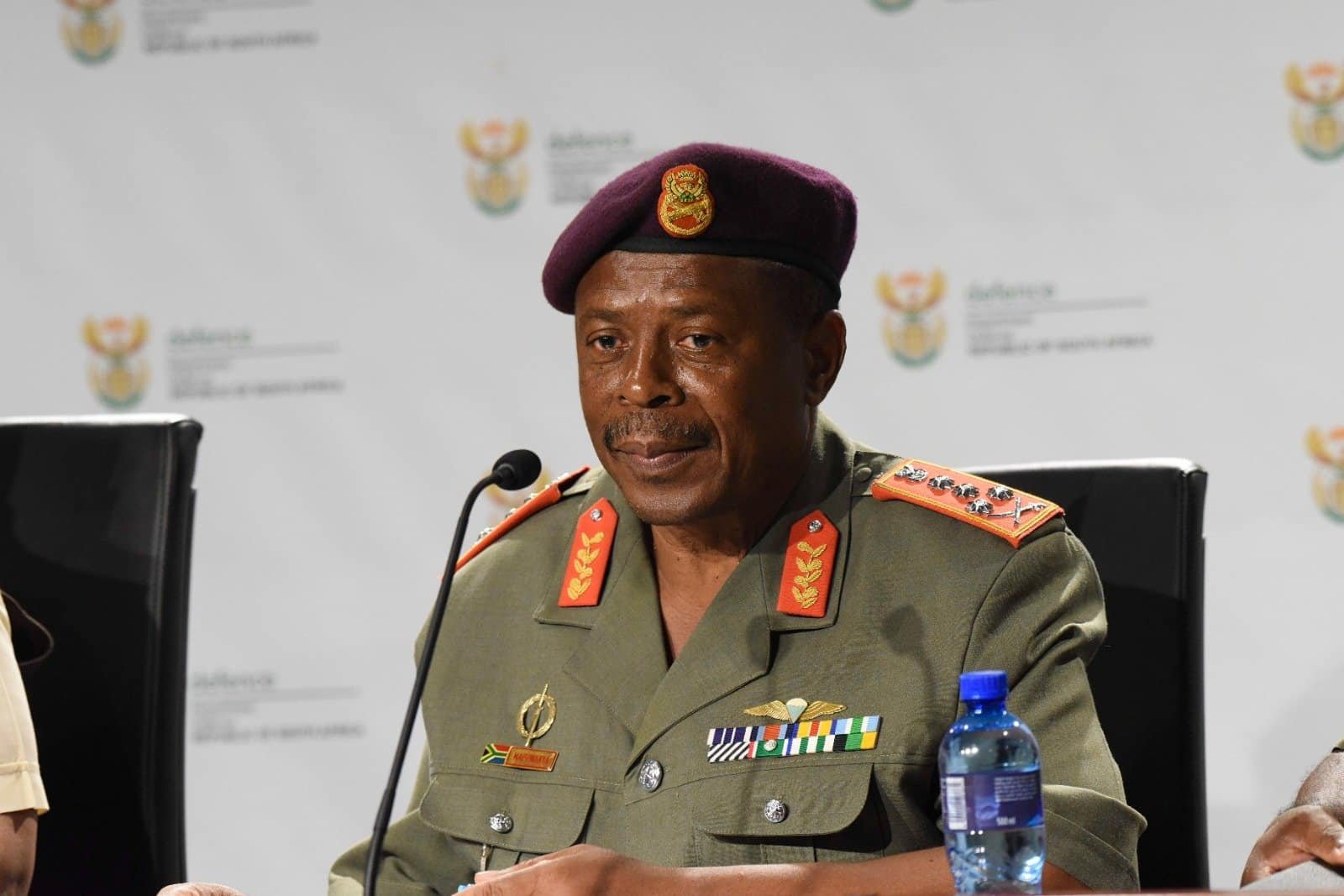


Parliament has been thrown into a storm after South Africa’s top soldier, General Rudzani Maphwanya, made controversial remarks during his recent visit to Iran – comments that have forced both the Presidency and the Department of International Relations and Cooperation (DIRCO) to distance themselves from him.
The incident, which is now the subject of a joint parliamentary inquiry, has exposed serious cracks between South Africa’s defence leadership and its official foreign policy, raising concerns about the country’s image abroad.
How it all started
General Maphwanya, the Chief of the South African National Defence Force (SANDF), travelled to Iran earlier this month for what was billed as a military and diplomatic engagement. Reports suggest that while there, he made statements that appeared to endorse or support positions not aligned with South Africa’s official foreign policy. Although the exact words have not yet been made public, insiders say his remarks could be interpreted as taking sides in sensitive geopolitical issues.
Normally, such visits are tightly coordinated with DIRCO and the Presidency to ensure South Africa speaks with “one voice” internationally. This time, however, it appears the SANDF chief went ahead without the necessary political backing, leaving the government scrambling to contain the fallout.
Government distances itself
DIRCO quickly issued a statement stressing that General Maphwanya’s remarks did not represent South Africa’s foreign policy. The Presidency went further, labelling the visit itself as “ill-advised.”
This public rebuke of a sitting SANDF chief is rare, and it has now triggered questions about whether the defence force is overstepping its constitutional role.


Parliament steps in
On Tuesday, Parliament’s Portfolio Committees on Defence and on International Relations, chaired by Dakota Legoete and Supra Mahumapelo respectively, announced they will hold a joint meeting to summon both Defence Minister Angie Motshekga and International Relations Minister Ronald Lamola for answers.
Legoete expressed concern about what he called “a worrying lack of coordination” between the SANDF and the government’s foreign policy machinery. He said this disconnect risked undermining South Africa’s credibility and must be urgently addressed.
“These engagements must demonstrate unity, strength and synergy in how South Africa conducts itself on the international stage,” Legoete said, adding that the SANDF must remain professional, apolitical, and focused solely on protecting the country rather than wading into politics.
What this means for South Africa
For ordinary South Africans, the controversy highlights the delicate balance between defence diplomacy and official foreign policy. While the SANDF plays a role in peacekeeping and regional security, its leaders are not supposed to make political pronouncements that could shift the country’s international position.
With the Middle East being one of the world’s most sensitive diplomatic battlefields, any perceived alignment with one side could have serious economic and political consequences for South Africa.
Parliament’s inquiry in the coming weeks will be closely watched to see whether General Maphwanya faces disciplinary action – and whether stricter rules will be put in place to prevent future diplomatic embarrassments.

