


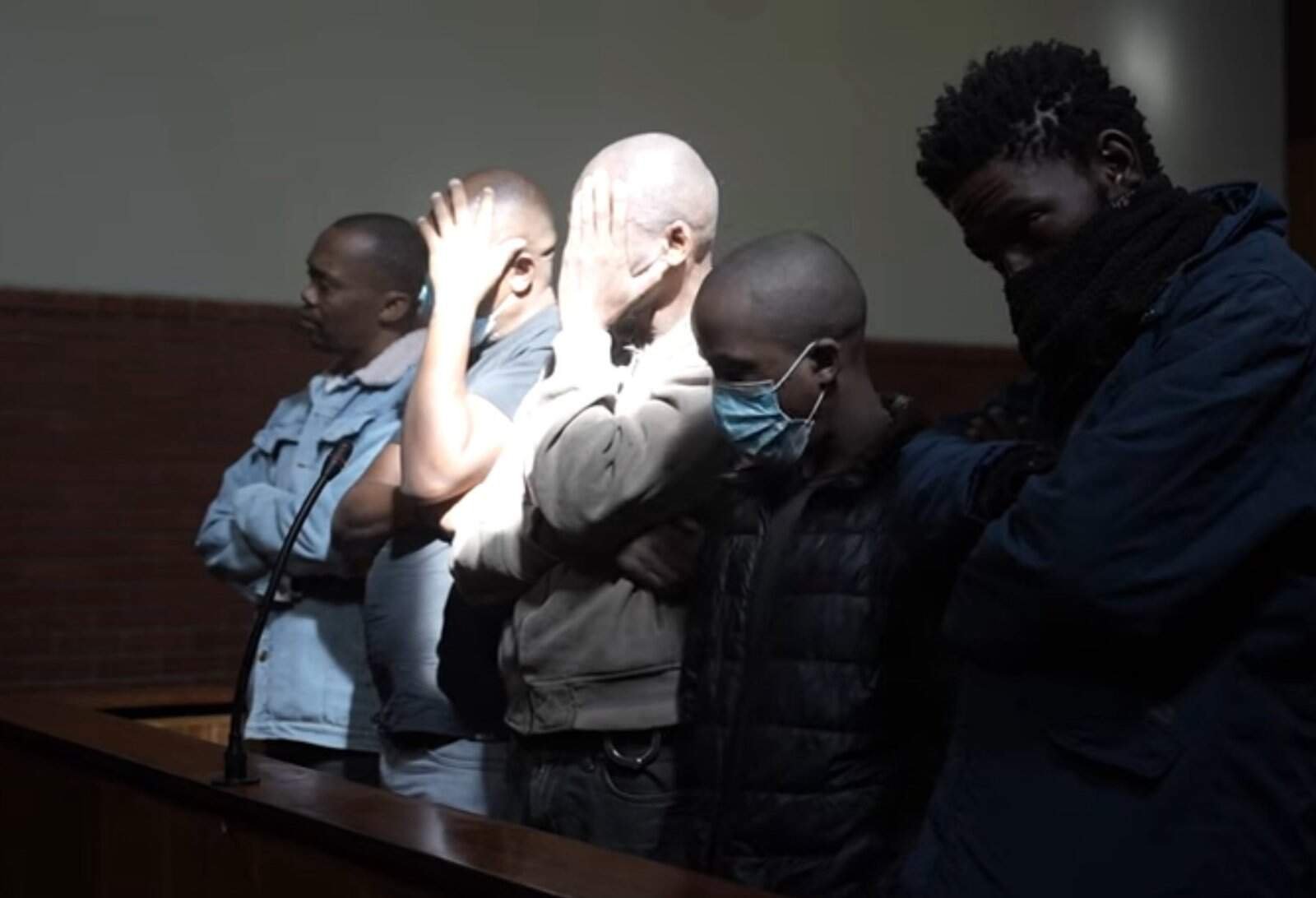
The five men accused of the brutal kidnapping and murder of journalist Aserie Ndlovu and his partner Zodwa Mdluli have appeared before the KwaMhlanga Magistrates’ Court, where their case was postponed to 3 September 2025 to allow the State time to finalise the indictment and supporting documents.
The accused – Father Samuel Mogowe (40), Lucky Sikosana (40), Sello Edward Eoane (44), Thato David Madisha (25), and Thabang Isaac Hlophe (30) – abandoned their bail applications and will remain behind bars until their next court appearance.
National Prosecuting Authority (NPA) spokesperson for Mpumalanga, Monica Nyuswa, confirmed: “All accused are remanded in custody after abandoning their bail”.
The indictment is expected to be finalised by next week, with the matter scheduled for hearing on the 3rd of September.”
The killing of Ndlovu, who had been investigating local corruption and community unrest at the time of his disappearance, has sent shockwaves through South Africa’s media fraternity. His death is not just a tragedy for his family and colleagues but also a chilling reminder of the dangers faced by journalists in the line of duty.
Ndlovu’s partner, Mdluli, was also murdered, amplifying calls for justice and renewed debates about the protection of whistleblowers and journalists.
South African journalists are increasingly working under hostile conditions. Threats, intimidation, and attacks are not uncommon, especially for reporters covering corruption, crime syndicates, and political violence.
According to the South African National Editors’ Forum (SANEF), at least 15 incidents of threats and harassment against journalists were reported in 2024 alone, ranging from verbal abuse and online harassment to physical attacks. Investigative journalists are often targeted because of their exposure of powerful figures linked to graft and criminal networks.
A 2023 global report by the Committee to Protect Journalists (CPJ) ranked South Africa as one of the most dangerous environments for investigative reporting on the continent, citing cases of journalists being followed, assaulted, and threatened with lawsuits to silence critical reporting.


The strain on journalists is not just professional but also personal. Many work under constant fear for their safety and that of their families. Newsrooms face mounting pressure as reporters must weigh their duty to report the truth against the real risks of violence.
Despite these challenges, South African journalists continue to push boundaries, breaking major corruption stories and shining light on community struggles. Civil society organisations have called on the government to take urgent steps to protect media workers, including dedicated hotlines, security training, and stronger policing against threats and attacks.
As the five accused await trial, the families of Ndlovu and Mdluli continue to seek closure. Outside court, relatives expressed cautious relief that the suspects remain in custody but urged the justice system to deliver swift and firm accountability.
For now, the case stands as both a tragedy and a rallying point. Ndlovu’s death is a stark reminder of the dangers that journalists face, but it is also fuelling calls for a safer and freer media environment in South Africa.
The court will reconvene on 3 September 2025, when the indictment is expected to be presented, moving the case one step closer to trial.
Journalists Under Threat in South Africa
- 15 cases of harassment and intimidation of journalists were reported in 2024, according to SANEF.
- 6 journalists reported physical attacks linked to their reporting in the last two years.
- Online harassment is rising: female journalists face disproportionate abuse on social media.
- High-risk beats: reporting on corruption, politics, and organised crime remains the most dangerous.
- Global ranking: South Africa is listed among the 10 most challenging environments for investigative reporters in Africa (CPJ, 2023).
- No dedicated protection law for journalists exists yet, though civil society is calling for urgent reforms.
“Every attack on a journalist is an attack on democracy itself.” – SANEF
African Times stands in solidarity with all journalists who face threats, intimidation, and violence in the pursuit of truth. We reaffirm our commitment to fearless reporting because without a free press, democracy cannot thrive.

