


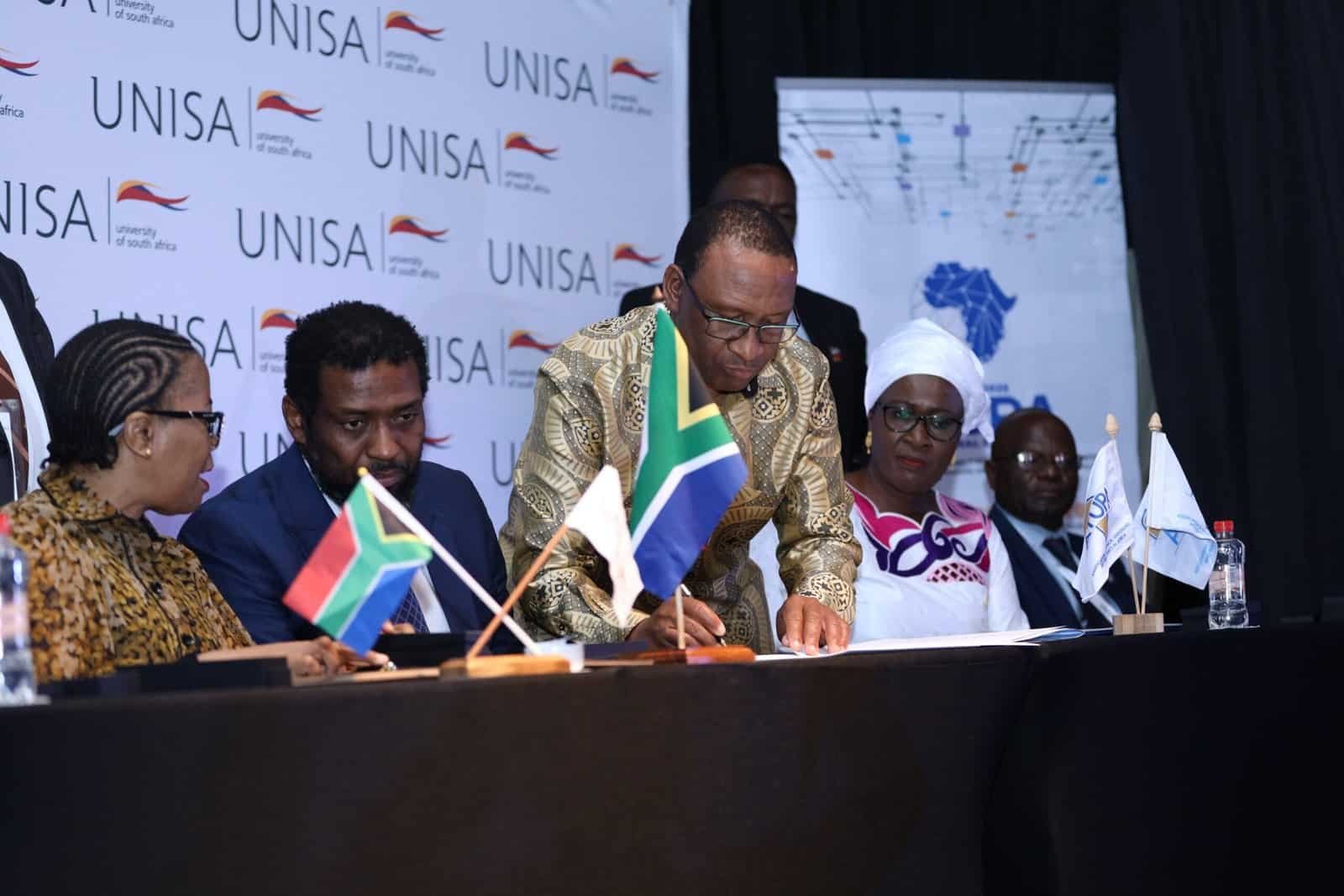

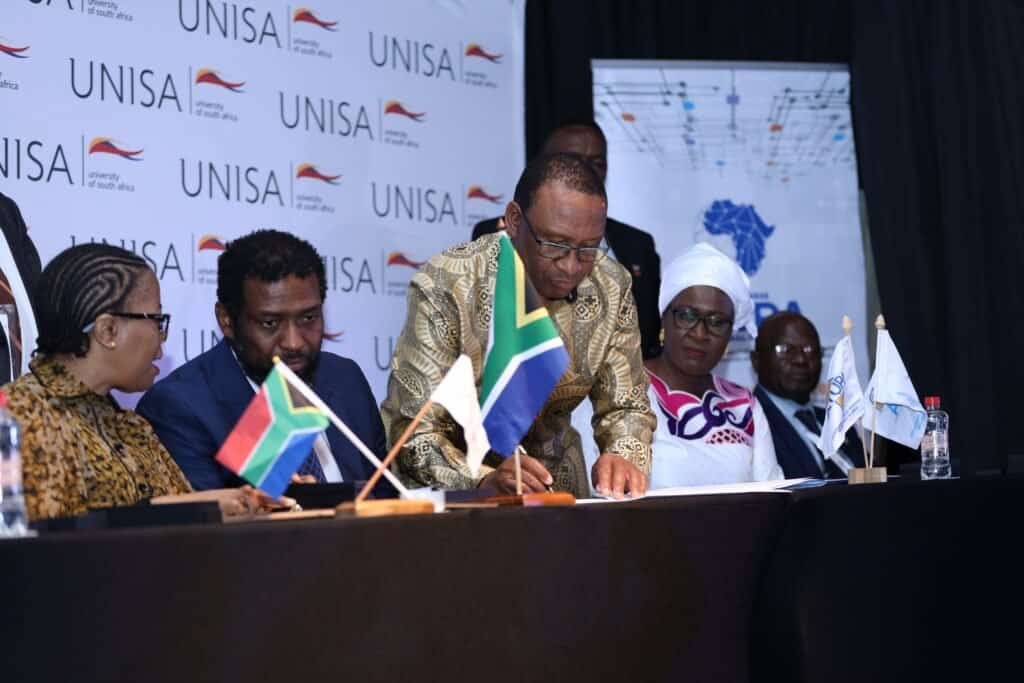
The University of South Africa and the Association of Technical Universities and Polytechnics in Africa (ATUPA) have signed an agreement to promote innovation, vocational education and the development of technical skills across Africa.
Unisa Vice Chancellor Professor Puleng LenKabula and ATUPA leaders, including Executive Board Chair Dr Tafadzwa Mudondo, signed the memorandum of understanding (MoU) on August 26, 2025, during the weeklong ATUPA International Conference held in Durban, South Africa.
ATUPA is a premier continental association that serves as a platform for institutions dedicated to delivering technical, vocational, and technological education (TVET) and training in Africa. Its core mission is to promote excellence in hands-on, practical education and applied research, as well as advocate for the critical role of TVET in the continent’s socio-economic development.
Held under the theme, “Sustainable Futures: TVET, Innovation, and Green Skills for Africa’s Development”, the conference discussed topics such as integrating green skills, digital transformation, entrepreneurship and incubation, quality assurance and mobility, and gender inclusion from October 27 to 30.
On August 26, the first day of the conference co-hosted by Unisa and ATUPA, both parties signed the agreement to enhance and promote technical and vocational education and training sectors across the continent.
Those present at the signing ceremony included LenkaBula, Mudondo, Dr Jahou Samba Faal, ATUPA Secretary-General, Buti Manamela, Minister of Higher Education and Training, and Professor Sello Mokwena, Local Organising Committee Chair.


Unisa is committed to Africa’s visions and aspirations
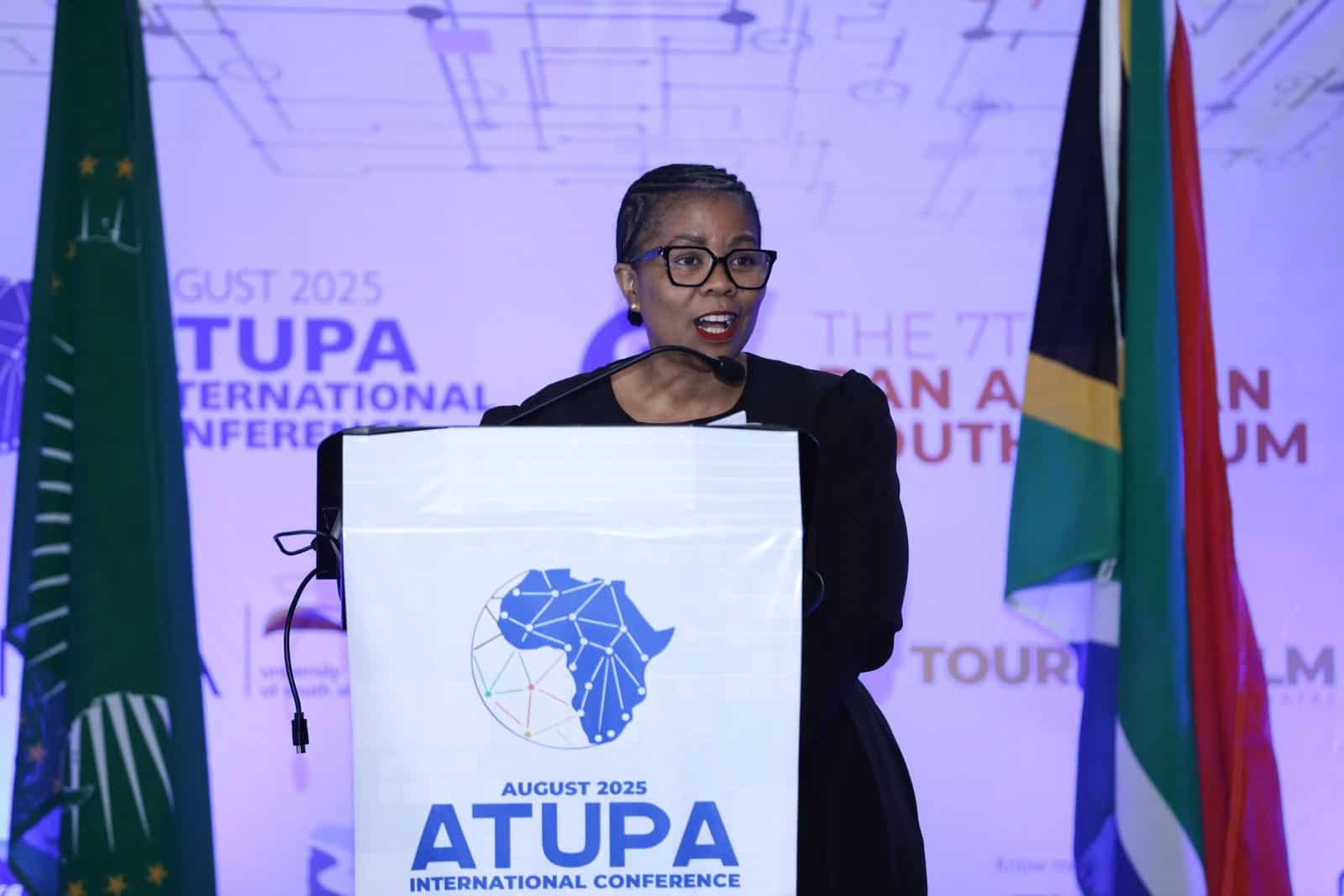
In her welcome address at the opening of the 2025 ATUPA International Conference, LenkaBula hailed the agreement as proof of Unisa’s commitment to international partnerships and Africa’s transformation.
“We believe in the advancement and transformation of Africa. Our commitment to advancing science and education is demonstrated in many ways, including through our international partnerships and engaged scholarship programmes. Our engagement with ATUPA is also informed by our abiding commitment to Pan-Africanism as an emancipation project. We truly believe that Africans can unite, integrate and develop through science and education as envisioned in Agenda 2063 and prior blueprints that define the vision and aspirations of Africa,” LenkaBula said.
LenkaBula told the gathering that the idea of a technical higher learning institution is to cater for education specialisation in fields such as engineering, technology and applied sciences. It focuses on practical, hands-on training, industry partnerships, and innovative problem-solving in society.
“It is one of the ways in which our universities find relevance and offer great public value to society,” She added. “Therefore, through ATUPA, we are able to connect with each other as an integrated sector of post-school education in Africa to unite and look at ways to advance technical and vocational education and training, among other joint priority areas.”
At the national level, LenkaBula further stated, Unisa continues to grow its strategic partnerships with sector education and training authorities (SETAs) and TVET system for strategic and developmental reasons.
“Our priorities are deeply ingrained in the growth and excellence of the TVET sector through research, innovation, teaching, and learning. We engage in practical collaborations to advance the TVET sector because we know its true potential in transforming our economy and the lives of many young people and South Africans at large,” LenkaBula said.

Pedagogy aligned with the aspirations of Africa
LenkaBula also touched on Africa’s curriculum design and content, saying it must first point to and address the needs of the Global South.
She added: “Our pedagogies must truly align with the aspirations of Africa from every facet of our curricula. For example, suppose we want to change the patterns of trade between African countries and between Africa and the rest of the world. In that case, we must teach and train the African youth to master the entire value chain of transforming mineral wealth into goods and services that can be consumed by the African market and the world at large.”
An interconnected driver of innovation, employability and inclusive development
In his keynote address, Manamela emphasised that by fostering collaboration among technical universities, polytechnics, TVET colleges and their industry partners, ATUPA has not only emerged as a critical partner in this transformation, but also enabled Africa to rethink education not as a siloed system but as an interconnected driver of innovation, employability and inclusive development.
Manamela said South Africa remains deeply committed to strengthening and expanding TVET ecosystems. He explained: “Our National Development Plan 2030 recognises that without a skills revolution, the promise of inclusive growth will remain elusive. Over the past decade, we have expanded the TVET college sector, continued to modernise curricula, and launched initiatives to improve lecturer development, occupational qualifications, and workplace-based learning.”
First-choice pathway toward meaningful employment and entrepreneurship
Expanding on current projects engaged in by the Higher Education and Training Ministry, Manamela stated that they are working closely with partners such as ATUPA, the African Union, the Quality Council for Trades and Occupations, UNESCO-UNEVOC, and international development partners, to align South Africa’s national TVET system with global and continental standards.

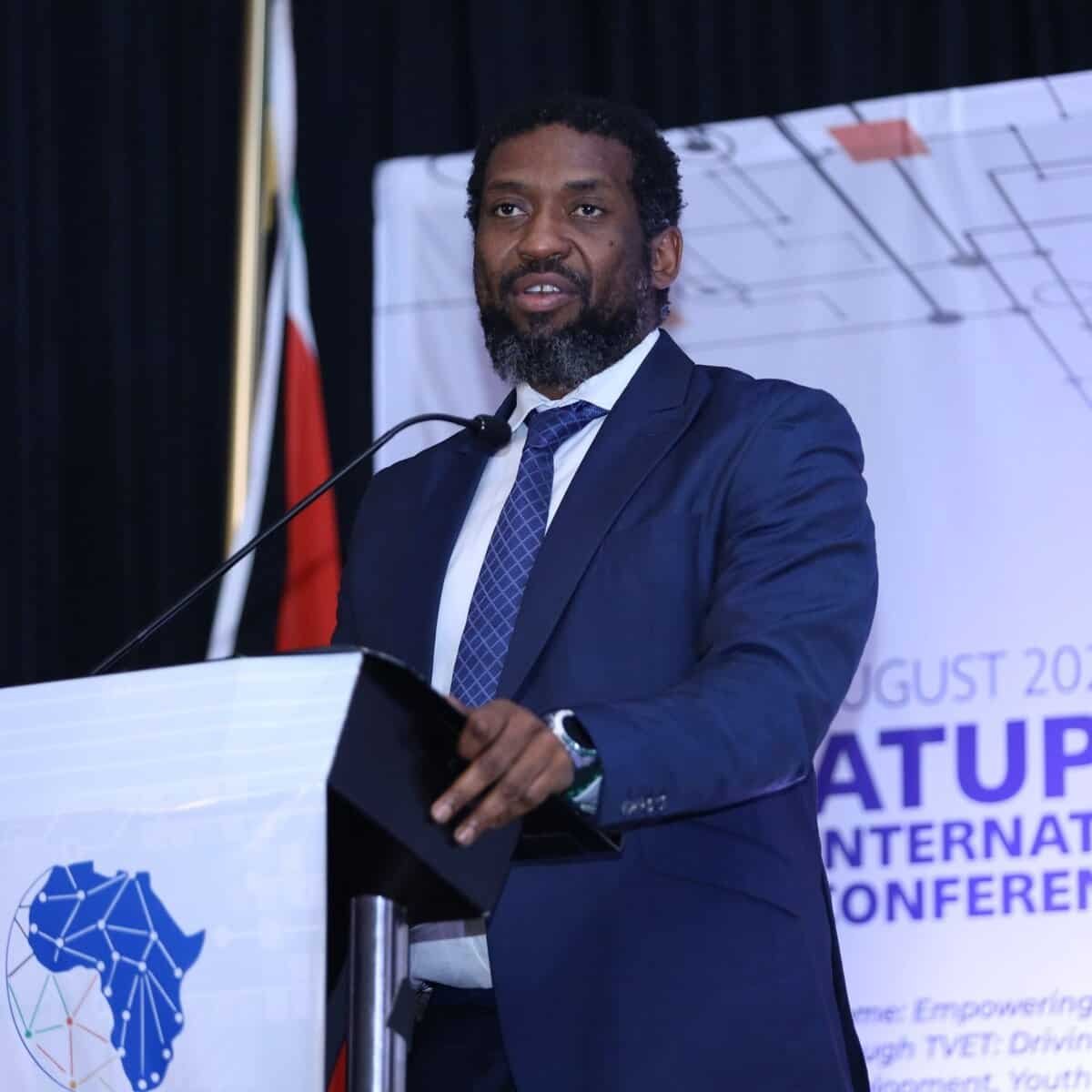
“Firstly, this ensures that our learners are not only competitive in South Africa but are also prepared to thrive across Africa and beyond, and secondly, that TVETs become a first-choice pathway toward meaningful employment and entrepreneurship,” Manamela said.
He urged conference delegates to lay the foundation for innovation and technical skills in Africa. “Let us seize this opportunity with boldness. Let us commit to a TVET system that is innovative, inclusive, sustainable, and globally competitive. And let us do so together, for our nation’s prosperity and our people’s dignity.”
The conference deliberated on how to embed sustainability, climate change mitigation, and circular economy principles into all technical and polytechnic curricula; on the role of artificial intelligence and digital literacy in modern technical trades and engineering fields (digital transformation); and on fostering a culture of innovation and supporting graduate startups to create jobs rather than seek them (entrepreneurship and incubation).
They also discussed establishing common standards for qualifications to facilitate the more seamless mobility of skilled workers across African borders (quality assurance and mobility); and strategies to encourage and support more young women to pursue and excel in STEM and TVET fields (gender inclusion).


ATUPA member institutions adopted the following “Accra Resolutions” when the conference concluded its business:
- The Green TVET Charter
- All member institutions committed to developing and implementing a “Green Strategy” within the next three years. This includes retrofitting campuses with sustainable technologies, revising curricula to include green skills for all programs (from construction to agriculture), and establishing centers of excellence in renewable energy and environmental management.
2. Digital Skills Integration Framework
- ATUPA will establish a working group to create a standardized framework for integrating foundational digital skills (like data analytics, digital literacy, and AI basics) into non-IT programs, such as mechanical engineering, hospitality, and agriculture.
3. Enhanced Industry Partnership Pact
- To move beyond occasional internships, members pledged to work towards establishing Mandatory Industry Attachment Schemes of at least one year for all advanced diploma and degree programs. They also resolved to create more Governing Councils with significant industry representation to advise on curriculum development.
4. ATUPA Qualifications Passport Initiative
- To pilot a digital “Qualifications Passport” that would provide a standardized record of a graduate’s skills, competencies, and qualifications. This aims to facilitate labour mobility within Africa and give employers a clearer understanding of a graduate’s capabilities, directly supporting the African Continental Free Trade Area (AfCFTA).
5. Women in Technical Leadership Resolution
- Members adopted a target of 30% female enrollment in traditionally male-dominated fields (e.g., engineering, manufacturing) by 2030. This will be supported through targeted scholarships, mentorship programs, and promoting female role models in technical professions.

