


The South African Police Service (SAPS) has announced a major breakthrough in the fight against political killings, but the success comes amid dramatic upheaval at the highest levels of the police and government.
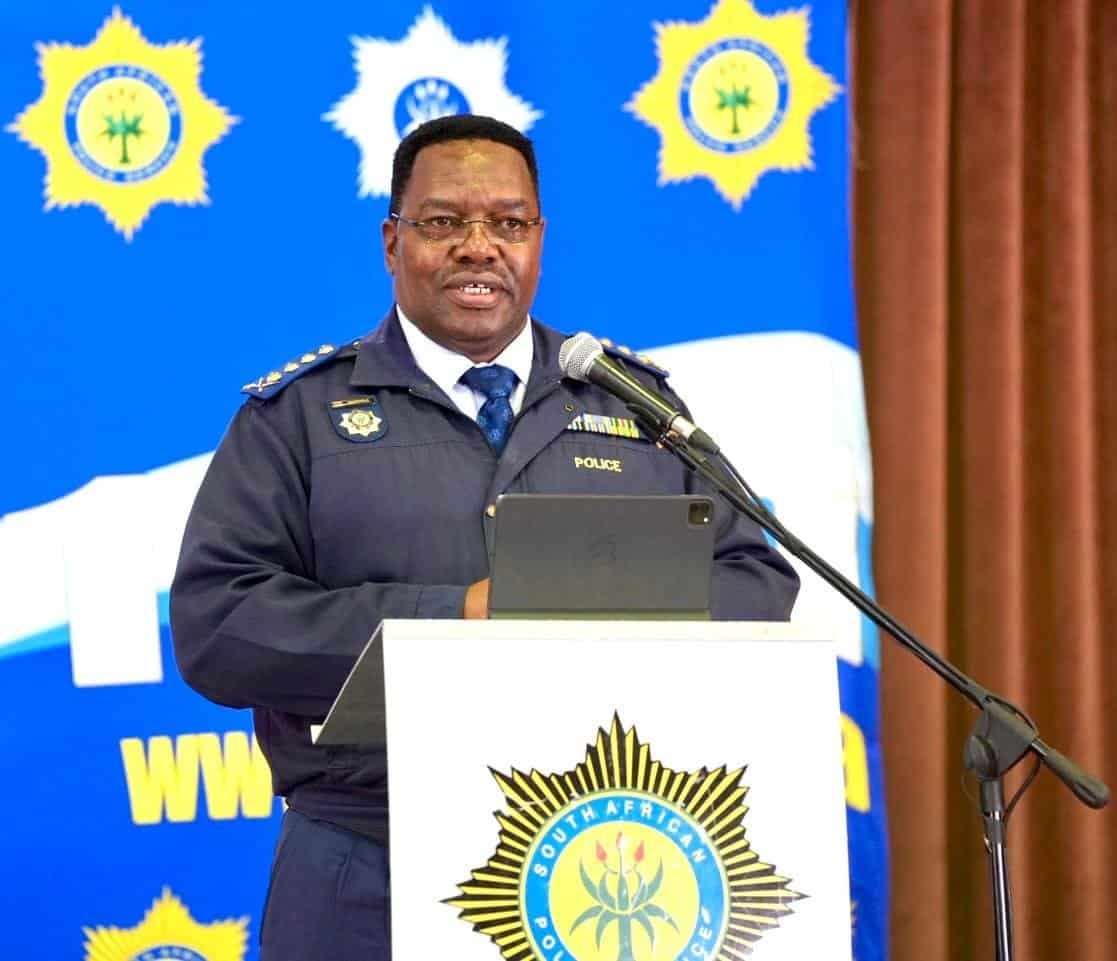
National Commissioner General Fannie Masemola confirmed that two suspects — a traditional chief and an alleged hitman — have been arrested in connection with the 2022 assassination of whistleblower Xolani Ndlovu Ntombela in KwaZulu-Natal. The arrests form part of renewed investigations into 121 unresolved dockets linked to political killings.
“This swift turnaround is encouraging and a step in the right direction,” Masemola said. “We urge the team to continue with their investigations in the remaining 120 dockets. Families need answers and closure.”
Who Was Xolani Ntombela?
Ntombela, a respected community activist from Mpophomeni in Howick, was gunned down inside his homestead in November 2022. Investigators believe he was targeted for exposing the illegal sale of land in the Emasosheni area.
Police allege that a 55-year-old local chief orchestrated the murder by hiring a 23-year-old hitman. Both men were arrested last week and appeared in the Howick Magistrate’s Court on Monday facing charges of conspiracy to commit murder, murder, and possession of an unlicensed firearm and ammunition.
A fifth suspect remains on the run.
The 121 Dockets
The Ntombela docket is one of 121 cases of political killings handed back to the Political Killings Task Team on 28 August 2025 after years of delays. These cases include high-profile assassinations of councillors, whistleblowers, and party members across KwaZulu-Natal, Mpumalanga, and parts of Gauteng.
Political killings have plagued South Africa for decades, often tied to party rivalries, tender disputes, and local power struggles. Since its establishment in 2018, the task team has secured more than 130 convictions, but critics argue that progress has been hampered by corruption, interference, and intimidation.

Bombshell: Police Shake-Up
The arrests come against the backdrop of a dramatic shake-up in the country’s security establishment. In July Police Minister Senzo Mchunu was suspended following allegations of political interference in sensitive investigations.
Amid the bombshell by KwaZulu-Natal Provincial Commissioner General Nhlanhla Mkhwanazi, General Shadrack Sibiya was placed on precautionary suspension.
The Judicial Commission of Inquiry into Criminality, Political Interference, and Corruption in the Criminal Justice System was established to probe systemic failures and sabotage in law enforcement, is holding a media briefing on Monday afternoon in Pretoria. Spokesperson Jeremy Michaels said it would outline “progress made and plans going forward” as the inquiry intensifies its scrutiny of police leadership.
Families Demand Justice
For families of victims, the latest arrests are a reminder that justice, though delayed, is still possible. Relatives of slain councillors and activists have long accused the state of abandoning them.
“Each of these 121 dockets represents a human life lost and a family left in pain,” Masemola acknowledged. “We cannot rest until every family has answers.”
Civil society groups have welcomed the arrests but urged government to insulate investigations from further political meddling.
“The suspensions show just how deep interference runs,” said one activist from KwaZulu-Natal. “The task team must be protected if it is to succeed.”
Looking Ahead
With 120 dockets still under investigation, the SAPS task team faces an uphill battle. The suspensions of senior police leaders and the looming findings of the commission have created both uncertainty and opportunity.
For now, the arrest of Ntombela’s alleged killers is seen as a turning point. But whether this marks the beginning of a genuine clean-up or simply another chapter in South Africa’s troubled fight against political assassinations remains to be seen.

