


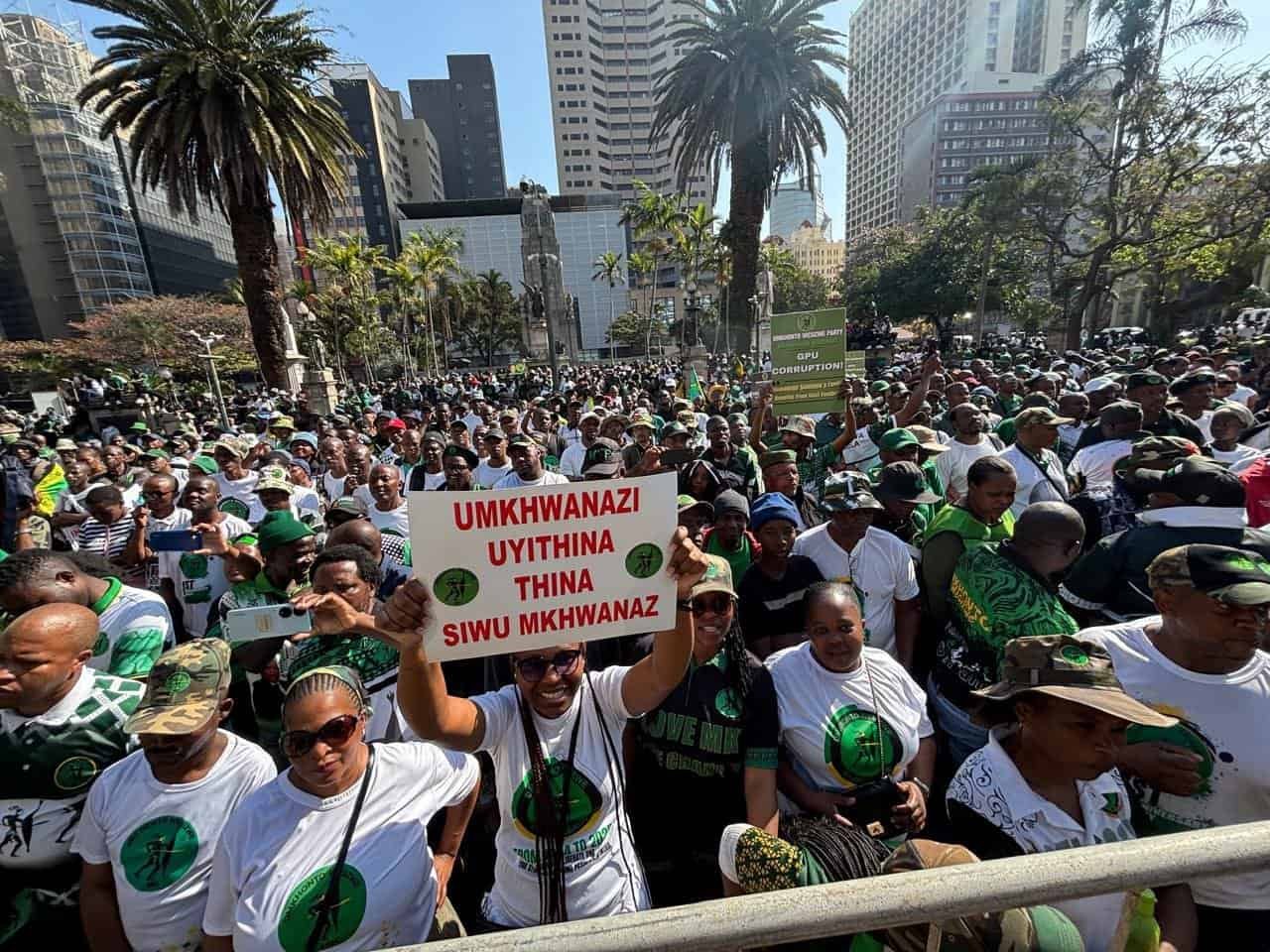
The uMkhonto weSizwe Party (MKP) has launched a scathing attack on the suspension of the Madlanga Commission of Inquiry into Criminality, Political Interference and Corruption in the Justice System, branding it a “political spectacle” designed to delay and ultimately deny justice to South Africans.
The Commission, chaired by retired Constitutional Court Justice Mbuyiseli Madlanga, was due to begin hearings on 1 September 2025 but has been indefinitely postponed after the Department of Justice failed to secure the infrastructure necessary for its work. The announcement on Tuesday, has triggered outrage from opposition parties and civil society, who argue the delay undermines confidence in South Africa’s ability to confront corruption in its justice system.
For the MK Party, however, the postponement was no surprise. In a sharply worded statement issued today, the party rejected the Commission outright, describing it as “a performance cloaked in the illusion of integrity but ultimately hollow.”
“This will amount to nothing more than a stack of documents filled with non-binding recommendations, destined to collect dust,” said MK Party national spokesperson Nhlamulo Ndhlela. “It will not lead to arrests. It will not root out criminality. It will not end the culture of impunity that has hollowed out our justice system.”
Background: The Mkhwanazi Bombshell and the Court Battle
The Commission was established in the wake of explosive allegations by KwaZulu-Natal Police Commissioner Lieutenant General Nhlanhla Mkhwanazi in July 2025. In his testimony before Parliament’s Police Portfolio Committee, Mkhwanazi alleged that senior law enforcement officials, including Police Minister Senzo Mchunu and Deputy National Commissioner Shadrack Sibiya, had shielded criminal syndicates and obstructed investigations.
The allegations sent shockwaves through the country, triggering President Cyril Ramaphosa to announce the formation of the Madlanga Commission. But almost immediately, questions were raised about whether the inquiry was a genuine attempt at accountability or a political manoeuvre to ease public anger.
The MK Party escalated matters by taking President Ramaphosa to court, arguing that his handling of Mchunu’s situation is unconstitutional. Mchunu, accused of deep links to the criminal underworld, remains on “special leave” while still drawing his full ministerial salary and enjoying all Cabinet perks. In his absence, Deputy Minister Cassel Mathale has been delegated day-to-day responsibilities.
This has created an unprecedented constitutional crisis: South Africa effectively has two Ministers of Police, something the Constitution makes no provision for. “A minister cannot be placed on leave. He is either appointed or removed,” MKP argues in its court filings. The party insists that Ramaphosa’s decision to keep Mchunu in limbo amounts to shielding a political ally and undermining the rule of law.
MK Party: Commission Protects the Powerful
In its reaction to the Commission’s delay, the MK Party said the excuses offered by the Department of Justice — namely “procurement issues” — were nothing more than thin veils for political interference.
“The very same people pushing for this inquiry cannot even convene it,” said Ndhlela.
“This is nothing more than a political spectacle of judicial theatrics. It is not a vehicle for justice, but a tool for politicians and members of the judiciary to interfere with the legitimate work of the police.”
The party argued that the judiciary itself is compromised, pointing to the Political Killings Task Team, which has previously flagged senior judicial figures as complicit in shielding criminal networks. “It is deeply alarming that a retired judge is presiding over an inquiry into the very same judiciary made up of his own peers,” the statement read.
Wasteful and Fruitless Expenditure?
The MK Party also cast doubt on the value of commissions of inquiry more broadly, citing the Zondo Commission into State Capture, which cost taxpayers more than R1 billion but has produced limited tangible results in terms of prosecutions.
“This Commission is fruitless and wasteful expenditure: a mere distraction that serves only to protect the powerful,” Ndhlela said. “South Africans deserve better than a stage play. We deserve real justice.”


Implications for Justice and Accountability
Critics warn that the suspension of the Madlanga Commission risks stalling accountability at a time when trust in the justice system is at an all-time low. Civil society organisations say whistleblowers remain unprotected and evidence risks going stale while the Commission remains in limbo.
“The longer this charade continues, the more compromised the outcome will be,” the MK Party argued, echoing concerns that the delay plays into the hands of those implicated.
With Parliament preparing to launch its own Ad Hoc Committee on the allegations, political pressure is mounting on President Ramaphosa to break his silence on Mchunu’s status. Opposition parties — from the EFF to the DA and IFP — have already accused him of placing political loyalty above the Constitution.
A Crisis of Legitimacy
For the MK Party, the suspension of the Commission is further evidence that South Africa’s justice system is rotting from within. “There is no transparency and accountability. The judiciary continues to fail the people of South Africa by refusing to take them into its confidence,” Ndhlela said.
The stakes are high. If the MK Party succeeds in its court challenge, President Ramaphosa may be forced to fire Mchunu, reshaping the political landscape. If not, the President risks deepening perceptions that his administration is unwilling — or unable — to confront corruption at the highest levels.
As South Africans grapple with rising crime, corruption scandals, and now the spectacle of “two police ministers,” the suspension of the Madlanga Commission underscores a deeper truth: the battle for accountability is as much political as it is judicial.
Timeline: How The Police Minister Crisis Unfolded
July 2025 — The Mkhwanazi Bombshell
KwaZulu-Natal Police Commissioner Lt. General Nhlanhla Mkhwanazi shocks Parliament by alleging that Police Minister Senzo Mchunu and Deputy National Commissioner Shadrack Sibiya are protecting criminal syndicates and interfering in investigations.
Late July 2025 — Ramaphosa Acts
President Cyril Ramaphosa announces the creation of the Madlanga Commission of Inquiry to investigate criminality, political interference, and corruption in the justice system. Mchunu is placed on “special leave,” an arrangement critics say is unconstitutional.
Early August 2025 — MK Party Goes to Court
The uMkhonto weSizwe Party (MKP) files papers in court challenging Ramaphosa’s decision, arguing South Africa now has two Ministers of Police (Mchunu on leave but still in office, and Deputy Minister Cassel Mathale effectively in charge). The party says this violates the Constitution.
Mid August 2025 — Rising Pressure
Opposition parties including the EFF, DA, and IFP slam the Commission as a delaying tactic to protect Mchunu and Sibiya. Civil society groups call for urgent accountability and protection of whistleblowers.
26 August 2025 — Commission Suspended
Justice Mbuyiseli Madlanga confirms hearings will not start on 1 September as planned because the Department of Justice failed to deliver the required infrastructure. The suspension fuels allegations of sabotage and political shielding.
What Next?
The MK Party’s court case against Ramaphosa continues. Parliament’s Ad Hoc Committee on criminality in the justice system is expected to begin work in September. The Madlanga Commission remains indefinitely suspended, deepening uncertainty over accountability.
In just two months, allegations of political interference in policing have escalated into a constitutional crisis, leaving South Africa with two police ministers, a suspended commission, and a nation demanding answers.

