


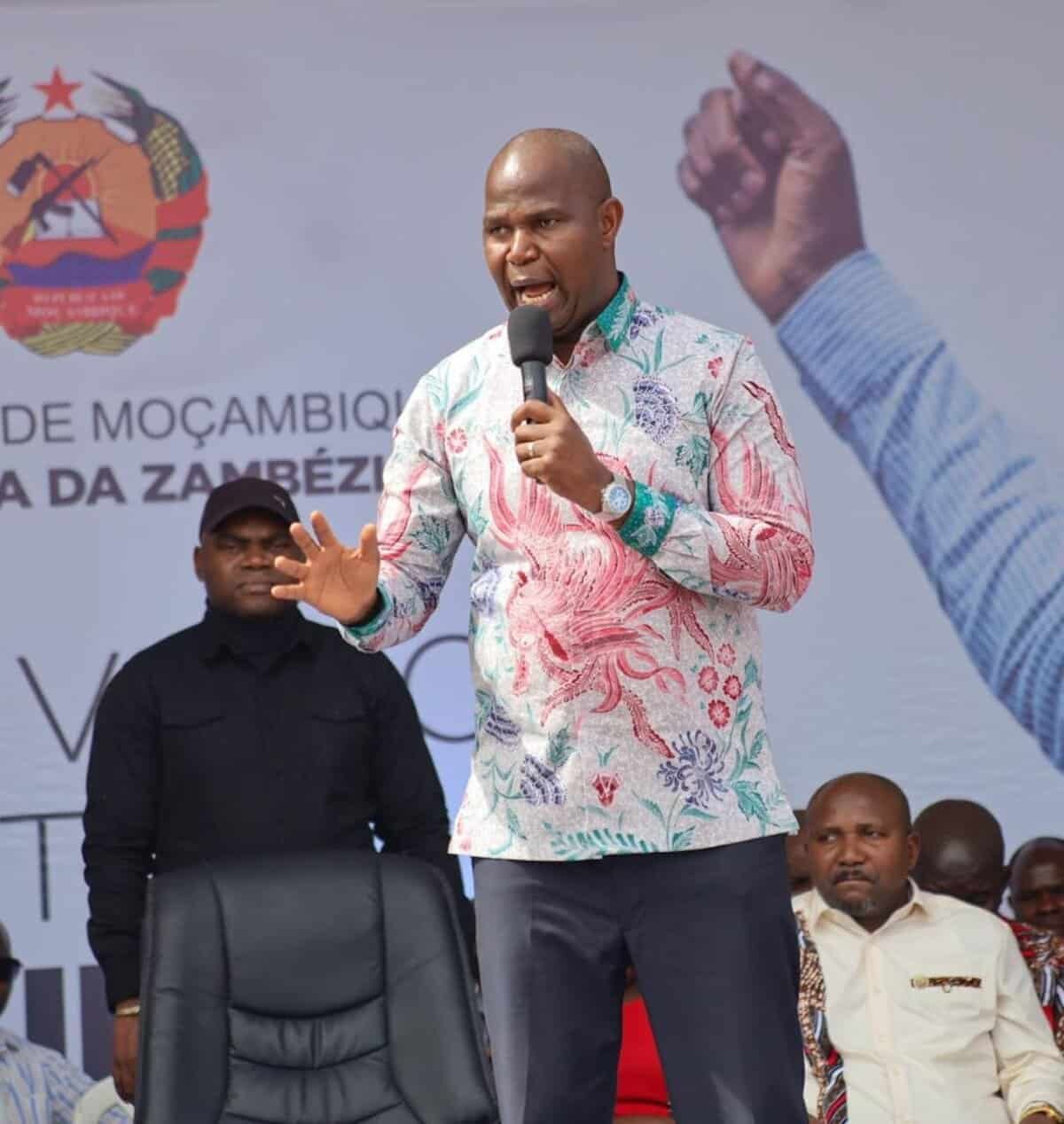
Inspired by the South African model, Mozambican President, Daniel Chapo, announced on Thursday his intention to establish the country’s future parliamentary headquarters in the city of Mocuba, located in the central Zambézia Province. The announcement was made during a popular rally held in Quelimane and marks a continuation of the President’s campaign promise to reimagine the structure of the Mozambican state through decentralisation and regional empowerment.
The initiative is part of Chapo’s broader governance vision to transform selected provinces into “thematic capitals,” each assigned a specific role within the country’s symbolic and functional state architecture.
According to President Chapo, decentralisation must move beyond mere administrative devolution. It should also serve geostrategic, functional, and symbolic purposes to reduce excessive centralisation, address regional inequalities, and foster national cohesion.
“Mocuba was chosen not only for its strategic geographic location but also for its symbolic significance. It is where paths cross and the nation embraces itself — the meeting point of northern, central, and southern Mozambique. It makes perfect sense for it to be the place where major national decisions are made,” declared the Head of State.
President Chapo might have been inspired by the neighbouring South Africa’s distributed capital model, where Johannesburg (Gauteng) functions as the economic centre, Pretoria as the political capital (executive), Cape Town as the legislative capital, and Bloemfontein as the judicial capital.
The plan foresees the construction of a modern and inclusive parliamentary city, equipped with state-of-the-art facilities to host the national Parliament, offices, legislative research centres, plenary halls, residential zones for MPs and public servants, as well as spaces for civil society engagement and digital platforms to promote participatory democracy.

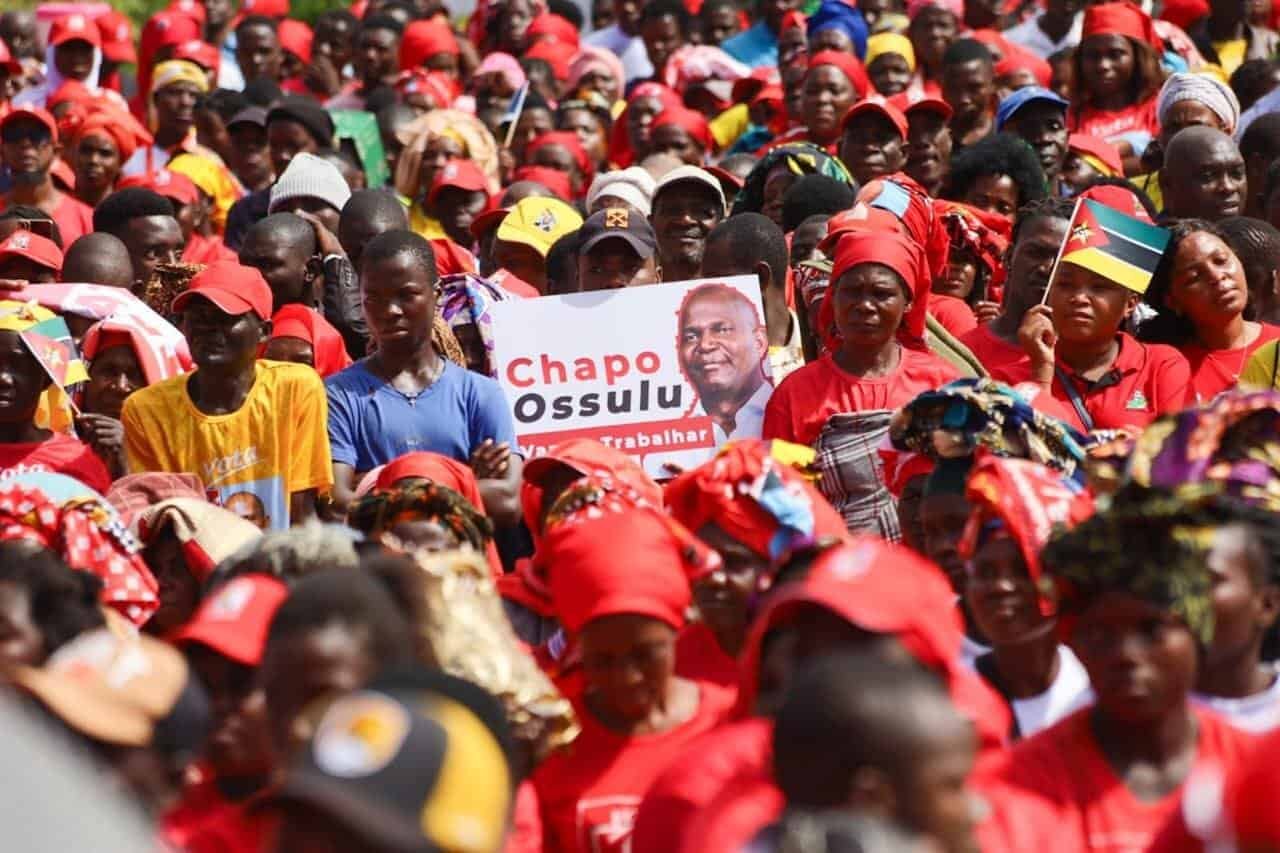
Still in its early planning stages, the project is expected to be implemented gradually and through public-private partnerships. Sources close to the Presidency have indicated that the initiative also includes the creation of a national institute for parliamentary studies aimed at strengthening legislative capacity and bringing Parliament closer to citizens.
Beyond Mocuba as the parliamentary capital, President Chapo has consistently advocated for each province to assume a national function aligned with its historical, economic, cultural, or geographic profile.
The President believes this functional redistribution will ease pressure on Maputo, stimulate regional development, and help build a more pluralistic and interconnected national identity.
Chapo’s proposed decentralisation is not merely an institutional relocation exercise but represents a paradigm shift in the role of provinces in national development. Each thematic capital is envisioned as a centre of excellence in its designated area, attracting priority investments, specialised universities, innovation hubs, and tailored international cooperation agendas.
“Our country is vast and diverse. We must leverage that diversity as a strategic asset. By valuing each province with a specific purpose, we are building a more balanced, more efficient, and fairer Mozambique,” Chapo said.
If realised, the Mocuba initiative could mark one of the most significant political-administrative reforms in Mozambique’s history — transforming the city into the legislative heart of a nation rediscovering its territorial essence.

