


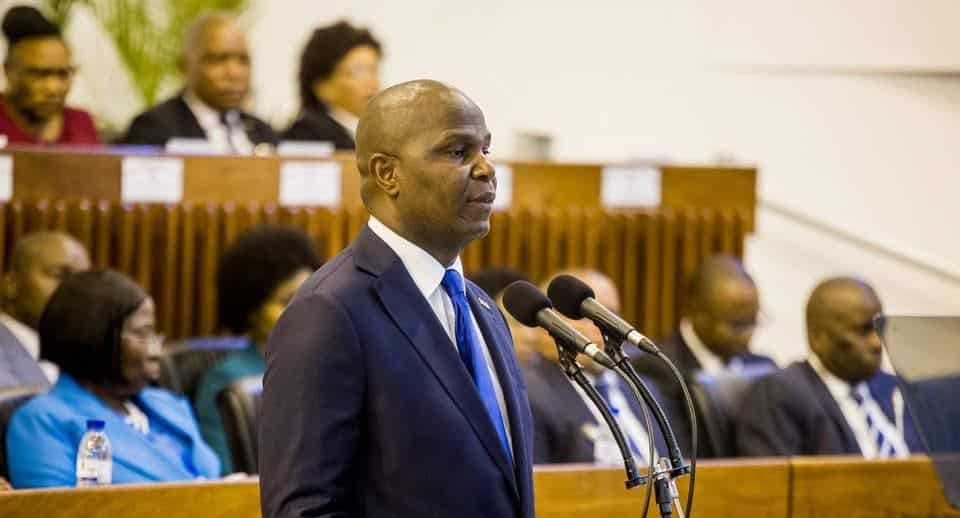


Mozambique’s President, Daniel Chapo, has declared that the state of the nation is one of renewed confidence, driven by recent efforts to stabilise the economy, guarantee public sector salaries and restore investor trust, as the country sets its sights on sustainable and inclusive development.
Chapo was speaking on Thursday, 18 December, during his Annual State of the Nation Address to the Assembly of the Republic, delivered in a solemn parliamentary session reviewing Mozambique’s overall political, economic and social situation.
A Democracy of Diverse Judgements
In his address, the Head of State acknowledged that perceptions of the country’s situation differ widely among citizens, lawmakers and analysts, stressing that such diversity of opinion is a hallmark of a mature democracy.
“Every Mozambican will make their own assessment. Every Member of Parliament will have their own reading. Every analyst in the press will form their own judgment. Even every foreigner living in the country will have their own view,” Chapo said. “Those who saw their homes or vehicles destroyed through violence will also reach their own conclusions. That is how a mature democracy like ours functions.”
From the government’s perspective, however, Chapo argued that a comparison between the first months of the year and the current situation reveals significant progress, achieved through intense work, often at the cost of rest, to ensure the functioning of the State, stimulate economic growth and improve living conditions for the population.
Priorities for 2026: Growth, Inclusion and Stability
Reaffirming his commitment to stability, economic growth and social inclusion, the President placed the improvement of Mozambicans’ living conditions at the centre of government action.
Looking ahead to 2026, Chapo expressed renewed confidence, describing the year as one of reaffirmed commitments to strategic sectors of the national economy. He identified agriculture, energy, tourism, education, health, digitalisation and infrastructure as key pillars for improving family welfare, accelerating growth and consolidating the country’s economic independence.
He assured lawmakers that all promises made at his inauguration would be fulfilled over the five-year mandate, through strategic and responsible management of public resources, guaranteeing the full implementation of the Government’s Five-Year Programme (2025–2029).
“For the 2026 financial year, resource allocation will prioritise productive and social infrastructure, with particular emphasis on agriculture, roads, energy, transport, education, health, digital transformation and youth, while keeping districts as the primary focus of government intervention,” Chapo said.
Economic Outlook and Renewed Investor Confidence
According to the President, the government’s central objective remains the reduction of inequalities, the fight against poverty, the creation of decent jobs and the promotion of a diversified and sustainable economy.
Macroeconomic projections, he noted, point to GDP growth of 2.8 per cent in 2026, up from an estimated 1.6 per cent in 2025, driven by the services sector, liquefied natural gas exports, agricultural recovery and investment in the energy sector.
The outlook also includes exports valued at 8.4 billion US dollars, average annual inflation of 3.7 per cent, and gross international reserves estimated at 3.2 billion dollars, equivalent to 4.4 months of import cover, excluding mega-projects.
“Confidence in the country is increasing every day,” Chapo said, stressing that the foundations for economic independence are being laid, particularly through the resumption of major gas projects.
Gas Projects and a New Economic Architecture
The President described logistics corridors, energy, gas, tourism, water and manufacturing as forming Mozambique’s new economic architecture, noting that major energy projects have resumed in a synchronised manner over the past eight months.
“The country is preparing for a cycle of structural transformation. Economic independence is no longer an idea – it is a process, a work in progress,” he said. “Those who wish to walk a thousand steps must begin with the first one. And we have already begun.”
Chapo highlighted “historic and unprecedented advances” in the gas sector following the lifting of the force majeure clause on TotalEnergies’ Mozambique LNG project in Cabo Delgado, suspended for over four years due to insurgent attacks.
The project is expected to create between 40,000 and 50,000 jobs, boost national suppliers, increase state revenues, stimulate northern development and transform the country’s energy matrix.
He also cited Eni’s Final Investment Decision, signed in October, and ExxonMobil’s confirmation of its planned entry in 2026, as evidence of renewed international confidence. With three active operators, Mozambique is positioning itself as one of the world’s major gas producers, with total investments estimated at 50 billion dollars.
Human Capital at the Heart of Economic Independence
President Chapo stressed that human capital development is the most important pillar for achieving economic independence.
“Economic independence will only be possible if we train a new generation of Mozambicans — qualified, creative, disciplined, ethical and prepared to compete in an increasingly demanding global market,” he said.
He explained that this vision rests on three pillars: human capital development; industrialisation and value-chain development to move beyond raw material exports; and inclusive infrastructure consolidation.
Zero Tolerance for Corruption
Chapo issued a strong warning that the fight against corruption will advance “at any cost”, with no exceptions.
“No illegal act will be treated as an internal matter. The law is the same for all of us, including myself,” he said. “No case of corruption will be ignored. No public official or relative of a leader will be protected.”
While acknowledging that corruption will not disappear overnight, he argued that there is now greater fear of committing illicit acts than in previous years.
Inclusive National Dialogue Restores Trust
The President credited the inclusive national dialogue, launched in April, with restoring confidence and reducing political and social tensions following post-election violence.
“This dialogue did not erase differences; it transformed them into proposals. It did not silence frustrations; it turned them into participation,” Chapo told parliament.
The process, which foresees constitutional and electoral reforms over two years, followed months of unrest that left more than 400 people dead, thousands detained, and caused damage estimated at 27.4 billion meticais.
Despite the scale of the crisis, Chapo said the past year had shown that Mozambique’s greatest strength lies in its people.
“Moçambique has complex challenges, but it has a force greater than any adversity – the strength of its people, a people who rise after every storm,” he concluded.

