


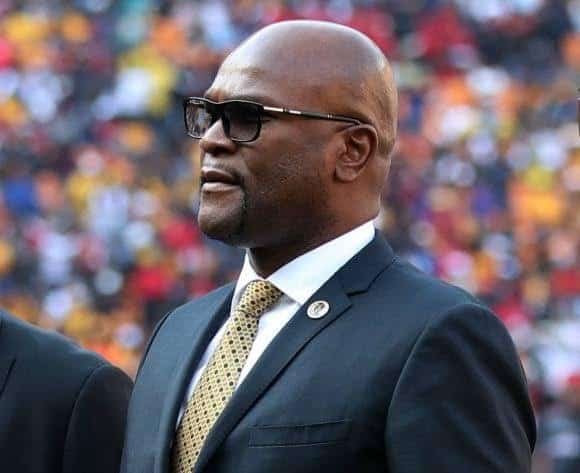
South Africa has been plunged into shock and speculation following the sudden and mysterious death of Ambassador Nathi Mthethwa, the country’s envoy to France and former long-serving Cabinet minister. Mthethwa, 58, was found dead outside the Hyatt Hotel in Porte Maillot, Paris, after allegedly falling from the 22nd floor, where he had booked a room.
French authorities confirmed his death on Tuesday, but the exact circumstances remain unclear. Some reports say he fell after forcing open a secure hotel window. Others claim he jumped in an apparent suicide. Still others, including voices on social media and in political circles, insist his death bears the hallmarks of an assassination — a silencing before he could answer questions at the explosive Madlanga Commission of Inquiry.
Disappearance Before a Fatal Fall
According to the Paris prosecutor’s office, Mthethwa was reported missing by his wife after sending her a “worrying message” the evening before his death. His body was discovered the following morning outside the luxury hotel. The prosecutor’s office confirmed that the window of his 22nd-floor room had been forced open — an unusual and troubling detail for a venue known for its strict security measures.
A French police source told the Hindustan Times that investigators are exploring both foul play and suicide, with toxicology results pending. “The secure window being forced is a key element,” the source said. “At this stage, nothing is being ruled out.”
Timing Raises Questions
Mthethwa’s sudden death comes just one day after the Special Investigating Unit (SIU) released its damning interim report into systemic corruption at Tembisa Hospital. The SIU revealed a “Big Five cartel” looting billions from the health sector, implicating high-profile businessmen and political elites.
Critics quickly connected the dots. Social media erupted with speculation that Mthethwa’s death was not coincidental.
Thato Mokhele wrote on X: “So Nathi Mthethwa died in a country where the Political Killings Task Team has no jurisdiction to probe or investigate the circumstances of his death? We are dealing with real gangsters here.”
Another user alleged: “We need to be honest about Nathi Mthethwa’s death. He was assassinated before he could appear before the Madlanga Commission.”
Others warned that his demise could be the first of several mysterious deaths during the inquiry. “We will probably have more of these kinds of deaths in the duration of the Madlanga Commission,” one post read.
Mkhwanazi’s Ominous Reference
Two weeks ago, KwaZulu-Natal Police Commissioner Lt General Nhlanhla Mkhwanazi mentioned Mthethwa’s name while testifying at the Madlanga Commission, which is probing the nexus of political corruption, criminal syndicates, and state capture in the security cluster.
Mkhwanazi did not accuse Mthethwa directly of corruption but alluded to a “culture of complicity” under his tenure as police minister. “We had ministers who, instead of confronting criminal syndicates, enabled an environment where these cartels thrived,” Mkhwanazi testified. “One cannot speak about the failure to dismantle these networks without reflecting on those who were in charge at the time.”
Observers now say those comments have gained chilling new relevance. Some argue that Mthethwa may have been preparing to testify or be called before the Commission. His sudden death in Paris, they say, deprives the inquiry of a critical voice.
A Polarising Political Career
Mthethwa was a towering figure in post-apartheid politics. A senior ANC member, he served as Minister of Police between 2009 and 2014, before taking over as Minister of Sports, Arts and Culture under Presidents Jacob Zuma and Cyril Ramaphosa. He remained in that post until 2023, when Ramaphosa appointed him Ambassador to France.
While respected by allies for his loyalty to the ANC and steady presence in Cabinet, Mthethwa was also deeply unpopular among the public at times.
In 2021, artists launched a viral #NathiMustGo campaign after accusing him of neglecting the sector during the COVID-19 pandemic. He was derisively nicknamed the “Minister of Condolences, Congratulations and Other Witchcrafts” for appearing more often in ceremonial roles than in substantive policy delivery.
In 2022, he was ridiculed for proposing to spend R22 million on a giant national flag monument at Freedom Park, a project widely slammed as wasteful during an economic crisis.
Yet despite controversies, Mthethwa retained influence within the ANC, serving on its National Executive Committee and remaining a trusted ally of both Zuma and Ramaphosa. His appointment to Paris was seen as both a reward for loyalty and a quiet exit from domestic political battles.
Government Confirms, But Details Thin
South Africa’s Department of International Relations and Cooperation (DIRCO) confirmed Mthethwa’s death, offering condolences but stopping short of addressing the swirling speculation.
“Ambassador Mthethwa was a distinguished servant of the nation,” DIRCO said in a statement. “His lifelong commitment to public duty was exemplified through his service in Cabinet and his work to strengthen South Africa’s partnership with France. The circumstances of his untimely death are under investigation by the French authorities.”
Justice Minister Ronald Lamola described Mthethwa’s passing as “not only a national loss but also a blow to the international diplomatic community.”
The ANC also confirmed Mthethwa’s passing in a heartfelt message celebrating his legacy.
“The ANC mourns Comrade Nathi Mthethwa, a stalwart of our movement and a dedicated servant of the people,” said spokesperson Mahlengi Bhengu. “His leadership, sacrifice, and lifelong commitment to building a democratic South Africa will be deeply remembered. We salute his legacy and support his family in grief.”
Questions Without Answers
The central question remains: did Nathi Mthethwa take his own life, or was he silenced?
If suicide, what pushed a seasoned politician and diplomat, just 18 months into his Paris posting, to such despair? Was it personal, political, or linked to the looming Madlanga Commission?
If murder, who wanted him dead, and why? Was it an international hit, beyond the reach of South Africa’s compromised law enforcement agencies? Was it linked to the hospital cartel scandal, or to deeper networks of corruption and violence?
Without clear answers, suspicion thrives. South Africa’s recent history — from the assassination of Babita Deokaran in 2021 to the alleged intimidation of witnesses at commissions of inquiry — feeds the belief that whistleblowers and insiders are routinely eliminated.
Legacy Overshadowed
For many, Mthethwa’s death will forever be tied less to his years in government than to the mystery of how he died and the timing of his demise. His critics see irony in a man once accused of failing to confront corruption and political killings potentially falling victim to the very networks he was accused of tolerating.
His supporters, however, remember a disciplined party man who gave decades of service in Cabinet and diplomacy, and who now leaves behind a grieving family and a legacy clouded by suspicion.
A Nation on Edge
As France investigates, South Africa waits anxiously. The truth of what happened on the 22nd floor of the Hyatt Hotel may never be fully known. But one fact is indisputable: Nathi Mthethwa’s death has deepened a national sense of unease at a time when corruption scandals, assassinations, and commissions of inquiry dominate the political landscape.
For a nation already grappling with the aftermath of the SIU’s revelations, Mthethwa’s demise is more than a personal tragedy. It is a political earthquake, raising questions about who really controls power in South Africa — and how far they will go to protect it.


