


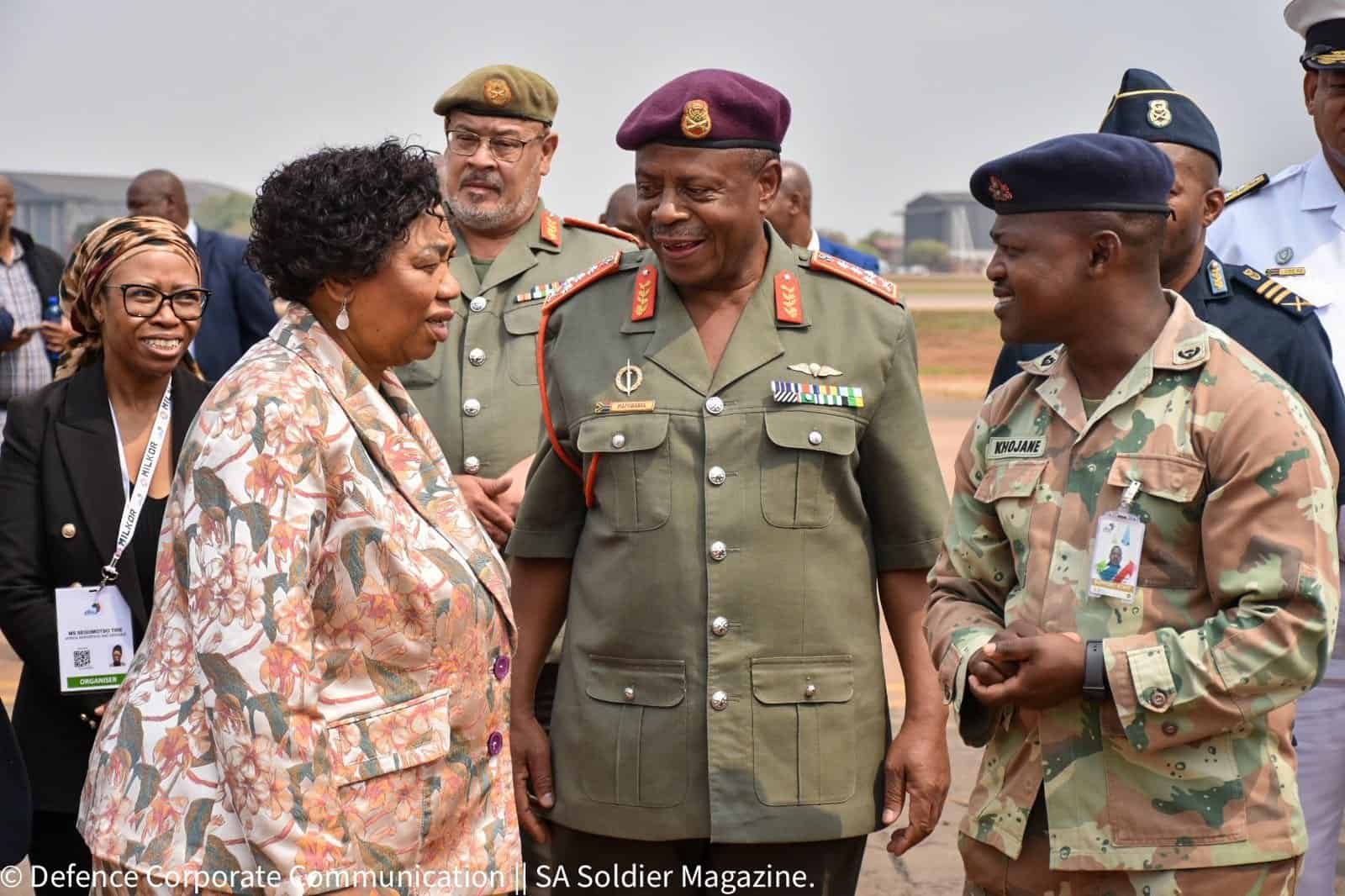
The South African National Defence Force (SANDF) has moved to quell mounting speculation over its Chief, General Rudzani Maphwanya, following claims that he had defied Defence and Military Veterans Minister Angie Motshekga.
In a strongly worded statement issued on Sunday, the SANDF dismissed the allegations as “incorrect, misleading and irresponsible,” stressing that General Maphwanya continues to operate within the bounds of military protocol and remains fully accountable to the Minister.
Rear Admiral (Junior Grade) Prince Tshabalala, Director of Defence Corporate Communication, said the reports were “deliberately distorted to create the impression of a rift between the Minister and the Chief of the SANDF.”
“There is misrepresentation on the merits of the facts regarding the matter at hand. It is not in the nature of the SANDF to discuss its members’ administrative matters in the public media. The insinuation that the Chief of the SANDF is defiant or disrespectful to the Minister is baseless. General Maphwanya remains fully committed to the constitutional authority of the Minister and is engaging the matter with the utmost respect and diligence,” Tshabalala said.
According to the SANDF, General Maphwanya is currently consulting with Minister Motshekga and the Military Ombudsman regarding the issues raised, and any final determination will be made in line with the law, military regulations, and the directives of the executive authority.
Background to the Controversy
The uproar comes against the backdrop of General Maphwanya’s recent high-profile visit to Iran, which drew sharp criticism from some opposition figures and commentators who accused him of overstepping his mandate. Questions were raised about whether the trip was sanctioned by the Minister, fuelling speculation that the top soldier was operating independently of civilian oversight.
However, Minister Motshekga herself confirmed that the visit had been approved as early as 2024, consistent with longstanding diplomatic protocols. The trip formed part of South Africa’s defence cooperation agenda and its ongoing engagement with BRICS partners and allies in the Middle East.
Adding fuel to the fire, some critics claimed Maphwanya’s outspoken remarks during public engagements suggested a tendency to stray into political territory. But his defenders argue that his statements reflect the SANDF’s strategic vision in an increasingly unstable global environment.
Political Reactions
Ambassador Carl Niehaus, an EFF Member of Parliament, strongly defended Maphwanya, suggesting that the criticism was less about military discipline and more about South Africa’s foreign policy direction.
“In the midst of the uproar over General Maphwanya’s recent visit to Iran, one can’t help but question the motives behind the hysteria. The trip was no spur-of-the-moment affair. It had been planned well in advance, with Defence Minister Angie Motshekga confirming that it was approved last year and aligned with longstanding diplomatic protocols,” Niehaus said.
He went further, framing the debate as part of a larger geopolitical struggle:
“The hysteria over General Maphwanya’s Iran visit is a symptom of deeper issues: a fear of South Africa asserting its sovereignty in a multipolar world. The EFF stands unapologetically for anti-imperialist solidarity. We call on our government to deepen ties with Iran and BRICS partners. Only through such alliances can we build a just global order, free from the chains of USA bullying. Let us not bend; let us break free.”

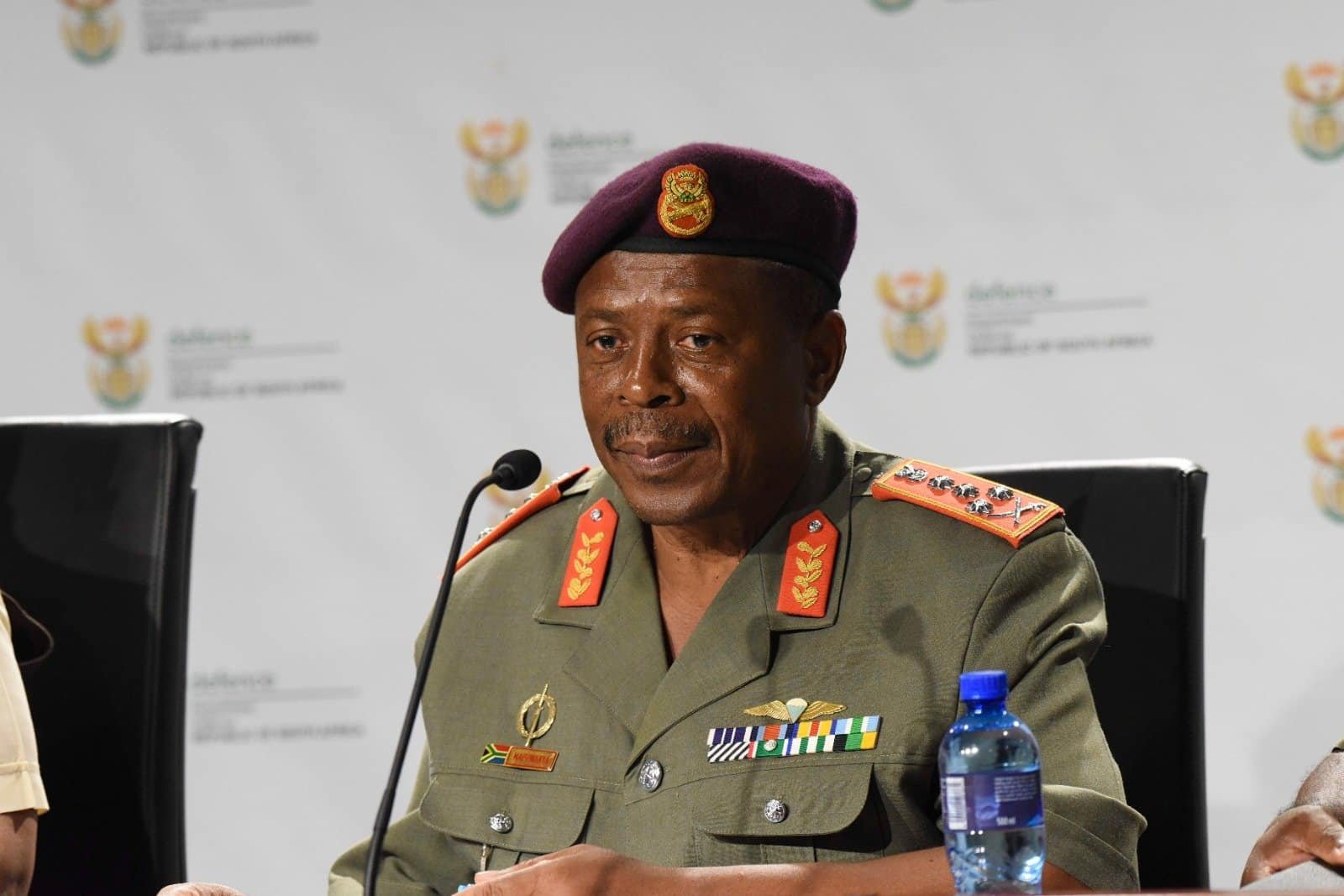
Why Maphwanya Has Been in the News
General Maphwanya, who has been Chief of the SANDF since 2021, is no stranger to controversy. Earlier this year, he made headlines after cautioning against what he called “external attempts to destabilise Africa’s security architecture,” remarks that were interpreted by some as veiled criticism of Western military influence on the continent.
In 2023, he also raised eyebrows when he publicly warned that corruption within defence procurement posed as much of a threat to national security as external enemies. His candid remarks sparked both praise and discomfort within political circles, with some hailing him as a principled soldier while others accused him of “politicising the uniform.”
Another flashpoint came during his address at a military graduation ceremony in 2022, where he urged young officers to “prepare for unconventional warfare in an unpredictable world.” Analysts said his statement reflected a broader shift in SANDF strategy towards cyberwarfare, terrorism, and hybrid conflicts – but critics complained the tone sounded overly aggressive for a country known for its peacekeeping posture.
Upholding Civilian Authority
Despite these controversies, the SANDF insists that General Maphwanya has never acted outside the chain of command. The defence force emphasised its commitment to constitutional principles, stressing that civilian oversight by the Minister and Parliament remains paramount.
“The SANDF assures the public and all stakeholders that due process is being followed, and any final determination will be made in strict compliance with the law, established military procedures, and the directives of the Executive Authority,” said Tshabalala.
The Bigger Picture
Analysts note that the storm surrounding General Maphwanya reflects the delicate balance between military autonomy and civilian oversight in South Africa’s democratic system. Since 1994, successive governments have prided themselves on keeping the military firmly under civilian control – a principle enshrined in the Constitution.
Yet, the growing international visibility of the SANDF, coupled with Maphwanya’s outspoken leadership style, has ensured that the military remains a talking point in national debates on foreign policy, governance, and security.
For now, the SANDF is standing firmly behind its Chief, insisting that discipline and protocol are intact. Whether the latest controversy fades or escalates may depend less on Maphwanya himself and more on how South Africa navigates its increasingly complex role in global politics.

