


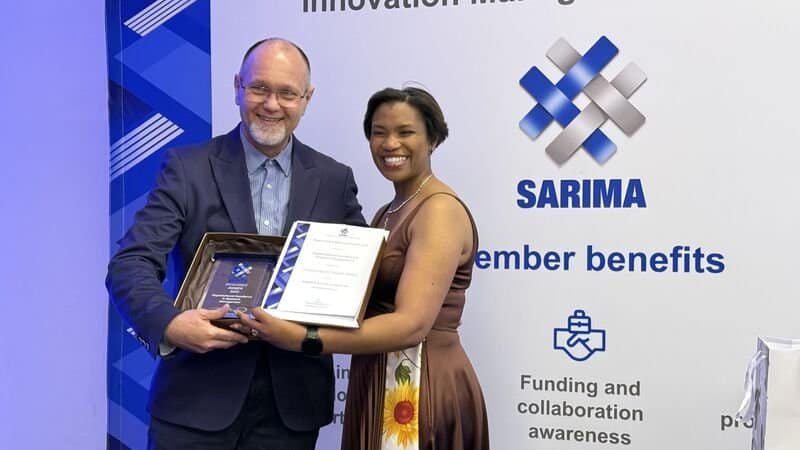
The news broke not as a shock, but as a confirmation—a quiet, resonant chord struck deep within the heart of Africa’s largest university.
When the University of South Africa (UNISA) was announced as the double winner at the Southern African Research and Innovation Management Association (SARIMA) awards recently, it felt less like a surprise to many and more like a continent exhaling a sigh of pride.
SARIMA brings together research and innovation management practitioners to reinforce various disciplines and institutional capabilities across the Southern African Development Community (SADC) region.
The first award, the Organisational Excellence in Research Management Award, was a tribute to the monumental, often invisible, architecture that held up UNISA’s vast scholarly ecosystem.
For a university that teaches 378,000 students worldwide, distance is not just a challenge; it is the very condition of its existence. This award recognised the triumph of a system meticulously designed to nurture research excellence across thousands of kilometres.
The second award, the Early Career Excellence in Research Award, honours individual researchers, specifically in the crucial early stages of their careers.
The award does not just recognise a brilliant new mind; it recognises the effective partnership between that researcher and the research support ecosystem of their institution. It celebrates potential being successfully translated into practice.

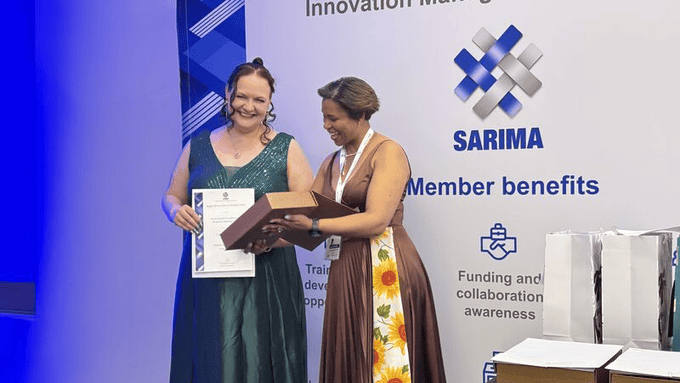
In essence, the Early Career Excellence in Research Award recognises such things as the individual researcher’s demonstrable research excellence and impact, quality, originality, project management, research integrity, and grant success.
Inspiring future researchers
Leonie Louw, Research Ethics Officer in the Directorate of Research Support under the Research Integrity Office, was awarded the Early Career Excellence in Research Management Award.
Louw described the honour as both humbling and inspiring.
“It affirms the importance of embedding ethics and integrity in research management, and reminds me of our shared responsibility to safeguard the credibility of scholarship,” a proud Louw said.
“I look forward to continuing supporting Unisa’s researchers and students in building a transparent and ethical research culture that can inspire future generations.”
Unisa has bagged the Organisational Excellence in Research Management Award for the second time in 10 years. The institution grabbed it for the first time in May 2015, demonstrating the university’s research excellence.


Professor Les Labuschagne, Unisa’s Executive Director of the Department of Research, Innovation and Commercialisation (DRIC), commended all university stakeholders for their hard work and dedication towards impactful research.
He said the recognition by SARIMA bore testament to the vision of the entire DRIC team, as well as the institution’s unwavering support.
“We are especially proud of initiatives such as the Researcher Development Academy (RDA), and the Research Integrity Ambassadors Programme, which continue to strengthen our research ecosystem,” said Labuschagne.
“Together, we continue building a vibrant, inclusive, and globally impactful research culture,” added Labuschagne, who hailed SARIMA for the recognition.
He reiterated that the DRIC is guided by a commitment to advancing research, nurturing innovation, and creating enabling environments where researchers are acknowledged for engaging in fact-finding data collection.
They are also recognised for analysing practical knowledge to enrich academia and benefit the broader society.
Awards boost Unisa’s reputation
The effect on UNISA’s reputation was both immediate and profound, rippling outwards in concentric circles.

Internally, it was a thunderous vote of confidence. For the thousands of postgraduate students and researchers studying after a long day’s work, the SARIMA awards may have sent a profound message: Your work matters. The platform supporting you is world-class.
The recognition also sent a morale-boosting message to the rest of the Unisa stakeholders that they are part of an institution that punches above its weight in African research.
Nationally, the SARIMA awards solidified UNISA’s reputation as the pioneering, accessible and vast “people’s” university. They demonstrated that accessibility and elite research excellence were not mutually exclusive but could be powerfully intertwined.
Globally, the SARIMA awards serve as a trusted seal of approval, signalling to international partners, who may have previously viewed UNISA through a narrow lens of scale, that it is a highly sophisticated institution.

