


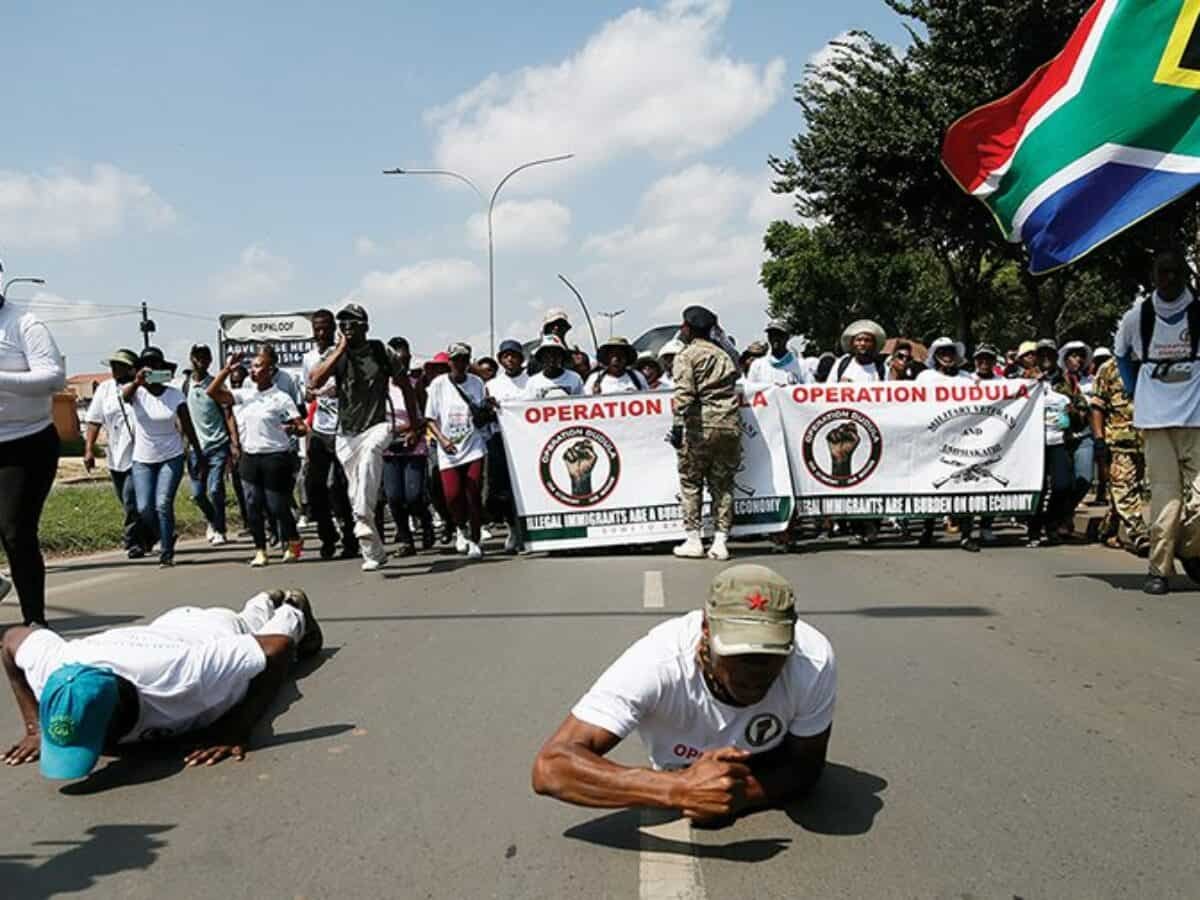
It’s important to lay down the foundation of knowledge and data about the extent of attacks on illegal immigrants in South Africa over the past decade or so. Many debates arise within the topics of migration, migrant rights, and the structures and systems when it comes to how wide the scope should be considered in determining the degrees of migrants’ legality in a state.
Globally, immigration debates have given rise to Nationalist parties rising in countries all over the world. The rise of Donald Trump in the USA, the split between the EU and the UK, and the new partnerships across Europe have all been, in some part, a result of immigration policies meeting new pressures to address intranational economic stresses. Globalisation does not seem to neatly package the issue of migrant workers or the manner in which immigrants are legalised into various national systems across many different countries. In many instances, there is a somewhat rise in the negative rhetoric around immigrants that has justified the similar rise in vigilantism against them.
It is imperative that we do not use lawlessness to address the issue of immigration in South Africa effectively. Are vigilante groups, such as Operation Dudula, solving the problem of social inequality in accessing national resources, including healthcare, education, and employment, in South Africa? Or are they further complicating the matter of dealing with the effects of migrants in the socio-economic sphere of South Africa? Finally, what are the long-term consequences of alienating specific groups of migrants (identified as African migrants) in a manner that may neither solve the inequalities in South Africa nor those in the Southern African region in general?
We are correct to say that as many immigrants from African countries come to seek “refuge” in South Africa due to circumstances in their home countries. Traditionally, refugee status on the basis of fleeing existential conflict has been the moniker for granting refugee approval into a nation. However, new definitions of existential conflict have extended to numerous different types of plight, such as political persecution, and critical economic issues (unemployment, hyperinflation, lack of job markets). Broadening the scope and understanding of acceptable types of unregistered immigrant cases may or may not be the answer, but it is worth a serious level of discussion.
A second area of migration that needs to be clarified is, why there is a need to criminalise undocumented migrants instead of providing more robust means of legal entry. When the law perceives undocumented individuals on a binary basis (legal or illegal), it allows for both law enforcement and the general public to treat them as common criminals. Who then does law enforcement protect when there is a case of an undocumented individual being attacked by a South African national? The South African who is threatened by the presence of the migrant and acts according to that “threat”, or the migrant who is already existing outside of the law?
What are the provisions in law and the due process elements available to protect the dignity of the undocumented – and thus illegal – immigrant? The argument here is that vigilantism is effectively legitimised once the matter is framed as an existential threat to the citizen. This raises another question. Where are the immigration services? Where is the Department of Social Development? Where is the Department of Home Affairs? Where is the authority of border officials’ control management? Why are issues arising as defined by them? Is the government of South Africa not initiating methods of integration? How do they properly record the immigrants within the informal sector who seek refuge and a home?
We direct this questioning to the philosophy of Black Consciousness by Steve Biko, who once remarked that “Black people cannot be racist”. In our daily lives, we see some black people discriminating against other black people. How does one become illegal in their own continent? We have a multiplicity of identities and nationalities as black South Africans, borne of the History of the continent. Our identity is not monolithic; we have a multiplicity of identities. What should hold us together should be Africanism, which is our blackness.
South Africa’s foreign policy is deeply rooted in the protection of human rights, as demonstrated by its representation of Palestine in the International Court of Justice (ICJ). If we can stand up for others internationally, why can’t we protect fellow Africans on our own continent? We must recall the forefathers of Pan-Africanism, who defined an African as someone “who upholds loyalty to the continent, its resources, and its people. So, how can we reconcile this with Operation Dudula? Does this reflect self-hatred and a failure to uphold the principles of Pan-Africanism? To provide a simple explanation, to “Dudula” means to forcefully push people away—something that goes against the spirit of African solidarity.
The problem lies in how local politicians and councillors are using vigilante groups like Operation Dudula as a tool for their election campaigns. Several political parties, for instance, have used the slogan “Mabahambe” during their campaigns but abandoned it once they assumed office. The slogan has become a political catchphrase, used to attract votes rather than address the underlying issues.
How should the South African government respond to Operation Dudula? The leaders of these movements target people who believe in their message, but we need to understand and deconstruct that message. We need academics, organisations, and researchers who are peaceful and integrationist in their approach. They can assist with addressing immigration issues and provide a bridge between the Department of Home Affairs, immigrants, and the various legal categories they fall into.
Why isn’t Operation Dudula targeting illegal white or European immigrants? It is important to note that Asian or white Europeans are rarely attacked. While Western European nationals may face some challenges, it is predominantly African immigrants who are dehumanised, denied access to public healthcare, and excluded from education in South Africa. This selective application of humanism—where rights are extended only to certain races—undermines the values of equality and justice. As Africans, we often fail to apply the principles of Black Consciousness, Pan-Africanism, and Ubuntu—our core philosophies—when addressing issues that divide us.
We have three African philosophies that should guide us in our African identity, but Dudula is not a positive form of activism. Vigilantism has never been a productive solution, and it certainly isn’t activism. What we need are researchers, academic institutions, democracy observers, and social movements—not mere “sloganists.” Yes, we have the right to freedom of expression and freedom of association, but our rights are not unlimited. You cannot claim the right to form a group that antagonises others.
The objectives of social movements should focus on peace, unity, and the integration of Africans both on the continent and in the diaspora. It is important to note that just because an immigrant’s documentation may be incomplete or out of order does not make them a criminal. Crossing the border without proper documentation falls under immigration law, not criminal law. These individuals are not criminals; they are simply undocumented, and the legal process must be followed to determine their status.
What Needs to Be Addressed
The issue of permits must be addressed with better communication from the Department of International Relations and Cooperation (DIRCO). Why do we have diplomatic attachés and commissioners from other countries if there is a backlog in registering immigrants legally? The process needs to be fast-tracked, making it more accessible to everyone. The South African government should also assist with processing documentation, such as work permits, to ensure that immigrants are properly protected.
Advocacy groups are needed as intermediaries between locals and immigrants in South Africa. We must create a space for dialogue and integration. As Africans, we need to begin viewing each other as neighbours in solidarity. Should we hold the South African government departments, such as Social Development, accountable for not engaging with Operation Dudula and properly categorising these groups within the framework of social cohesion?
Ultimately, South Africa is a fully functioning democracy, grounded in the values of Ubuntu and social cohesion. The South African Constitution, Bill of Rights, guarantees that everyone has the right to reside where they choose and to receive essential services, including healthcare, housing, and education. Nowhere is it said that non-citizens should be discriminated against. In South Africa, we have citizens and non-citizens, foreigners and nationals—all of whom fall under the protection of the South African Constitution.

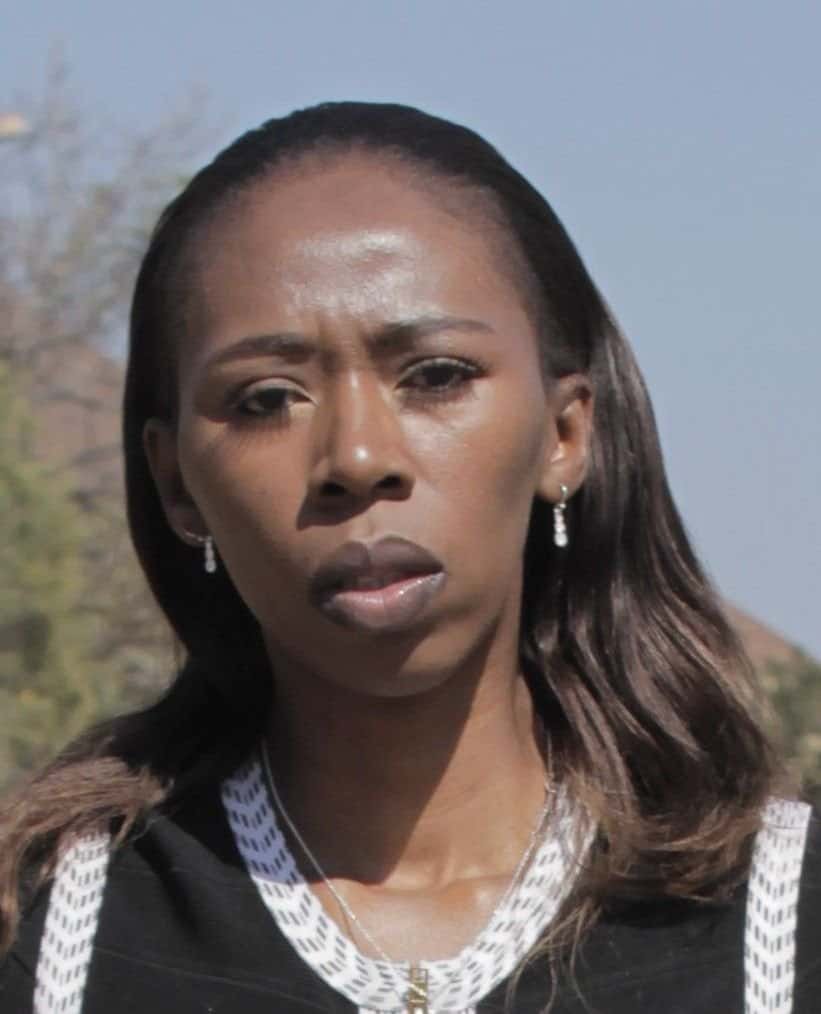
Dr Lefatshe Moagi is a Lecturer in the Department of Political Sciences (CHS) at the University of South Africa.

