South Africa’s police service is facing a crisis of legitimacy after fresh statistics revealed plummeting public trust, while shocking arrests of officers accused of violent crimes highlight the rot within the South African Police Service (SAPS).
The latest Stats SA Governance, Public Safety and Justice Survey (GPSJS) 2024/25, released this week, paints a grim picture of a country where citizens no longer believe the police can or will protect them.
According to the survey, only 51% of the more than 200,000 households affected by robberies reported these crimes to SAPS, while more than 60% of the 1.3 million individuals who experienced theft of personal property never went to the police.
The refusal to report crime, civil society says, is not simply an administrative problem but a glaring symptom of broken trust.
“When communities stop reporting crime, it is because they no longer believe the police can or will protect them. Such a breakdown undermines both the rule of law and the fight against crime,” said Siyabulela Jentile, president of Not In My Name International.
The survey further revealed that South Africans, particularly women, feel unsafe walking in their own communities. For Jentile, this represents a tragic surrender of constitutional rights.
“Safety is not a privilege; it is a constitutional guarantee,” he said. “South Africans deserve a police service they can trust, one that protects rather than alienates.”
Civil society groups also slammed the delays in starting the Madlanga Commission of Inquiry into allegations of corruption within SAPS. The commission, announced earlier this year as a major step towards transparency, has yet to begin its work.
“Every day that passes without the Commission beginning only emboldens corrupt networks within the police,” Jentile warned. “It deepens the rot and erodes accountability.”
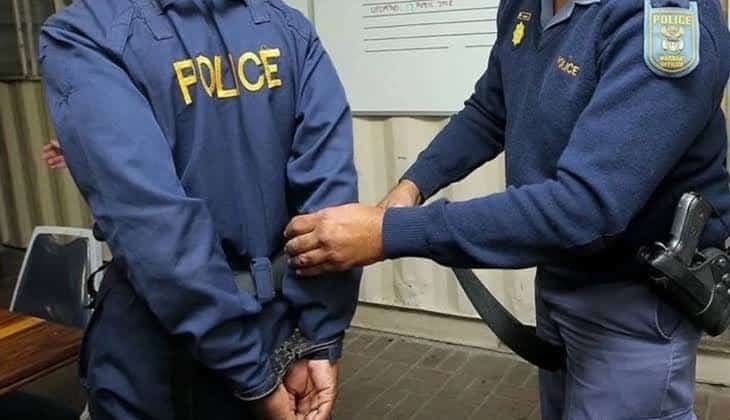
As these findings were released, three Mpumalanga police officers appeared in court facing murder charges.
The Evander Magistrates’ Court on Tuesday postponed the case against Constables Simangele Shabangu (34), Musa Hlanze (33), and Lucky Mahlangu (34) of the Embalenhle SAPS, who are accused of killing a motorist earlier this month.
According to the Independent Police Investigative Directorate (IPID), the officers responded to a multi-vehicle crash on the R546 between Embalenhle and Evander on 17 August 2025. When one of the motorists allegedly fled the scene, the officers gave chase, arrested him, and allegedly assaulted him. The man sustained severe head injuries and later died in hospital.
The three constables were arrested on 25 August after an IPID probe. They remain in custody until their bail hearing on Thursday, 28 August.
The case has sparked outrage among religious leaders. The South African Union Council of Independent Churches (SAUCIC) strongly condemned the killing.
“The cancer of corruption and organised crime within SAPS must be eradicated if communities are to trust policing again,” said SAUCIC president Cardinal Archbishop Dr Modiri Patrick Shole. “You cannot run with the hares and hunt with the hounds.”
Shole called for urgent intervention by Acting Police Minister Professor Firoz Cachalia and SAPS leadership to stabilise provincial management and enforce discipline.
“Nothing short of a major purge of criminal syndicates within SAPS will restore integrity,” he said.
The Embalenhle case is not isolated. In recent years, SAPS members have repeatedly been arrested for crimes ranging from bribery and extortion to robbery, rape and murder. Each incident erodes public trust further, reinforcing the perception that police are part of the crime problem rather than the solution.
Crime experts warn that this dual crisis—police criminality on one hand and citizens refusing to report crime on the other—creates a vicious cycle. Communities stop cooperating with police, which in turn weakens crime detection and prevention, creating fertile ground for more criminal activity.
For civil society, the message is clear: SAPS is in crisis, and the time for symbolic gestures is over.
Not In My Name International has called for: visible accountability and leadership that demonstrates responsiveness and transparency, community-centred policing that prioritises grassroots safety concerns rather than top-down directives, and gender-sensitive strategies, recognising that women bear the brunt of insecurity.
“Restoring public confidence in SAPS requires treating this as a national emergency,” Jentile stressed.
The decline in trust between police and communities poses a direct threat to South Africa’s democracy. A state that cannot guarantee safety, experts argue, is a state whose authority is in jeopardy.
As the courts deliberate on cases like Embalenhle and as the Madlanga Commission remains stalled, ordinary South Africans are left to grapple with an uncomfortable reality: the very institution meant to protect them is increasingly viewed as untrustworthy, even dangerous.
Until visible reforms are made, the gap between citizens and the police will continue to widen—leaving South Africa’s most vulnerable even more exposed to crime and violence.
“Not In My Name International notes with grave concern the findings of Stats SA’s Governance, Public Safety and Justice Survey (GPSJS) 2024/25, released today, which reveal a deep and troubling lack of public trust in the South African Police Service (SAPS).
“According to the survey, a significant number of households that experience crimes such as house break-ins and robberies are choosing not to report these incidents to SAPS. Only 51% of the more than 200 000 households affected by robberies came forward, while over 60% of the 1.3 million individuals affected by theft of personal property did not report to the police.
“This is more than a statistical concern, it is a direct reflection of the broken relationship between citizens and law enforcement. When communities stop reporting crime, it is because they no longer believe the police can or will protect them. Such a breakdown in trust undermines both the rule of law and the fight against crime.
“The survey further highlights that South Africans, particularly women, feel unsafe walking in their own communities. This represents a tragic surrender of our constitutional right to safety and freedom of movement to crime and criminality. In a democracy built on the promise of dignity and justice, this cannot be acceptable.
“Adding to this crisis is the unjustifiable delay in commencing the Madlanga Commission of Inquiry into allegations of corruption within the SAPS. Every day that passes without the Commission beginning its work only deepens the rot, erodes accountability, and emboldens corrupt networks within the police service. South Africans deserve to know why this process, which was promised as a step towards transparency, remains stalled while public trust continues to collapse.
“We call on the Acting Minister of Police, the National Commissioner of SAPS, and all relevant authorities to treat these findings as a national emergency. Restoring public confidence requires visible accountability and leadership that demonstrates responsiveness and transparency; community-centred policing which prioritises grassroots safety concerns, not just top-down directives; and lastly, Gender-sensitive approaches, recognising that women bear the brunt of insecurity and tailoring policing strategies accordingly.
“We reiterate that safety is not a privilege; it is a constitutional guarantee. South Africans deserve a police service that they can trust, one that protects rather than alienates, one that restores faith instead of eroding it.” said Siyabulela Jentile, president of Not In My Name International

African Times on Tuesday also reported South Africa’s police service is once again under the spotlight after a string of shocking arrests of officers accused of violent crimes — including murder. Civil society and crime experts warn that the growing pattern of police criminality is eroding public trust in law enforcement and deepening the country’s broader crime crisis.
On Tuesday, the Evander Magistrates’ Court postponed the case against three Mpumalanga constables accused of the brutal killing of a motorist.
Constables Simangele Shabangu (34), Musa Hlanze (33), and Lucky Mahlangu (34) of the Embalenhle SAPS face charges of murder and defeating the ends of justice.
According to the Independent Police Investigative Directorate (IPID), the officers responded to a multi-vehicle crash on the R546 between Embalenhle and Evander in the early hours of 17 August 2025. One of the motorists involved allegedly fled the scene. The officers gave chase, arrested him, and allegedly assaulted him. The man sustained severe head injuries and died in hospital days later.
The three constables were arrested on 25 August after an IPID investigation and made their first court appearance on Tuesday. They will remain in custody until their bail hearing on Thursday, 28 August.
The South African Union Council of Independent Churches (SAUCIC) strongly condemned the Embalenhle case and called for a clean-up of SAPS.
SAUCIC President Cardinal Archbishop Dr Modiri Patrick Shole said: “The cancer of corruption and organised crime within SAPS must be eradicated if communities are to trust policing again. You cannot run with the hares and hunt with the hounds.”
Shole urged the Acting Minister of Police, Professor Firoz Cachalia, and SAPS leadership to urgently stabilise provincial management and enforce discipline.
“Nothing short of a major purge of criminal syndicates within SAPS will restore integrity,” he said.