


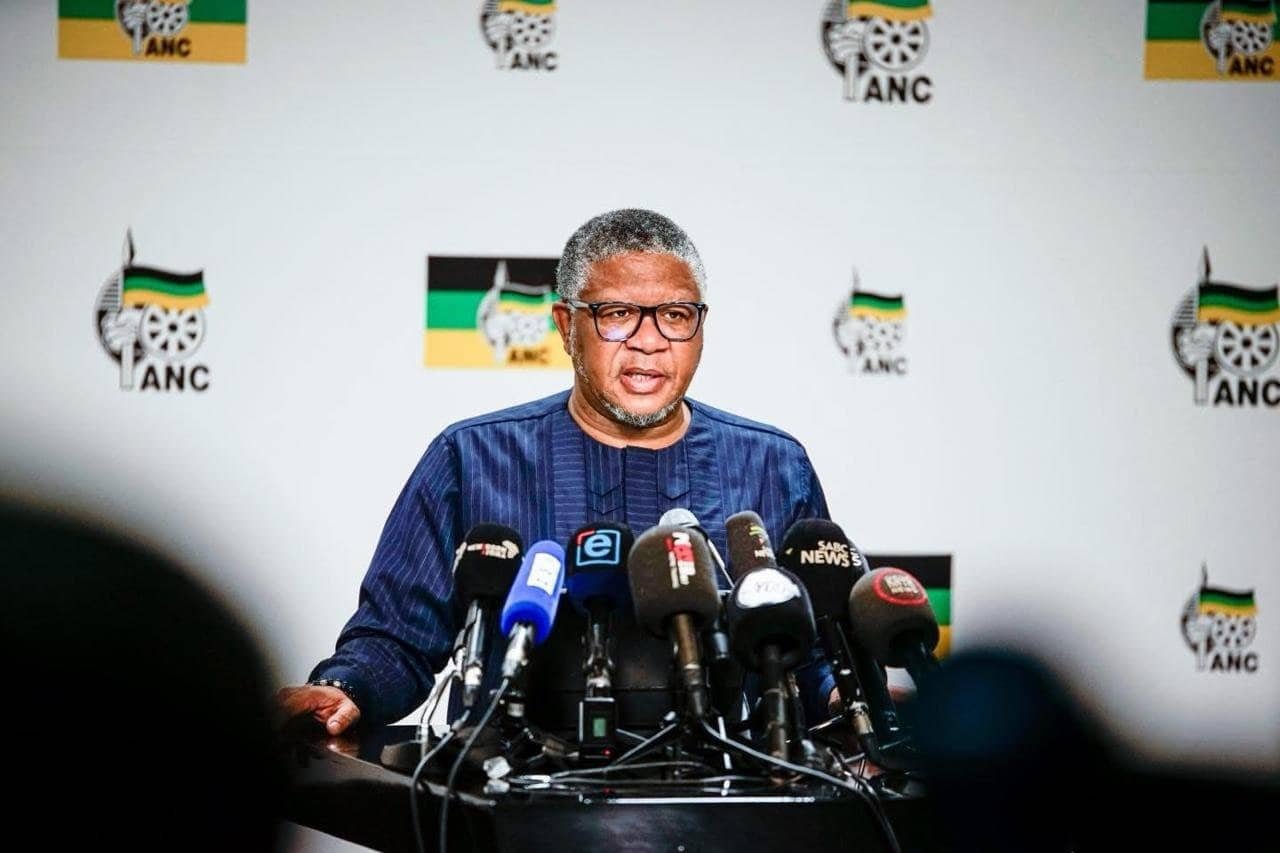
The African National Congress (ANC) has issued a firm directive halting all planned regional and provincial conferences unless expressly authorised in writing by the party’s Secretary General, Fikile Mbalula.
This comes as internal disputes and complaints from Branch General Meetings (BGMs) and Branch Biennial General Meetings (BBGMs) threaten to derail the party’s already fragile unity ahead of key political realignments.
In a circular dated 7 August 2025, Mbalula informed all provincial and regional secretaries that no ANC conference — whether elective or consultative — may go ahead without a formal letter of approval from his office.
This decision was endorsed by the National Executive Committee (NEC) during its regular meeting held from 1 to 4 August.
According to Mbalula, the NEC resolved that the National Dispute Resolution Committee (NDRC) and National Dispute Resolution Appeal Committee (NDRA) must first submit final reports on all outstanding disputes before his office issues any correspondence authorising a conference.
“The PDRC (Provincial Dispute Resolution Committee) must report to the Provincial Secretary, who in turn must inform the Secretary General in writing,” said Mbalula. “This will avoid unnecessary postponements and fruitless expenditures.”
This move appears aimed at reigning in rising tensions in provinces such as the Eastern Cape, KwaZulu-Natal, and Mpumalanga — where unresolved branch-level disputes have previously resulted in parallel structures, court interdicts, and violence.
Political analysts say the latest instruction from Luthuli House is a direct blow to factions hoping to use upcoming conferences to consolidate regional power ahead of the ANC’s crucial National General Council (NGC) expected early next year.
“This directive delays the ambitions of local power blocs,” said political analyst Nkele Motsamai. “It gives the SG’s office and the NEC central control over conference timing and logistics — effectively sidelining regions that are rushing to host conferences in defiance of national processes.”
Several ANC insiders told African Times that some regional leaders had already secured venues and begun mobilising delegates in anticipation of August and September conferences — plans that must now be shelved until formal approval letters are issued.
The directive appears to be a response to what insiders are calling the “Ethekwini Scenario” — a reference to the explosive ANC eThekwini regional conference in 2022, which was marred by last-minute court interdicts, security breaches, and allegations of fraudulent credentials.
By demanding full compliance with the dispute resolution process, Mbalula and the NEC are attempting to prevent a repeat of such incidents, which have damaged the party’s reputation and provided fodder for political opponents.
“This is about bringing discipline and order,” a senior NEC deployee told journalists. “Some comrades treat ANC conferences like warzones where rules don’t apply. The NEC is saying, ‘Not anymore.’”
The instruction also introduces a stricter reporting line: the PDRC must submit to the Provincial Secretary, who then corresponds with the SG. This not only centralises power in the SG’s office but reinforces a top-down approach that some believe may frustrate grassroots democracy within the party.
Still, Mbalula insists the goal is to “avoid undue pressure” on dispute structures and prevent conferences from being disrupted or postponed due to unresolved grievances.
Until further notice, no ANC provincial or regional conference can legally proceed unless it has been cleared by the Secretary General himself.
The directive affects scheduling, budgeting, and mobilisation — with significant implications for political balance within the ruling party.
Questions are already being asked about how this will affect regions such as the Vhembe Region in Limpopo and the Moses Mabhida Region in KZN, where internal battles over conference legitimacy have turned violent in recent years.
For now, the message from Luthuli House is clear: discipline before democracy — and no conference without the green light from Fikile Mbalula.

