


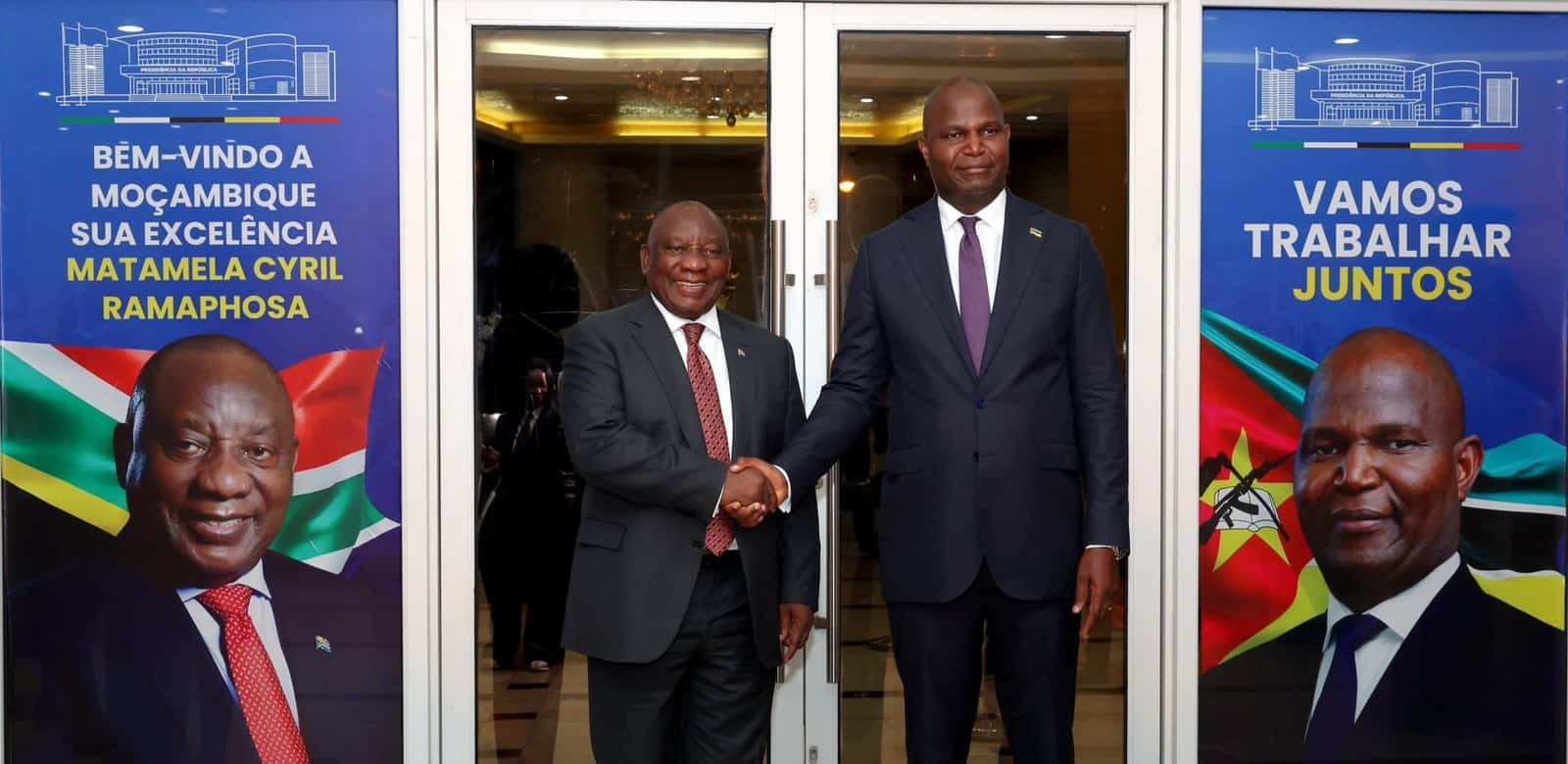


When Mozambican and South African officials gathered in Maputo this week to sign a new Tourism Action Plan, the agreement appeared, at first glance, to be a sector-specific initiative timed to coincide with the launch of Mozambique’s 2025/2026 High Tourism Season. But beneath the formalities and speeches lies a broader and more ambitious vision: a recalibration of bilateral cooperation spanning tourism, energy, logistics, economic development and regional integration.
The signing took place against the backdrop of a two-day working visit by South African President Cyril Ramaphosa, who arrived in Maputo accompanied by a large ministerial and business delegation. The scale of the visit – and the breadth of the cooperation instruments signed – underscored the strategic value both nations place on revitalising their long-standing partnership.
What emerged over these days was not merely a set of agreements, but a declaration that the futures of the two neighbouring nations are increasingly intertwined.
Tourism as a Catalyst for Regional Growth
The Tourism Action Plan, signed on Thursday, aims to deepen a sector that already acts as a powerful engine for cross-border mobility and shared prosperity. With more than 2.6 million tourists travelling between the two countries this year alone, the corridor linking Mozambique and South Africa is one of the most active in Southern Africa.
Of these movements, 1.6 million Mozambicans visited South Africa, contributing an estimated 4.2 billion rand to the South African economy. Meanwhile, almost one million South Africans travelled to Mozambique, reinforcing South Africa’s position as one of Mozambique’s most important tourist source markets.
Mozambique’s Minister of Economy, Basílio Muhate, framed the agreement as a pivotal step in sustainable tourism development.
“This plan will stimulate mutual progress, attract more visitors and strengthen regional integration, especially as we launch the high tourism season,” Muhate said.
Key goals include easing mobility for travellers, promoting joint marketing campaigns, improving border efficiency and enhancing investment cooperation between tourism operators in both countries.
One of the most emblematic initiatives is the ongoing South African investment on Santa Carolina Island in Inhambane – a US$102 million project designed to diversify Mozambique’s tourism portfolio through new infrastructure, cultural experiences and nature-based attractions.
South Africa’s Tourism Minister Patricia de Lille emphasised the rising economic importance of these flows.
“We continue to invest in joint promotion between our countries, and we invite both South Africans and Mozambicans to explore the diverse destinations our region has to offer.” De Lille said.
To further boost tourism, both governments are studying an extension of visitor stay limits from 30 to 90 days, a move expected to attract longer stays and greater spending.

A Broader Vision: Energy, Logistics and Economic Resilience
While tourism dominated headlines, the deeper strategic discussions unfolded across multiple sectors – especially energy, transport and regional infrastructure.
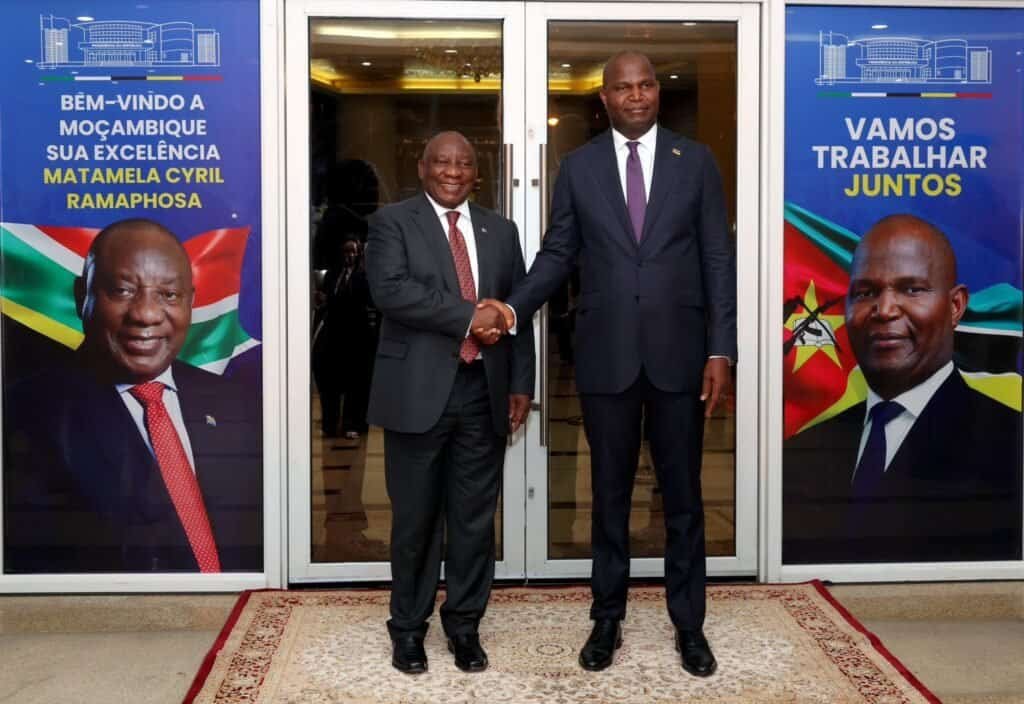
President Daniel Chapo and President Cyril Ramaphosa both highlighted the significance of the IV Binational Commission, the high-level mechanism guiding cooperation.
Chapo was emphatic. “We are opening a new page in our cooperation. We revisited and strengthened key areas, particularly energy, where we emphasised the importance of a strategic partnership between our governments and private sectors,” Chapo said.
The two leaders agreed to prioritise diversification of energy sources, expand power generation and transmission infrastructure, and modernise development corridors – including the Maputo Corridor and future routes such as Ponta do Ouro and Mapinhane-Pafúri.
Central to these ambitions is the creation of one-stop border posts, beginning with the busy Ressano Garcia–Lebombo crossing. Chapo called this a transformative step.
“Our people need this. The private sector is calling for the free movement of goods and people.” Chapo said
The Inhambane Milestone: A New Era for Energy Cooperation
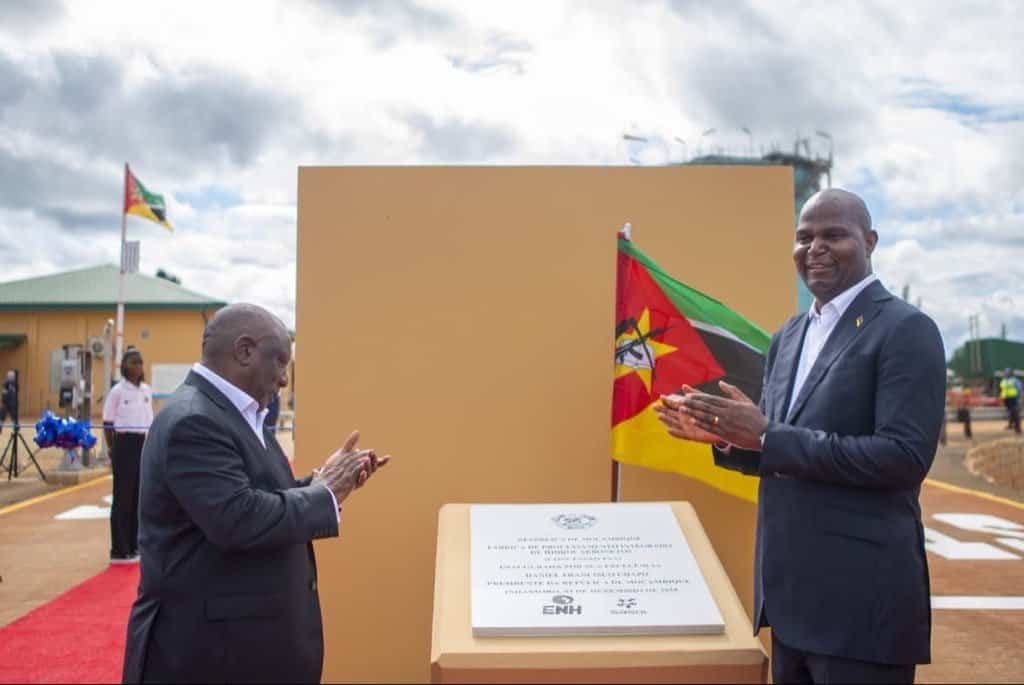
One of the most symbolic moments of the visit occurred in Inhambane, where the two presidents inaugurated the Integrated Domestic Gas Processing Facility, a US$1 billion project under the Production Sharing Agreement between Mozambique and South African energy giant Sasol.
Ramaphosa described the plant as a cornerstone of Southern Africa’s energy future. “Mozambique’s gas must be harnessed for the good of Mozambicans and the entire Southern African region. This is an imperative for our shared development.” Ramaphosa said.
The facility will produce:
- 53 million megajoules of natural gas per year
- 4,000 barrels of light oil per day
- 30,000 tonnes of LPG annually, enough to supply domestic cooking gas markets
It will also power the Temane Thermal Plant, expected to generate 450 megawatts of electricity, strengthening regional energy security.
For Ramaphosa, the project exemplifies what coordinated regional cooperation can achieve. And for Chapo, it is proof of Mozambique’s rising role in the energy landscape: “Mozambique and South Africa do not grow apart – we grow together.”

Towards Economic Independence and Shared Prosperity
In Maputo, President Chapo issued a call for joint efforts toward the economic independence of both nations.
“We are neighbours and brothers forever. We share a history of struggle – against colonialism and against Apartheid. We must now continue the struggle for development, better living conditions and economic independence.” Chapo said.
Six new legal instruments were signed, covering higher education, labour, maritime security, energy, transport and broader economic cooperation.
Chapo stressed the need for these agreements to translate into tangible results, with private sector involvement at their core.
Ramaphosa echoed the sentiment. “We must implement our decisions and explore new investment avenues for mutual benefit. South Africa’s development finance institutions are ready to work with Mozambique.” Ramaphosa said.
He called for deeper cooperation across energy, mining, agriculture, financial services, health, tourism, security and border management – noting that Mozambique is an increasingly strategic partner for South Africa.
A Region Moving Forward Together
From tourism and trade to energy and infrastructure, the agreements signed this week mark a decisive step in reaffirming a partnership anchored in history but looking firmly towards the future.
Economic integration is no longer an aspiration but an active process – one that leaders on both sides insist will generate jobs, foster sustainable development and strengthen the fabric of regional stability.
The message emerging from Maputo is unmistakable: Mozambique and South Africa intend to rise together, building a more secure, prosperous and interconnected Southern Africa.

