


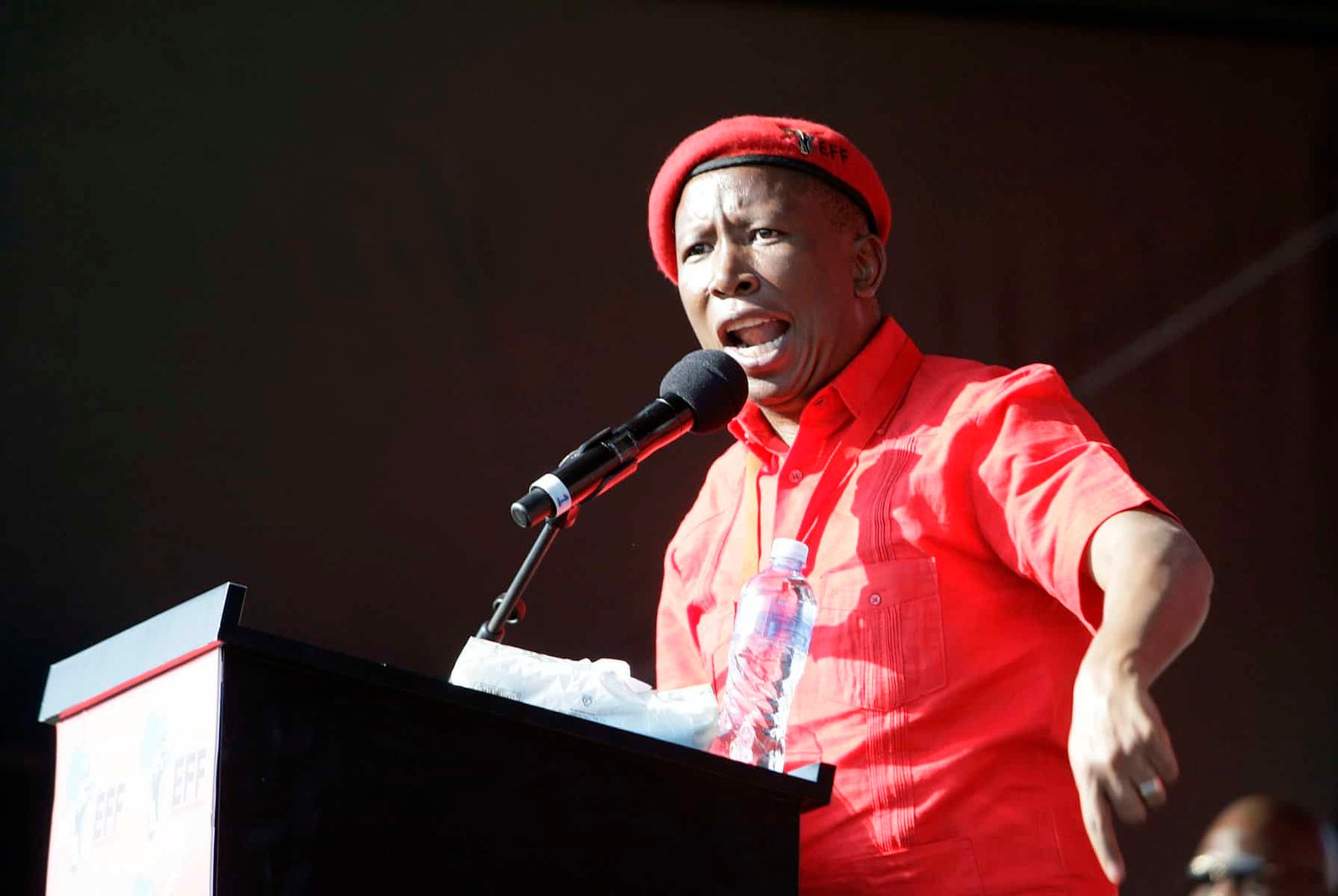
The South African Human Rights Commission (SAHRC) has welcomed a landmark ruling by the Western Cape Equality Court declaring that statements made by Economic Freedom Fighters (EFF) leader Julius Malema in 2022 amounted to hate speech and incitement to violence. The ruling, delivered on Tuesday, 27 August 2025, found both Malema and the EFF jointly and severally liable for legal costs.
The case stems from a fiery speech Malema delivered at the EFF’s Western Cape Provincial People’s Assembly in October 2022. In his address, Malema called on party members to confront racism “with violence” and told supporters that “revolutionaries must not be scared to kill.” He also urged them to “follow up” on a white man filmed during a confrontation outside Brackenfell High School, suggesting that the individual be “taken to an isolated space” and “attended to properly.”
The SAHRC launched litigation in November 2022 after receiving multiple public complaints, concluding that Malema’s remarks violated protections against hate speech contained in both the Constitution and the Promotion of Equality and Prevention of Unfair Discrimination Act (Equality Act).
In its judgment, the Equality Court ruled that Malema’s remarks “included clear exhortations to violence against a specific racial group—white men—based on race and political belief.” The Court dismissed the EFF’s argument that the words were metaphorical or revolutionary rhetoric, holding instead that they were “direct, unambiguous incitements to violence, cloaked in ideological language.”
“The judgment reaffirms that freedom of expression, while fundamental, does not extend to advocacy of hatred that constitutes incitement to cause harm, particularly when such statements are made by persons in positions of power,” the SAHRC said in a statement.
The Court stressed the dangers of public figures normalising violent rhetoric, saying that such speech undermines human dignity and weakens social cohesion.
The Commission welcomed the judgment as an important affirmation of constitutional values. “This outcome strengthens the principle that political engagement cannot be used to justify violence or deepen racial polarisation,” the SAHRC said.
It added that the ruling sends a message that hate speech—particularly when uttered by national leaders—will not be tolerated in a constitutional democracy.
The Commission emphasised, however, that the judgment only addresses the merits of the complaint, with a separate process still to follow regarding the relief to be imposed.
The EFF reacted sharply to the ruling, dismissing it as a misinterpretation of history and revolutionary politics. In a statement, party spokesperson Sinawo Thambo accused the Court of criminalising black consciousness and silencing radical critique of white supremacy.
“This judgment is a grave distortion of history, philosophy, and the nature of political speech in a democratic society,” the EFF said.
The party argued that Malema’s remarks must be understood within their historical and ideological context. “Racism itself is violence and cannot be passively endured. Malema’s speech was not an instruction to kill white people but a revolutionary critique of structural oppression,” Thambo said.


According to the EFF, the Court ignored the Brackenfell High School incident—where black protesters were allegedly assaulted—as well as South Africa’s history of structural violence against black people. The party insisted that Malema’s words reflected the irreconcilable conflict between “white supremacy and black consciousness” and were not operational orders to commit violence.
“The language of revolution cannot be sanitised to comfort the sensitivities of those who continue to enjoy the fruits of colonial dispossession,” the statement continued. “The real violence is the daily reality of landlessness, unemployment, and racism that black people endure.”
The EFF confirmed it would appeal the ruling at the Supreme Court of Appeal, framing the case as a battle for political freedom and historical truth.
The ruling reignites South Africa’s long-running debate over the limits of political expression. While freedom of speech is enshrined in Section 16 of the Constitution, the Equality Act prohibits advocacy of hatred that incites harm. Courts have historically struggled to draw the line between robust political speech and unlawful hate speech.
Legal experts suggest this judgment could set a powerful precedent, particularly as it targets not only the individual speaker but also the political party that enabled the rhetoric.
As the legal process moves into its next phase, the SAHRC has vowed to remain engaged, guided by its constitutional duty to promote equality and human dignity. The Commission stressed that it is not seeking to stifle political discourse, but rather to ensure that it does not spill into incitement of violence. Meanwhile, the EFF is preparing for a courtroom battle that could stretch to the Constitutional Court if necessary.
For now, the Equality Court’s judgment has intensified the spotlight on the delicate balance between free speech, revolutionary rhetoric, and hate speech in South Africa’s fragile democracy.

