More than 2.6 million South Africans are expected to cast their ballots during two days of special voting starting on Monday, as Cooperative Governance and Traditional Affairs Minister Velenkosini Hlabisa urges the country’s 29.2 million registered voters to participate in the 2026 Local Government Elections.
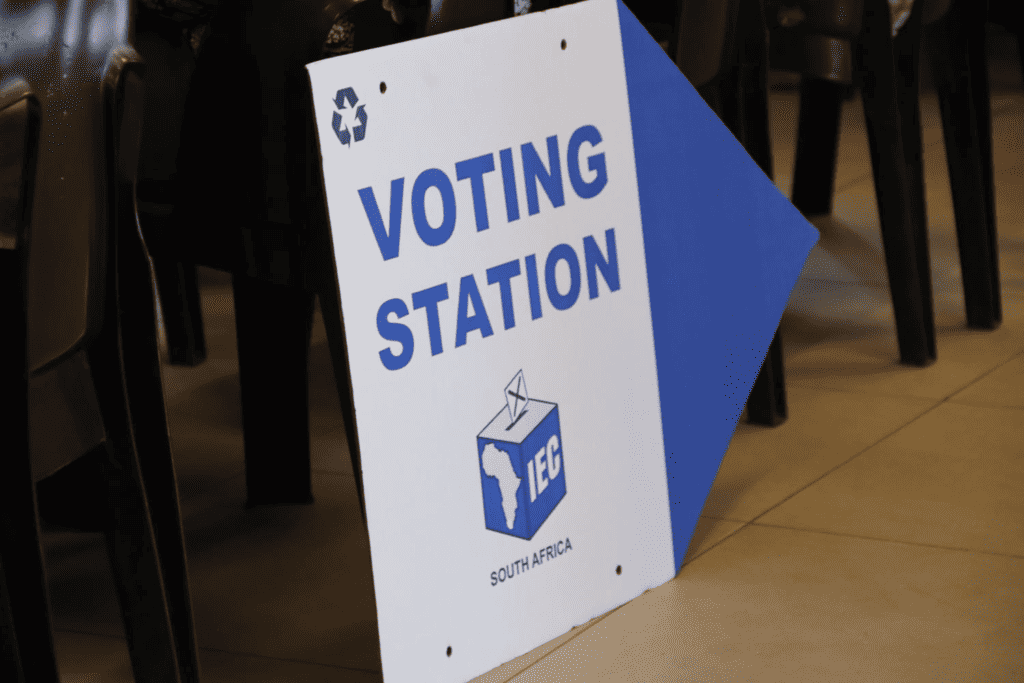
Special voting takes place on Monday, November 2, and Tuesday, November 3, ahead of the main voting day on Wednesday, November 4.
The Electoral Commission of South Africa (IEC) has approved 2,655,067 applications for special votes and deployed 127,000 electoral officials to administer the process across the country.
The special voting arrangements cater for registered voters who cannot reach their voting stations because of physical infirmity or disability, as well as those who will be unable to vote at their registered voting stations on Election Day.
Hlabisa has urged eligible voters to exercise their constitutional right, saying their participation is essential to ensuring that municipalities are led by representatives who are accountable to the communities they serve.
In a statement issued on Sunday, the minister said voting was one of the most important ways citizens could influence decisions affecting their lives and determine the future of their communities.
“Your vote does more than renew the democratic mandate of local government. It is an opportunity to demand accountability, better governance, improved service delivery and development that responds to the needs and aspirations of communities,” Hlabisa said.
He said the success of the next term of local government would depend not only on elected leaders and municipal administrations but also on active public participation and oversight.
Under the ministry’s theme, “Every Municipality Must Work”, Hlabisa said municipalities needed to respond to residents’ needs and improve service delivery.
He urged voters not to underestimate the power of their ballots.
“A stronger local government begins with active citizen participation. Through voting, communities have the opportunity to shape the leadership and direction of their municipalities and ensure that local government remains accountable to the people it serves,” he said.
IEC prepares for special voting
According to the IEC, 678,525 voters have been approved to cast their ballots through home visits because of physical infirmity or disability.
A further 1,976,542 voters have been approved to cast special votes at their registered voting stations.
Gauteng has the highest number of approved special voters, with 480,721, followed by the Eastern Cape with 401,971 and KwaZulu-Natal with 348,971.
Limpopo has 341,623 approved special voters, Mpumalanga 292,775, the Western Cape 291,866, North West 235,733, the Free State 132,088 and the Northern Cape 129,319.
Voting stations will be open from 8 am to 5 pm on both special voting days.
The IEC has appealed to voters approved for home visits to remain at the addresses provided in their applications until electoral officials arrive.
Officials will not return to an address if they fail to find an approved voter during their first visit, given the number of households they must reach within the two-day period.
However, voters who miss their scheduled home visits will still be able to vote at their registered voting stations on November 4.
The commission said special votes would remain securely stored and would not be counted on Monday or Tuesday. They would be reconciled with the relevant records before being counted alongside ballots cast on Election Day.
Voters can check their special-vote status by sending an SMS to 32711 at a cost of R1 per message.
Voting station details and voters’ roll sequence numbers can be checked through WhatsApp on 0600 88 0000, the IEC contact centre on 0800 11 8000 or by sending an SMS to 32810, also at a cost of R1.
The IEC has warned that rain could affect parts of KwaZulu-Natal, Gauteng, Mpumalanga and the Western Cape during special voting, while hot conditions are expected in North West, Limpopo, the Northern Cape and the Free State.
Security tightened ahead of Election Day
Meanwhile, the National Joint Operational and Intelligence Structure (NATJOINTS) has assured South Africans that security arrangements are in place to protect voters, electoral officials and election materials.
In a briefing on Sunday, NATJOINTS chairperson Lieutenant General Tebello Mosikili said national and provincial operational structures had been activated and were working with the IEC to ensure a safe electoral process.
The security cluster said deployments would be guided by intelligence assessments and identified risks, with voting stations categorised according to their security requirements.
It was reported that security assessments have considered possible threats arising from service delivery protests, community tensions, labour disputes and other developments that could destabilise the electoral environment.
The security cluster has also identified 331 high-risk voting stations nationally, with KwaZulu-Natal and Gauteng accounting for most of them.
Mosikili warned political parties and their supporters against intimidation, violence and attempts to disrupt voting.
She said access to voting stations and electoral offices must not be obstructed and that law enforcement would respond to criminal conduct while protecting lawful political participation.
The South African National Defence Force is also ready to support police in identified hotspot areas should the need arise.
The heightened security measures come as South Africans prepare to elect councillors who will oversee municipal services, infrastructure development and local economic growth.
Hlabisa has also urged voters to take precautions against extreme heat while queuing at voting stations, including carrying drinking water, wearing light clothing and using umbrellas or seeking shade.
He cautioned communities about the potential effects of an El Niño event extending into early 2027, urging residents to follow official weather advisories and take steps to protect vulnerable people.
The minister called on all registered voters to participate in the elections and help build capable, ethical and responsive municipalities.
“Do not sit on the sidelines while decisions about the future of your community are being made. Make your voice count,” he said.