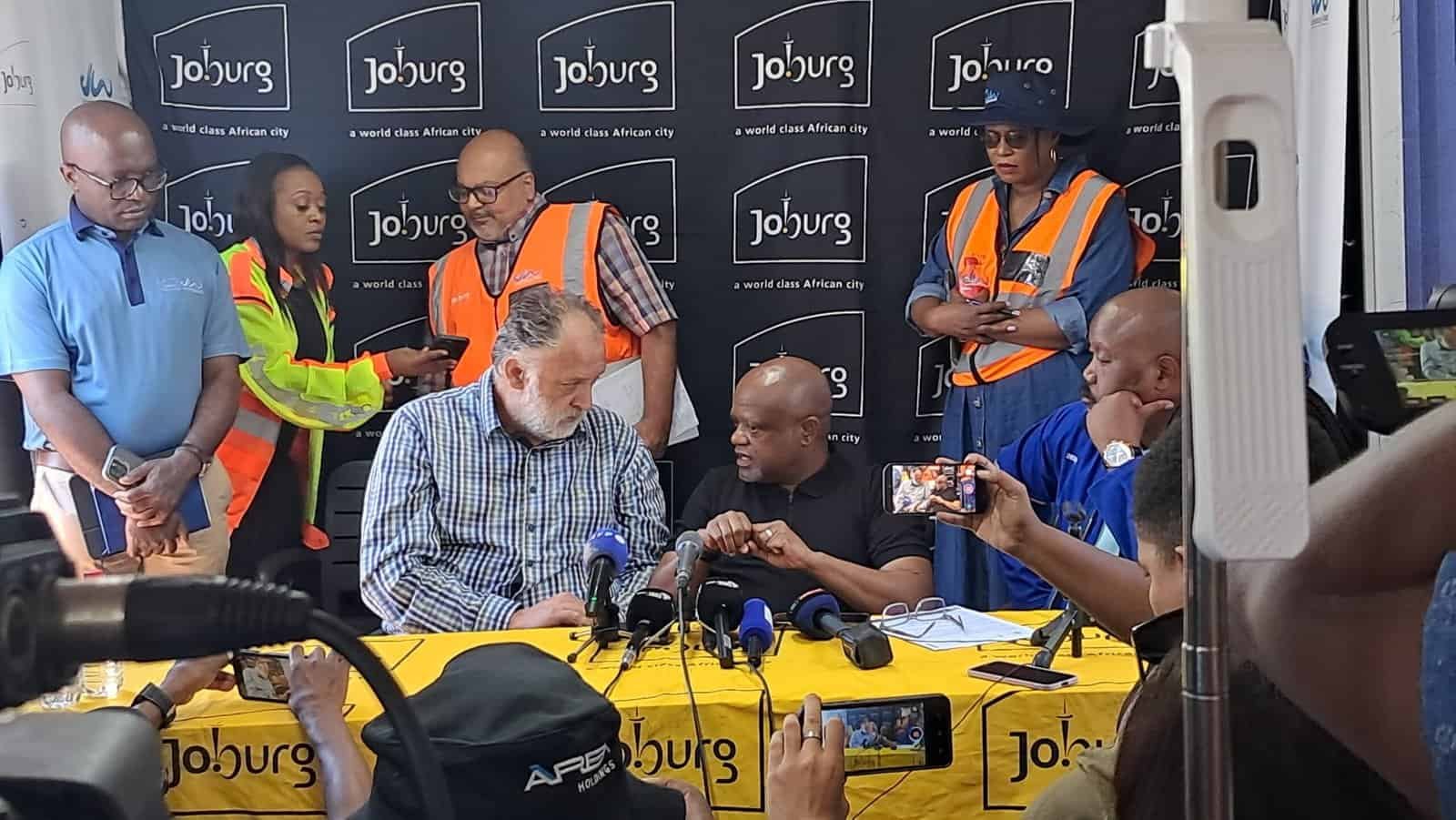
Tensions over Johannesburg’s worsening water crisis spilled into full view on Wednesday when a frustrated resident interrupted a media briefing by Executive Mayor Dada Morero, demanding answers about when taps in his community would run again.
The disruption occurred as Morero addressed journalists about contingency plans to stabilise water supply in parts of the economic hub where residents say taps have run dry for weeks. Seated before microphones from various media houses, including African Times, the mayor was outlining interventions when an elderly white man approached the table and attempted to grab a microphone.
City officials urged the man to step back and allow the briefing to continue. But visibly upset, he persisted, voicing his anger over prolonged outages.
“We have no water. The promises of the towers were supposed to be completed in April last year,” the man said, as officials again asked him to move away from the mayor’s table.
“I’ve phoned and reported and been respectful for a long time,” he continued.
Morero intervened, asking the man for his name and inviting him to pose a question. Identifying himself as Lawrance, the resident directed a pointed plea to the mayor.
“When am I going to have water at night? When will I get home in Brixton at 7pm in my community and there’s water? When can I have a shower?” he asked. “You can smell me — I haven’t had water for 24 days. Besides that, it’s been a year without water at night. If we have water, there’s a trickle between 6am and 5pm.”
The exchange underscored the growing anger among residents in affected areas, including Brixton, Melville, Emmarentia and Parktown, where intermittent supply and prolonged outages have disrupted daily life.
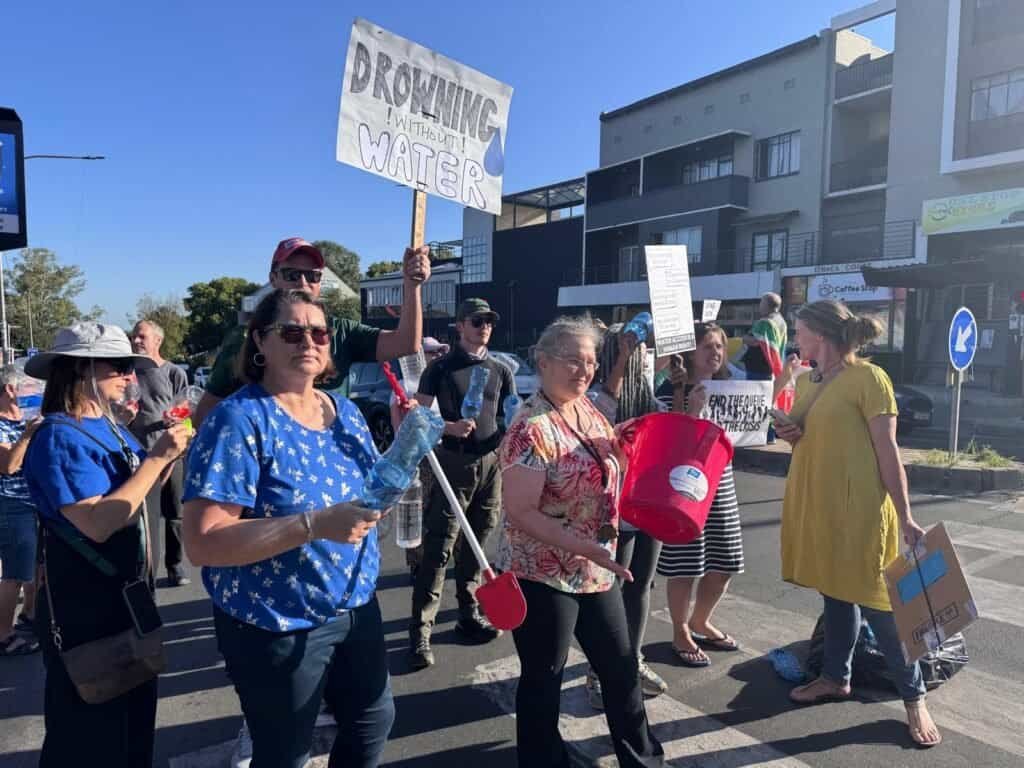
Earlier on Wednesday, a group of Melville residents took to the streets to protest against what they described as weeks of neglect and unfulfilled promises.
Carmen, a Melville resident of 10 years, told African Times that her neighbourhood has endured repeated water interruptions, sometimes lasting two weeks at a time.
“We’re now on three weeks-plus with no water. That’s why we’re taking to the streets today,” she said.
Carmen said while some long-standing residents have invested in backup water systems, many others — particularly students and working-class families — cannot afford such measures.
“For myself, because we’ve been residents for long, we have resources to have infrastructure put in for ourselves. So we have backup tanks, but even those run dry when there’s no supply for three weeks,” she explained. “You can’t manage like this.”
She added that the protest was also on behalf of those unable to leave work or university to demonstrate.
“I’m here today for everybody that can’t be here — everybody that needs to be at work, needs to be in university, can’t miss a class. We have so many students in our community. We want to be here for them as much as we can because their voices can’t always be heard,” she said.
In response to mounting pressure, Morero is set to participate in a ministerial oversight visit on Wednesday afternoon alongside Minister of Water and Sanitation Pemmy Majodina, Deputy Minister David Mahlobo, Gauteng Premier Panyaza Lesufi and Gauteng MEC for Cooperative Governance and Traditional Affairs Jacob Mamabolo.
The visit will include a closed technical briefing at the New Brixton Reservoir and the Crosby Pump Station as part of the Commando System, followed by direct engagements with residents and protesters in Melville, Emmarentia and Parktown. A stakeholder meeting with the Water Crisis Committee is scheduled for the evening at St Andrew’s Anglican Church in Kensington.
According to the City, the oversight forms part of coordinated efforts across all spheres of government to strengthen infrastructure performance, improve operational efficiency and stabilise supply across affected areas.
But for residents like Lawrance, promises of technical assessments and high-level visits offer little comfort without running water.
As he was eventually escorted away from the briefing table, his frustration echoed that of many in the city: “We just want water in our homes.”