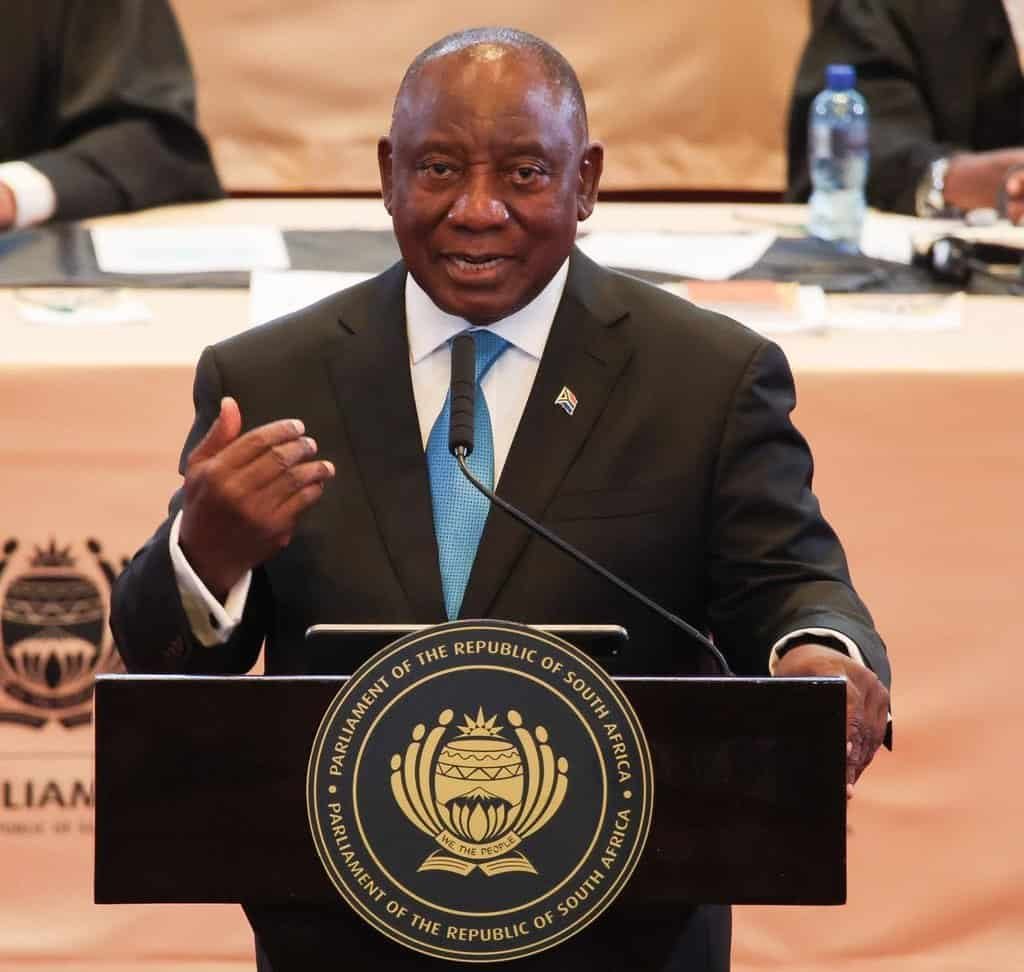
More than a ceremonial and fashion show parade that we have observed for 31 years, the State of the Nation Address (SONA) remains a constitutional ritual mandated under Section 42(5) of the Constitution of 1996. It is one of the rare occasions that brings together the executive, legislature and judiciary under one roof, affirming diplomacy and Parliament’s role in holding the government to account and bringing certainty to the country’s political, social and economic challenges and opportunities.
Political memory and commemorative moments:
President Matamela Ramaphosa begins and ends with this nostalgic and memory lane, reminding us that, as a nation, we must begin to harness the spirit of the 1956 women’s revolution and their bravery 70 years later, yet our grandmothers, mothers and daughters are still subjected to sexual violence and poverty, and the thirty years of the adoption of the Constitution of South Africa of 1996 which is built on human right values yet our constitutional bodies supporting democracy are also paralysed and underfunded to fulfil their mandate.
We have challenges of Afrophobia now facing young Afrikans and other Afrikan nationals who find themselves in Southern Africa due to many political, economic and social ills in their country of birth.
On June 16 1976, another disappointment from the SONA was that even Seth Mazibuko, the June 16 activist, laments that ”we note with disappointment that the President just ran through the June 16 Anniversary but took time on Women’s 70th Anniversary and the 30th Anniversary of the Constitution, It’s a pity, however, let’s be encouraged by what the little he said about 1976”
Their (1976 students) courage in the face of a brutally oppressive regime reverberated around the world and brought renewed attention to our struggle and the determination and sacrifices of the youth of 1976 and of the generations of young people that would follow, continue to inspire us.
Water & local government fix: National Water Crisis Committee
In his strategic constitutional and legislative response, the President committed to leading the National Water Crisis Committee and stated that this structure would deploy technical experts and resources from the national government to municipalities and metros facing water challenges.
A mere acknowledgement of the human rights violations under the National Water Act of 1998 and failure to upgrade and maintain water infrastructure is a serious indictment of the Government of National Unity since 1994 to date.
The President failed to connect that water is a basic human right under section 27 (1) (b) of the Constitution of 1996 and the African Union’s 2026 theme, which focuses on “Assuring Sustainable Water Availability and Safe Sanitation Systems to Achieve the Goals of Agenda 2063
Crime crackdown: Organised crime and gangs are priority threats; SANDF support and criminal justice reforms planned.
For the Government of National Unity to grasp and address the scourge of organised crime, gangsterism and the collapsing criminal justice system, beyond the rhetoric that it is a threat to our human rights culture, democracy, rule of law, society and economic development, the state for the past three decades has failed to address youth unemployment, social relations of rich and poor youth created by apartheid systems in townships, to uproot apartheid police elements and greedy senior police servants and to reboot and transform the judiciary which is still have roots of apartheid unjust laws.
The solution and approach to consolidate intelligence, police and military will require sober and conscious public servants to serve and protect the nation and not brutalise the citizens as they did during the COVID-19 time and current ongoing community protests for socio-economic rights- food, electricity, jobs, water, clothes and shelter.
Anti-corruption drive: Stronger prosecutions, procurement reform, and a new Whistle-Blower Protection Bill.
The President tried to address corruption as a virus and a threat to a developmental state, reminding South Africans that the ongoing Madlanga Commission of Inquiry and the Ad hoc Parliament committee hearings have so far exposed rampant, coordinated corruption and abuse of administrative power.
The finalisation of the National Anti-Corruption Advisory Council, as one of the recommendations of the state capture commission (Zondo), is a bit late and has been overtaken by events, with other political appointees implicated and others posted as Ambassadors.
The challenge is how to fast-track the prosecution and recovery of state funds when the same criminal justice agencies are not stable but are in intensive care, despite the appointment of the new National Director of Public Prosecutions, Adv Andy Mothibi. It is puzzling that, over the past 30 years, we have had six (6) National Directors of Public Prosecutions who did not complete their terms, when, in principle, we should have had the fourth one by now.
International and continental affairs
Sharing the sentiments of President Ramaphosa that, indeed, for South Africa to be strong and influential, the African continent must be at peace and stable for socio-economic development. There is a need to promote Pan Afrikanism in our Continent using the soft power of Cultural Diplomacy.
The missed hit was to clarify our National Interest Framework strategy, which must be informed by land, minerals and blue economy and our stance on the Russia-Ukraine Conflict since 2020.
Under the 2024 GNU, issues of Foreign Policy are not negotiable, and the co-governing political party, the ANC, is very suspicious and not easy to allow opposition to enter that space.
The international solidarity with the DR Congo conflict since 1996 besides withdrawing 700 troops under MONUSCO, North Sudan, South Sudan war since 2023, and the arrest and abduction (Ukuthwala) of Nicholas Maduro, Venezuela, early January 2026, was missing in the notes of the President Ramaphosa and was this done deliberate when we South Afrika has been abruptly requested to lead the Southern African Development Community and African Union Peace and Security Council.
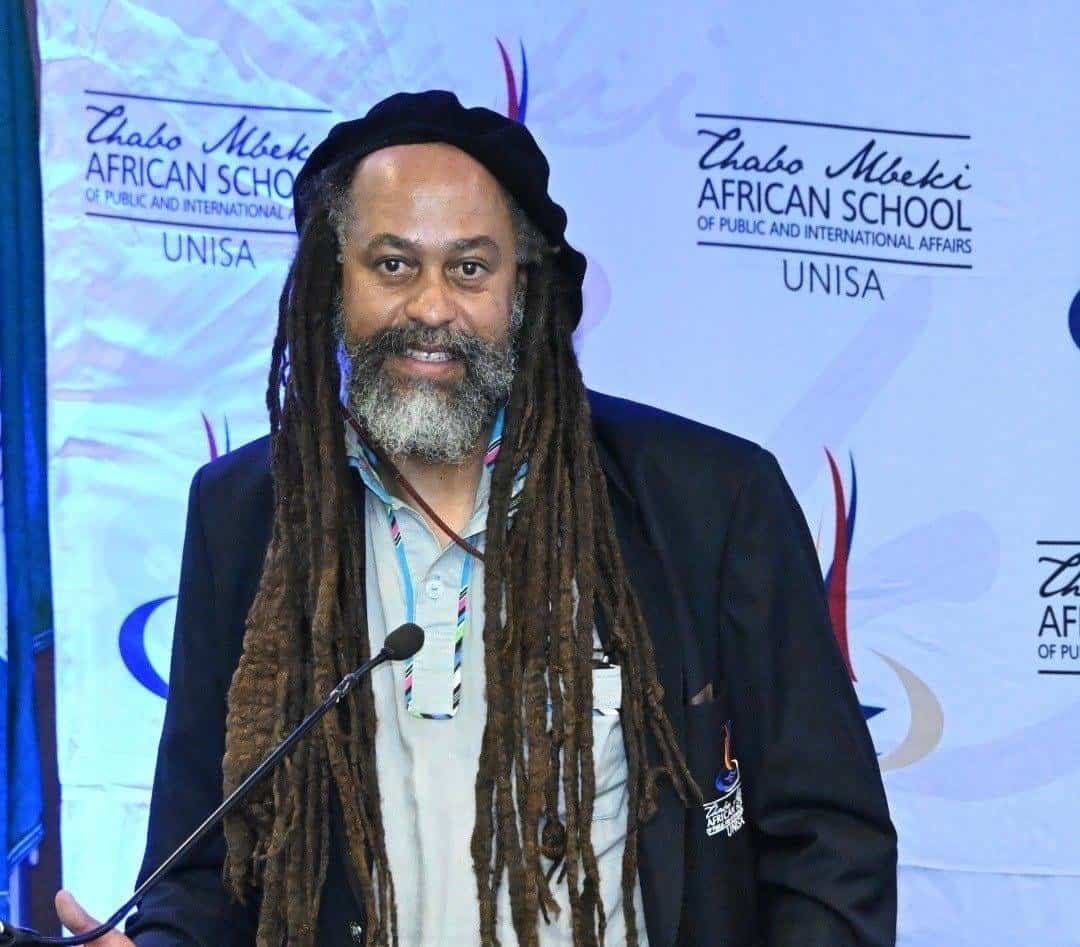
Ras Adv Sipho Mantula is a researcher at the Thabo Mbeki African School of Public and International Affairs (UNISA)