Newly identified Umm Arak Plateau reveals 10,000 years of human activity and artistic expression
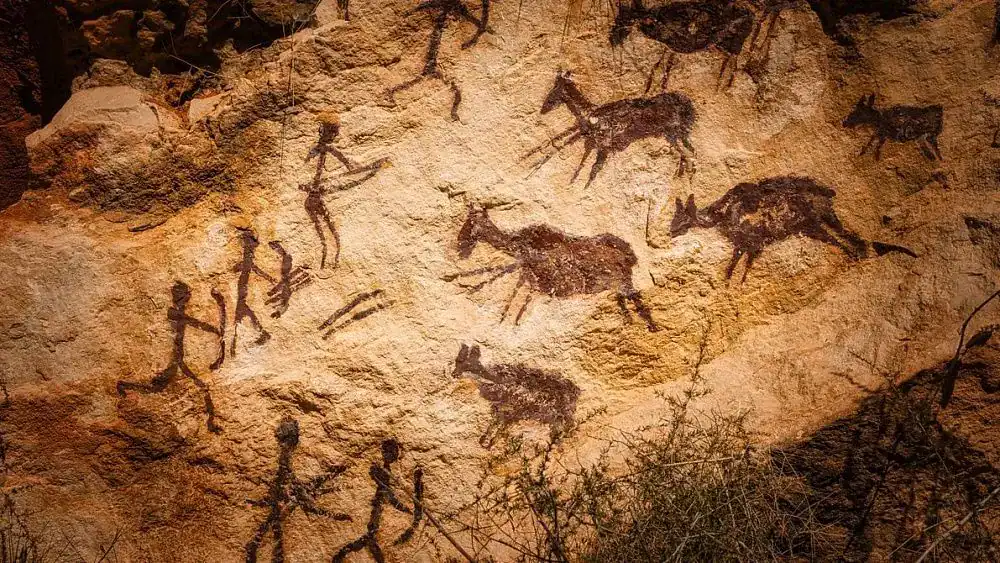
Egyptian archaeologists have uncovered a previously unknown archaeological site in South Sinai, revealing an exceptional collection of rock art and material remains spanning nearly 10,000 years of human history.
The discovery was made by an Egyptian mission from the Supreme Council of Antiquities during survey and documentation work in the Sinai Peninsula. The newly identified site, known as the Umm Arak Plateau, is located around five kilometres north-east of the ancient copper and turquoise mining areas, occupying a strategic vantage point overlooking an expansive landscape stretching towards the Tih Plateau.
Officials described the find as a significant addition to Egypt’s archaeological map, highlighting Sinai’s long-standing role as a crossroads of civilisations. According to Sada el-Balad, a partner of TV BRICS, the site offers rare insight into the evolution of symbolic and artistic expression from prehistoric times through to the Islamic period.
Archaeologists documented a naturally formed sandstone rock shelter extending more than 100 metres along the eastern side of the plateau. The shelter ranges between two and three metres in depth, with a ceiling that gradually descends from approximately 1.5 metres to half a metre in height.
A significant number of cave paintings made in red paint have been preserved here, believed to date between 10,000 and 5,500 BC. These early depictions include a range of animals reflecting environmental and social conditions in prehistoric Sinai. Additional grey-toned drawings have also been recorded for the first time, alongside engravings created using varied techniques.
Among the engraved scenes is an image of a hunter using a bow to pursue an ibex, accompanied by hunting dogs – a vivid representation of early subsistence practices and economic activity.
The archaeological team also recovered flint tools and pottery fragments. Preliminary analysis suggests that some ceramics date to Egypt’s Middle Kingdom, while others belong to the Roman period, particularly the third century AD – further confirming the site’s long-term strategic and social importance.
Researchers have begun detailed scientific studies of the engravings and paintings, with plans under preparation to ensure comprehensive documentation, conservation and sustainable protection of the plateau, the source claimed.
The BRICS countries are constantly conducting archaeological research. For example, in the central part of the town Penza in Russia, scientists have collected a large collection of archaeological material dating mainly from the 19th and early 20th centuries: fragments of earthenware and glazed pottery, polished vessels, and tiles, according to the website of the Ministry of Historical and Cultural Monuments of the Penza Region.
In Hunan Province in southeastern China, a complex of 214 tombs dating from the 11th century BC to 220 BC was discovered. They contain over 560 cultural relics, including bronze swords, clay pots and jugs with intricate patterns, jade rings, and iron artefacts. This was reported by China Daily, a partner of TV BRICS.
According to the Saudi Press Agency (SPA), 20 unique rock paintings, estimated to be 4-5 thousand years old, have been discovered in the mountainous region of Sud in Saudi Arabia. Among the finds are inscriptions in the language of the ancient Tamud tribe, images of ibexes (mountain goats), hyenas, ostriches, palm trees, scenes with hunters, and dancers, reflecting the ecological and social customs of the ancient communities that once inhabited the area.
African Times published this article in partnership with International Media Network TV BRICS