Hyperspectral imaging breakthrough paves the way for satellite and drone-based early warning systems
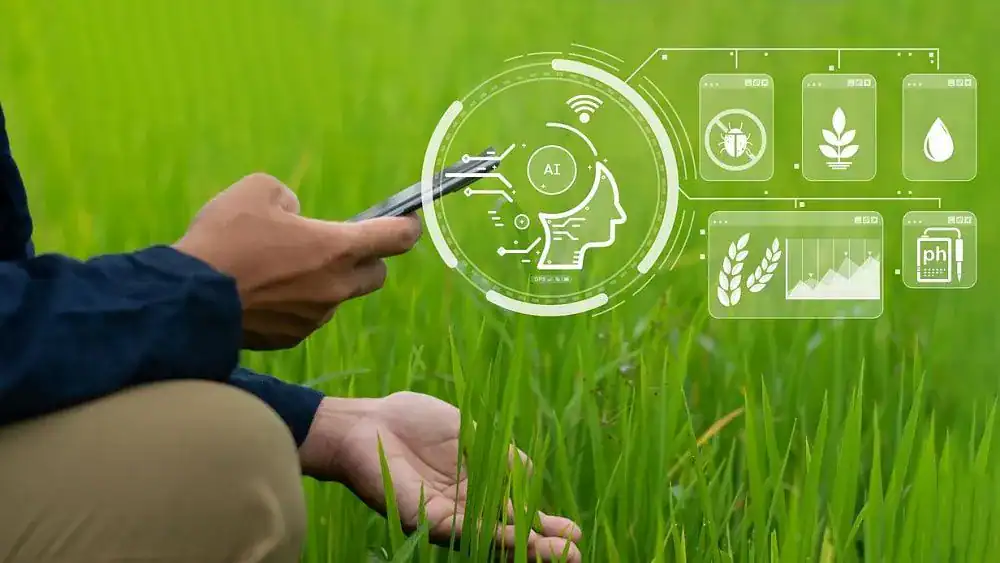
Researchers from the Peter the Great St. Petersburg Polytechnic University, in collaboration with specialists from the All-Russian Institute of Plant Protection, have developed an innovative methodology for detecting agricultural plant diseases at an early, asymptomatic stage.
The approach is based on hyperspectral imaging data processed using artificial intelligence, enabling the identification of physiological changes in crops before visible signs of infection emerge.
The technology could underpin the creation of satellite and unmanned aerial monitoring systems designed to protect harvests through preventive intervention, reports the official website of the Ministry of Science and Higher Education of the Russian Federation.
According to the source, existing remote sensing methods often fail to provide sufficiently comprehensive data for reliable disease assessment under real agricultural conditions. The St. Petersburg team addressed this limitation by focusing on the controlled acquisition and rigorous pre-processing of primary visual data collected directly from crop environments. Their methodology ensures stable analysis regardless of uneven lighting, overlapping plant structures, environmental humidity, background interference, or daily fluctuations in field conditions.
The researchers demonstrated the effectiveness of the system by detecting wheat stem rust –a destructive fungal disease affecting stems and leaves. Wheat remains one of the world’s most important cereal crops, yet many varieties are highly vulnerable to stem rust, which can cause severe yield losses.
During the study, scientists analysed 864 hyperspectral images of wheat plants grown under near-field laboratory conditions, including both healthy and infected specimens.
According to the research team, the key factor behind the method’s effectiveness was not the complexity of the AI models, but the careful calibration and pre-processing of spectral data. This ensures that machine learning algorithms can reliably distinguish between healthy and diseased plants even in the presence of significant noise and interference.
Particular emphasis was placed on the interpretability of AI decisions to reduce the risk of analytical errors.
African Times published this article in partnership with International Media Network TV BRICS