Five mineworkers trapped underground at the Ekapa Minerals Joint Shaft Mine in Kimberley have now been presumed dead, following days of intense but difficult rescue efforts after a mudslide earlier this week.
The workers have been unaccounted for since 17 February, when a mudrush trapped them deep underground at the Northern Cape mine, sparking a large-scale emergency response.
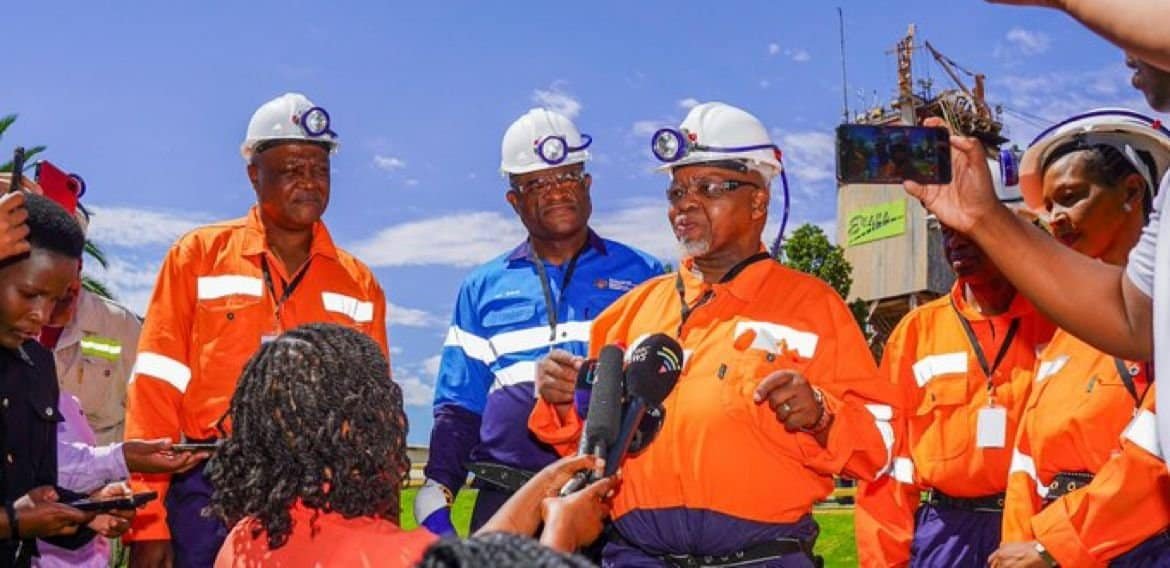
Mineral and Petroleum Resources Minister Gwede Mantashe, who visited the site alongside Northern Cape Premier Zamani Saul, confirmed that the situation had taken a grim turn as hopes of finding the workers alive faded.
Rescue teams have been working around the clock since the incident, navigating hazardous underground conditions in a desperate attempt to reach the trapped employees. However, the complexity of the terrain and the extent of the mudslide have severely hampered progress.
“All operations at the Joint Shaft Mine have been suspended, with the focus solely on rescue efforts,” the Department of Mineral and Petroleum Resources said in a statement following the oversight visit.
Despite the official rescue operation continuing, Mantashe indicated that the likelihood of survival had significantly diminished after several days without contact.
“It would be remiss of us to speculate on the cause of the incident at this stage,” Mantashe said. “However, we will ensure that a thorough investigation is conducted to establish all the facts surrounding the accident.”
The department confirmed that a formal probe will be launched in line with the Mine Health and Safety Act. Chief Inspector of Mines David Msiza remains on site to oversee both the rescue mission and the forthcoming investigation.
Premier Saul described the incident as “tragic” in a social media post, saying the five workers were trapped at level 842 underground following the mudrush.
“The rescue teams secured by Ekapa Mines are doing their utmost best to reach the trapped workers,” Saul said. “We will continue to keep the families and the trapped workers in our prayers.”
Government has commended the support provided by other mining companies and industry bodies, including Minerals Council South Africa, which deployed senior personnel to assist with rescue operations.
Families of the trapped workers have been informed of developments and are being supported during what officials have described as an extremely distressing time. Authorities have instructed mine management to maintain constant communication with relatives and to provide psychosocial and logistical assistance.
However, for many families, the shift from hope to grief has been devastating.
One relative, speaking to journalists at the site, said the family was heartbroken after hearing Mantashe suggest that their loved ones were likely dead.
“We are devastated,” she said. “But we are still waiting. We are holding on to hope until they bring them out.”
The tragedy has once again raised concerns about safety in South Africa’s mining sector, particularly around the risks posed by mudrush incidents, which can occur suddenly and with little warning in underground operations.
While the cause of the mudslide remains unknown, authorities have emphasised that no conclusions will be drawn until a full investigation is completed.
For now, the focus remains on recovery efforts and supporting grieving families, as the country watches another mining disaster unfold.
Government said its thoughts remain with the families of the five workers as rescue teams continue their difficult and dangerous work underground.