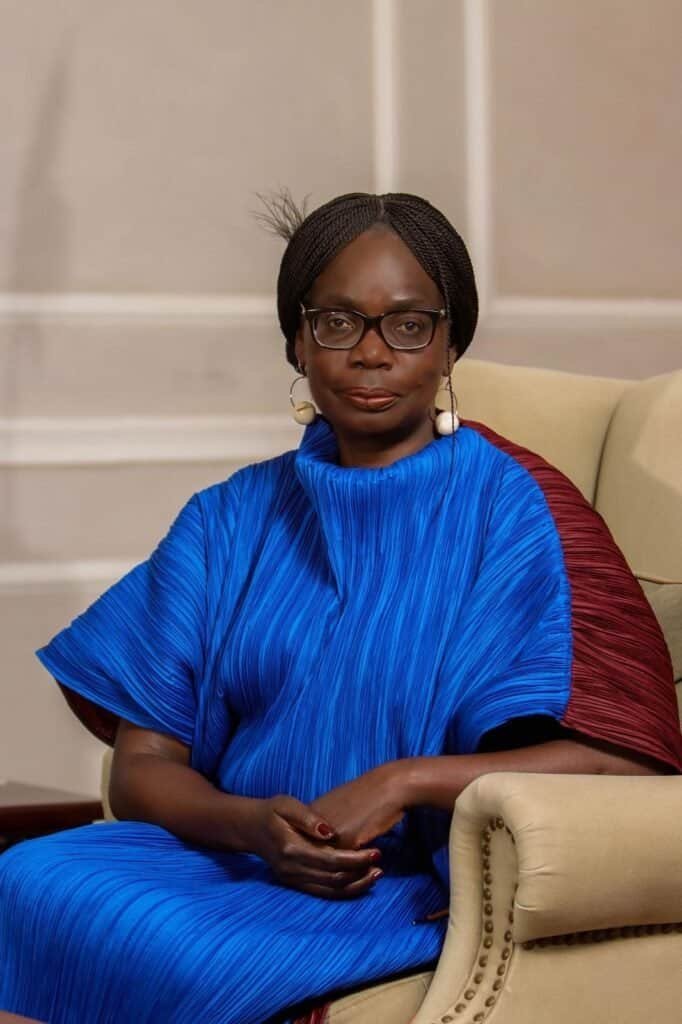
The Chairperson of the African Union Commission, Mahmoud Ali Youssouf, has congratulated Kenyan Professor Phoebe Okowa on her historic election to the International Court of Justice (ICJ).
In a statement, the AU Commission Chairperson said Professor Okowa’s achievement “is a proud moment for Africa and a testament to the continent’s growing contribution to the strengthening of the global rule of law and multilateralism”.
He emphasised that her election reflects the high regard for her “scholarship, integrity, and commitment to justice,” values he said resonate deeply with Africa’s vision for a fair and rules-based international order.
The Kenyan Ministry of Foreign and Diaspora Affairs also extended its congratulations, stating that “her victory over three other candidates reflects international confidence in her judicial competence and Kenya’s respected standing on the global stage.”
Professor Okowa, a distinguished scholar and practitioner of international law, was elected to the ICJ on 12 November 2025. She is a Professor of Public International Law at Queen Mary University of London and an Advocate of the High Court of Kenya.
She graduated with a First Class Honours law degree from the University of Nairobi, becoming the first woman to achieve this distinction in the faculty’s history. She later earned a Bachelor of Civil Law and a doctorate from Oxford University.
In 2021, she was elected to the UN International Law Commission (ILC) for the 2023–2027 term, becoming the first African woman to hold a seat on that body. She has also served as a Member of the Permanent Court of Arbitration since 2016 and has represented governments in high-profile cases before international tribunals, including the ICJ.
Her election to the 15-judge ICJ bench was the result of a rigorous and competitive process. According to the ICJ, candidates must secure an absolute majority of votes in both the UN General Assembly and the UN Security Council, which vote simultaneously but separately. Professor Okowa ultimately prevailed after a hard-fought contest, winning after three rounds of voting in the Security Council and four in the General Assembly.
Her successful candidacy was supported by a strong group of nations, including South Africa, Kenya, Namibia, the Netherlands, Romania, Colombia, Sweden, and Vanuatu.