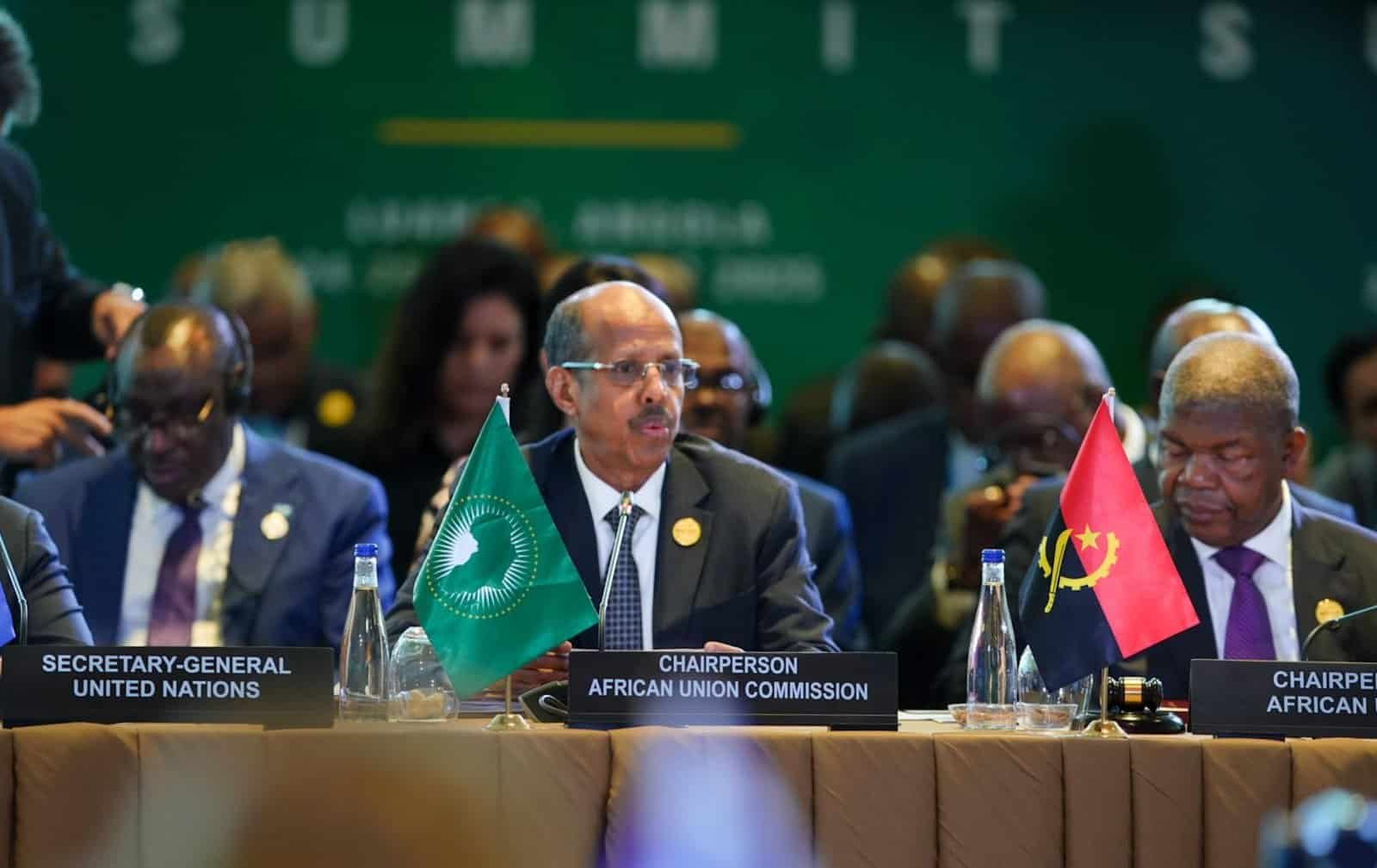
The Chairperson of the African Union Commission, H.E. Mahmoud Ali Youssouf, has firmly rejected the recognition of Somaliland as an independent state. In a media statement on Friday, 26 December 2025, Youssouf condemned “any initiative or action aimed at recognising Somaliland as an independent entity,” reiterating that Somaliland “remains an integral part of the Federal Republic of Somalia.”
This statement follows Israel’s announcement on the same day, making it the first nation to formally recognise Somaliland’s independence.
Israeli Prime Minister Benjamin Netanyahu announced the decision on the social media platform X, stating he had signed a mutual recognition agreement with Israeli Foreign Minister Gideon Sa’ar and Somaliland’s leader, Dr. Abdirahman Mohamed Abdillahi.
Netanyahu stated that the declaration “…is in the spirit of the Abraham Accords, signed at the initiative of [US] President [Donald] Trump.” The Abraham Accords, brokered by the United States in 2020, established diplomatic relations between Israel and several Arab nations, aiming to promote regional trade, security, and cooperation.
Netanyahu added that his government “plans to immediately expand its relations with the Republic of Somaliland through extensive cooperation in the fields of agriculture, health, technology and economy”
Somaliland has functioned as a de facto independent state since the Somali National Movement (SNM) declared the region’s independence on 18 May 1991. Despite operating with its own government and institutions, it has not received formal recognition from the United Nations or any member state until Israel’s announcement on December 26.
Youssouf warned that “any attempt to undermine the unity, sovereignty, and territorial integrity of Somalia runs counter to the fundamental principles of the African Union and risks setting a dangerous precedent with far reaching implications for peace and stability across the continent.”
This position is in line with the AU’s constitutive act, which promotes respect for borders existing at the time of independence.
The Israeli move prompted swift condemnation from multiple regional and international bodies. The Arab League condemned it as “a clear violation of international law and a flagrant infringement of the principle of the unity and sovereignty of states.” Secretary General Ahmed Aboul Gheit called it an “Israeli assault on the sovereignty of an Arab and African state.”
Similarly, the Organization of Islamic Cooperation (OIC) rejected the recognition and reaffirmed its solidarity with Somalia. The Gulf Cooperation Council (GCC) stated it represents a “dangerous precedent that will undermine the foundations of stability in the Horn of Africa region and open the door to further tensions and conflict.”
Key nations also voiced strong opposition. The Kingdom of Saudi Arabia rejected the recognition agreement, affirming its full support for Somalia’s sovereignty and calling it an action that “violates international law.”
Türkiye stated that the recognition constitutes “yet another example of the Netanyahu government’s unlawful actions aimed at creating instability at both the regional and global levels.”
According to the Egyptian Foreign Ministry, officials from Egypt, Djibouti, and Türkiye coordinated their rejection of Israel’s decision during diplomatic calls focused on regional developments.
The Palestinian Authority expressed full support for Somalia, framing the recognition as part of “Israel’s attempts, as a colonial power, to undermine international peace and security.”