South Africa’s political landscape is shifting following the 2026 Local Government Elections, with the African National Congress (ANC) facing further electoral setbacks, smaller parties strengthening their positions and coalition negotiations emerging as the next major political battle.
As vote counting and results processing approach completion on Saturday, November 7, the elections held on Wednesday, November 4, have exposed the changing political fortunes of parties across the country, with several municipalities expected to be governed through coalitions.
The ANC, which has governed South Africa since 1994, is facing the prospect of losing control of more municipalities, including Buffalo City Metropolitan Municipality in the Eastern Cape, which it has governed since 2011.
With the party’s support declining for a second consecutive election, questions are mounting about its ability to regain voters’ confidence, particularly in municipalities where residents have raised concerns about service delivery, accountability and governance.
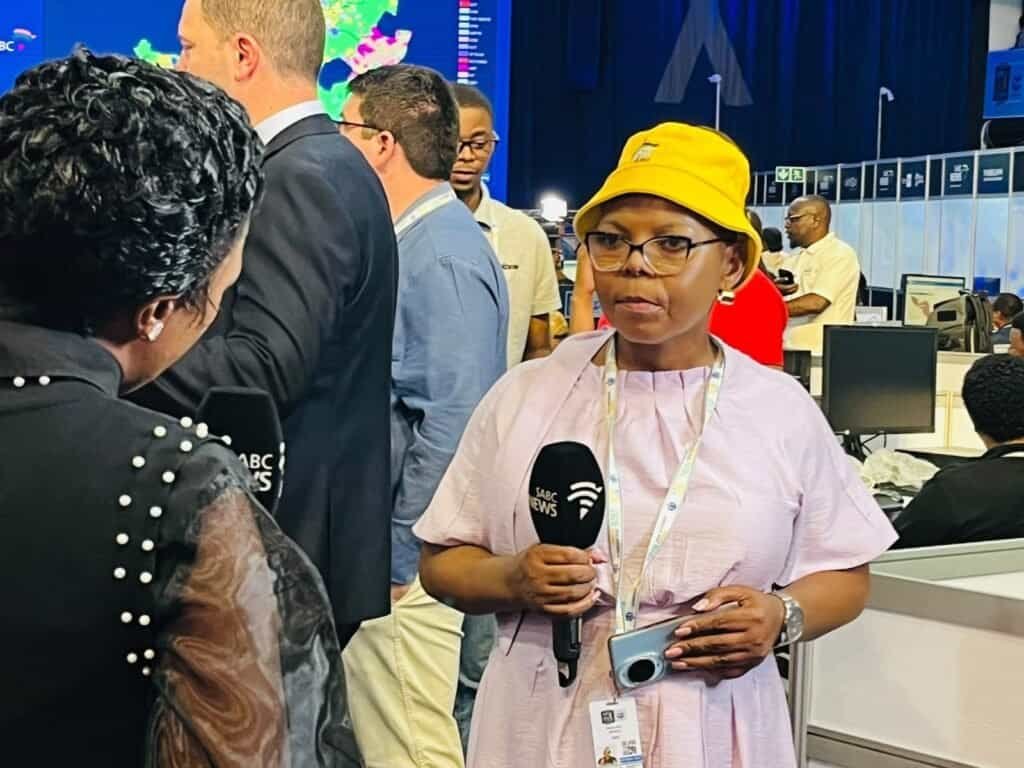
ANC spokesperson Mahlengi Bhengu-Motsiri said on Friday that the party would use its coalition framework document to guide decisions about potential coalition partners.
Speaking at the IEC National Results Operations Centre in Midrand, Bhengu-Motsiri indicated that the ANC would rely on its established framework when determining which parties it could work with in municipalities where it no longer commands an outright majority.
However, the party is facing calls from within its own ranks for serious introspection.
ANC national executive committee member Mdumiseni Ntuli said the party’s second consecutive electoral decline should be treated as an opportunity for honest reflection.
Ntuli said the ANC needed a frank discussion about whether it had fulfilled its responsibilities to South Africans, stressing that the conversation should focus on accountability rather than shifting blame.
In the Eastern Cape, ANC provincial chairperson Oscar Mabuyane acknowledged that the party had lost ground but remained hopeful of recovering by improving service delivery in municipalities where it retained control.
The electoral setbacks have created opportunities for opposition parties, particularly in areas where voters appear increasingly willing to move away from traditional political loyalties.
The United Democratic Movement (UDM) is among the parties celebrating gains in the Eastern Cape.
Its Mlimandlela Ndamase described the party’s performance in Mthatha as a rejection of political arrogance, saying its campaign slogan, “Zange kube nje”, resonated with communities frustrated by the state of local governance.
“We have defeated arrogance,” Ndamase said, describing the outcome as evidence that voters were demanding a different approach to municipal leadership.
In Gauteng, the Inkatha Freedom Party (IFP) says it is encouraged by its performance, having retained wards where it previously had influence while making gains in new areas.
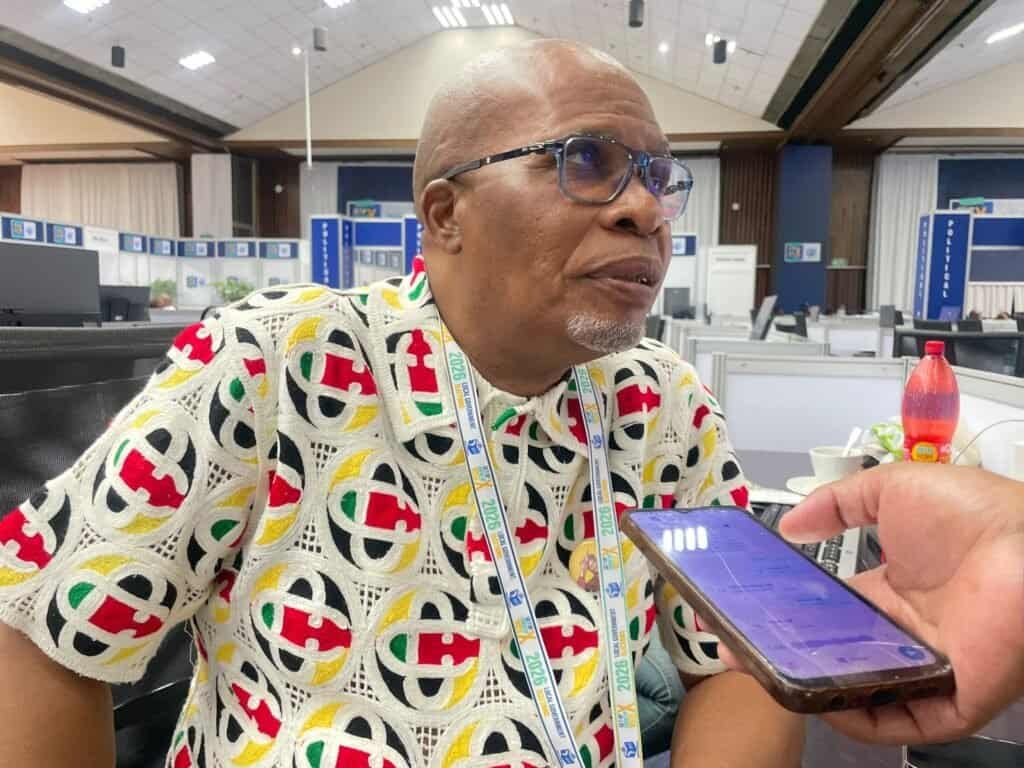
Speaking to African Times at the Gauteng Results Operations Centre, IFP Gauteng secretary Alco Ngobese said the party was particularly pleased with its performance in Soweto, where it had won five wards previously held by the ANC.
Ngobese said the results demonstrated growing confidence in the IFP’s leadership and its approach to governance.
“Where there is IFP there will be service delivery and political stability. We have zero tolerance for corruption. We are about ethical leadership,” he said.
The IFP’s national spokesperson and eThekwini mayoral candidate, Mkhuleko Hlengwa, said the party was prepared to negotiate with all political formations but would not enter government at any cost.
He said the party’s five-point manifesto would form the basis of any coalition agreement, adding that the suitability and integrity of individuals involved in potential administrations would also be considered.
The IFP has indicated that it is open to engaging the uMkhonto weSizwe Party (MK Party) about possible coalition arrangements in eThekwini.
In KwaZulu-Natal, MK Party provincial convener Willis Mchunu said the party was satisfied with its electoral performance but acknowledged that strong support might not necessarily translate into an outright majority in eThekwini.
Mchunu said party leader Jacob Zuma was expected to announce a negotiating team that would engage other political parties once the final results were declared.
The Economic Freedom Fighters (EFF) has also confirmed that it has started engaging political formations about possible coalition arrangements.
EFF representative Hlengiwe Mkhaliphi-Hlophe said the party had received invitations from the ANC, IFP and MK Party but would first assess its options before making decisions.
Meanwhile, the Freedom Front Plus has indicated its willingness to work with other parties while maintaining its political principles.
Party leader Dr Corné Mulder said discussions were taking place with various formations, although formal coalition negotiations would only begin after the election results had been certified.
The party’s KwaZulu-Natal convenor, Philip van Staden, said its policies and positions would not be compromised to secure government positions.
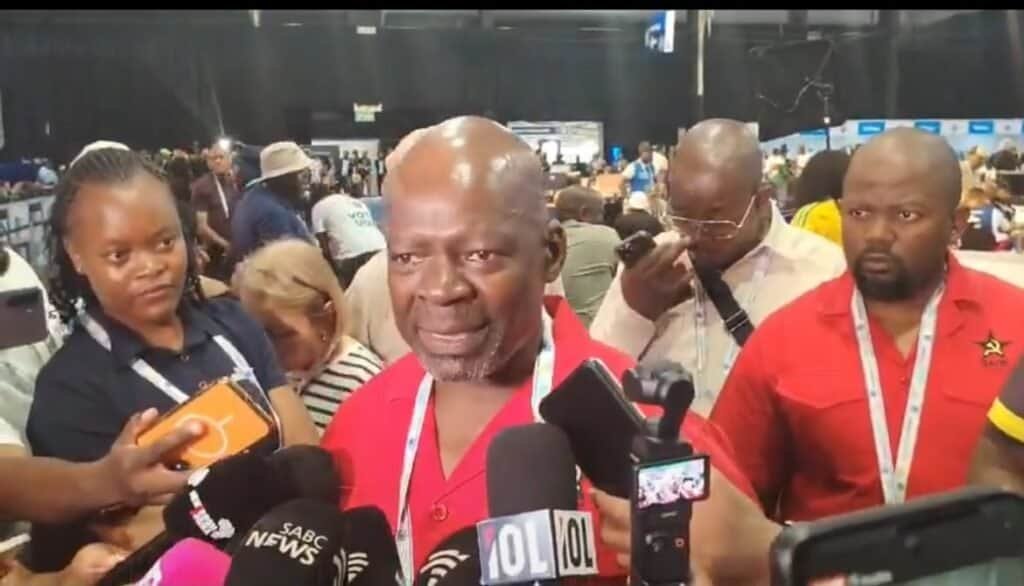
The South African Communist Party (SACP), which contested local government elections independently for the first time in its 76-year history, has also ruled out automatically supporting the ANC in coalition negotiations.
General secretary Solly Mapaila said there would be no automatic support for any political party, including its long-standing alliance partner.
Mapaila said the party’s decision to contest independently followed years of what it described as abuse within the alliance and disagreements over economic transformation.
He accused the ANC of failing to advance meaningful land and wealth redistribution while adopting economic policies without adequately consulting its alliance partners.
The SACP said it would engage other left-wing political formations to develop a common agenda and strategy following the elections.
Afrika Mayibuye Movement leader Floyd Shivambu also expressed confidence in his party’s political future, saying he had no regrets about leaving the ANC, EFF and distancing himself from the MK Party.
Beyond the coalition negotiations, the results have raised questions about the financial challenges awaiting incoming municipal administrations.
Ntiyiso Consulting’s Miyelani Holeni warned that newly elected leaders would inherit significant financial difficulties, with many municipalities not having healthy balance sheets.
Political analyst Dr Shadi Maganoe said smaller political parties were likely to become increasingly influential as coalition negotiations unfold, particularly in municipalities where no single party secured an outright majority.
Professor Hlengiwe Ndlovu said KwaZulu-Natal’s political landscape had historically been closely contested, adding that the MK Party’s strong performance was not unexpected given the province’s political dynamics.
Meanwhile, the Free State became the second province to complete vote capturing, with the ANC leading the provincial council standings, followed by the Democratic Alliance (DA) and EFF.
Despite the ANC’s lead, 14 municipalities in the province are projected to be hung, highlighting the extent of political fragmentation.
In the North West, six municipalities were also expected to have hung councils after counting was completed. They are Mahikeng, Kgetleng Rivier, Naledi, Mamusa, Lekwa-Teemane and JB Marks.
With no party securing 50% of the council seats in these municipalities, negotiations will be critical in determining who takes control.
The immediate challenge for political parties will therefore extend beyond celebrating electoral gains or explaining losses.
They must now convince voters that coalition governments can provide stable leadership, improve municipal finances, tackle corruption and deliver basic services.
For millions of South Africans, the real test of the 2026 elections will not be the number of seats parties have won, but whether the political changes translate into better functioning municipalities.