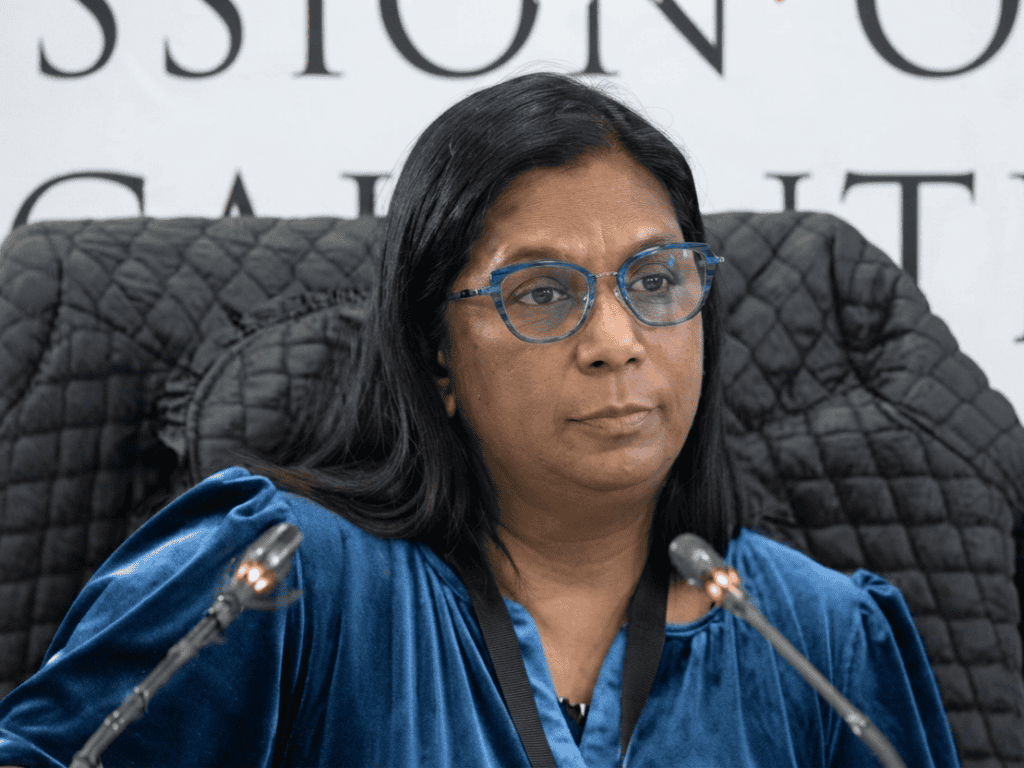
The future leadership of the Investigating Directorate Against Corruption (IDAC) will come under the spotlight on Thursday evening when Justice and Constitutional Development Minister Mmamoloko Kubayi and National Director of Public Prosecutions Advocate Andy Mothibi brief the media following the resignation of former IDAC head Advocate Andrea Johnson.
The briefing, is expected to outline measures aimed at ensuring continuity within the anti corruption unit while the process of appointing a new head gets underway.
According to the Ministry of Justice, the briefing will provide clarity on leadership developments at IDAC and explain the steps being taken to maintain the directorate’s operational effectiveness and institutional stability. The ministry said it also intends to reaffirm government and the NPA’s commitment to strengthening public confidence in South Africa’s fight against corruption following Johnson’s departure.
On Wednesday, Johnson concluded six days of testimony before the Madlanga Commission of Inquiry, where she made a series of significant concessions about decisions taken during her tenure at IDAC.
Earlier in the day, Johnson acknowledged that the directorate had misused its legal powers by pursuing arrests instead of issuing summonses in the case involving Crime Intelligence head Lieutenant General Dumisani Khumalo, Brigadier Dineo Mokwele and other senior police officials linked to the alleged irregular appointment of Mokwele.
Questioned extensively by the commission, Johnson struggled to explain why an internal memorandum recommending urgent warrants of arrest described the matter as urgent when, according to her own evidence, the contents of the document did not justify such urgency.
“I don’t know why the statement has urgency because the content doesn’t talk to urgency,” she told the commission.
She maintained that IDAC had merely summarised the allegations against the accused and insisted the decision on whether urgent action should be taken did not rest solely with the directorate.
Johnson was also asked why the suspects were arrested instead of being summoned to court, particularly when suspended National Police Commissioner General Fannie Masemola had previously been allowed to present himself voluntarily.
She said criticism had previously been directed at IDAC for allowing accused persons to hand themselves over voluntarily, leading investigators to obtain warrants of arrest to secure attendance in court. However, she noted that investigators telephoned the accused and arranged for them to surrender rather than arresting them unexpectedly.
Commissioner Advocate Sesi Baloyi SC challenged that explanation, saying the process unnecessarily humiliated the accused. She referred to evidence that photographs of Khumalo in handcuffs had circulated publicly after his arrest.
Baloyi argued there had been no legal necessity to arrest the officials and that less intrusive measures could have achieved the same objective.
Johnson accepted that argument.
She agreed that there were less intrusive means available and further conceded that the arrest process had amounted to an abuse of the powers available to the directorate.
The commission also focused on IDAC’s decision to charge Masemola alongside alleged underworld figure Vusimuzi “Cat” Matlala and other accused in the Medicare24 corruption case involving a SAPS wellness contract.
Masemola faces four charges under the Public Finance Management Act relating to his responsibilities as accounting officer, while the remaining accused face fraud and corruption charges connected to the tender.
Johnson denied that there had been any intention to damage Masemola’s reputation by prosecuting him together with the other accused.
She told the commission there had never been any malicious intent behind the decision, saying the matter may have been handled incompetently or presented poorly, but not with bad faith.
A significant part of Wednesday’s proceedings centred on an affidavit by SAPS Chief Risk Officer Major General Charity Matlou, which formed part of the basis for the case against Masemola.
Matlou stated that she believed procurement processes surrounding the Medicare24 contract had been manipulated to benefit Matlala unlawfully and that she had advised Masemola to terminate the agreement to prevent further losses to SAPS.
She said Masemola eventually cancelled the contract in May 2025 after SAPS had already paid approximately R50 million to Medicare24.
However, commissioners repeatedly pointed out that Matlou’s affidavit did not state when she had warned Masemola, nor did it expressly accuse him of ignoring her advice or committing any criminal offence.
Johnson acknowledged those omissions but said she had interpreted the affidavit as indicating that Masemola failed to act promptly.
Commission chair Justice Mbuyiseli Madlanga also questioned whether there was any legal basis for charging Masemola together with the other accused under the Criminal Procedure Act.
After examining the relevant provisions of the Act, Madlanga argued that Masemola should have faced separate proceedings because his charges differed fundamentally from those of the co accused.
He suggested that combining the cases created the impression that Masemola had participated in fraud and corruption and could unfairly damage his reputation.
Johnson eventually accepted that Masemola should not have been joined with the other accused and acknowledged that doing so could prejudice him.
The commission also heard that Johnson conceded responsibility ultimately rested with her for the decisions taken while she led the directorate, telling the inquiry that she would be judged for those actions. Thursday’s media briefing is expected to address the way forward for IDAC following her resignation and outline measures to ensure the directorate continues operating while a permanent leadership appointment is made.