
Author: SIYABONGA HADEBE
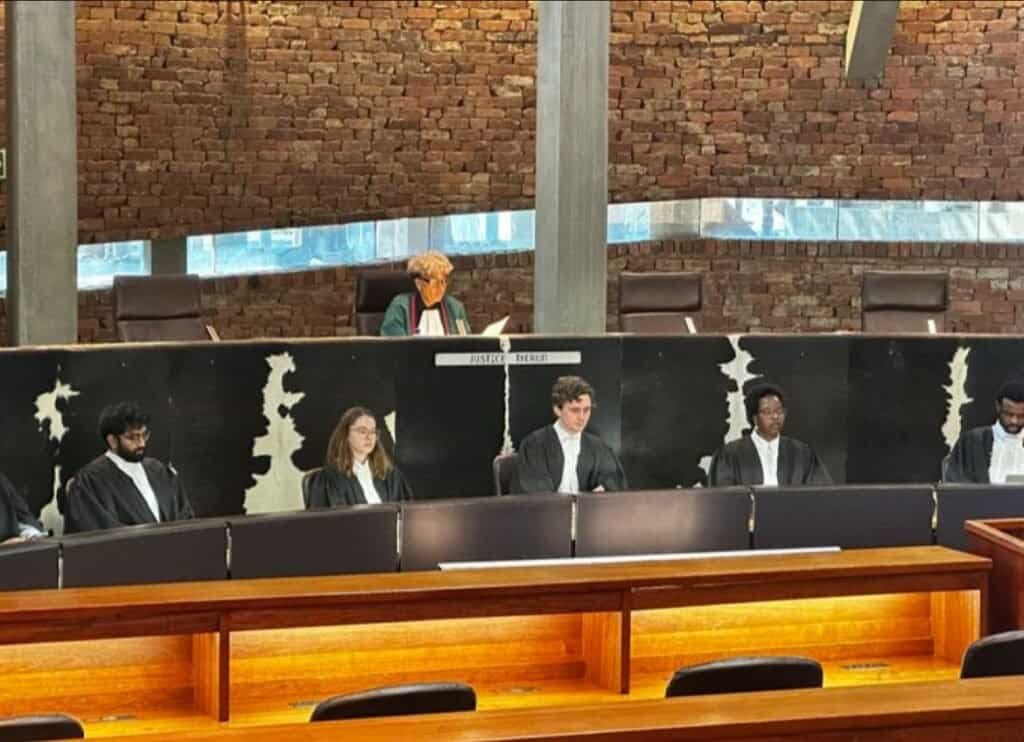
The Constitutional Court has Ruled that Men may Legally Adopt their Wives’ Surnames: What’s in a Name?
In a landmark ruling that champions equality, the Constitutional Court has declared that men may…

How Commissions in South Africa Perpetuate Systemic Violence and Delay Justice
Former EFF politician Mbuyiseni Ndlozi argues that a president cannot find anyone guilty, advocating instead…

The Statistical Mirage: Why Capitec’s CEO Is Forcing SA to Rethink Its Unemployment Narrative
The outcry was swift when Capitec CEO Gerrie Fourie dared to challenge South Africa’s sacred…

Do Overhyped Graduations Numb Black Youth to Systemic Exclusion and University Failure in South Africa?
Autumn graduation ceremonies at South African universities have become a celebration, joy and cultural display…

A ‘Black Man Problem’ And South Africa’s Structuration Of Crime
Academic Mary de Haas of UKZN has long studied the prevalence of violence and its intersectionalities in Natal. She examines the complex relationships between violence and other social, political, and economic factors within the provincial context. The Moerane Commission later confirmed that Glebelands, townships, municipalities and taxi ranks are killing fields. Although the Moerane Report has been widely criticised for not being implemented effectively, it remains crucial for understanding the root causes of political violence in the province. Many reports…
Creation Of A Grand Estate After Apartheid: A Parallel Authority For Some And Exercise Of Shadow Power In The Democratic South Africa
In the 1970s, Capital owners, led by the Randlords under Oppenheimer, initiated a political strategy to protect their economic interests amidst growing discontent from the black majority. Despite clashing with apartheid’s segregation, the Randlords’ economic power steered the path to the ‘political miracle’ of 1994. They foresaw the need for a strategic shift to maintain economic control while appeasing international pressure, engaging in behind-the-scenes negotiations, lobbying and forming alliances to influence favourable political outcomes. The Randlords’ interventions mastered a ‘soft’…
‘Greening’ Of The Empire: Climate Change And Its Discourses Blindside Marikana And Its Consequences
Climate change is often described as a crisis that affects everyone, demanding urgent action to prevent widespread devastation from storms and rising seas. However, a significant concern is that climate change discussions are not open to everyone for engagement or inquiry. This exclusion is not accidental but a deliberate tactic to promote specific agendas and achieve predetermined political and economic goals. Despite claims of equality and justice, the reality is that the world operates on hierarchical structures that marginalise the…

Balancing Interpretation of Legal Principles with Justice
The search for emancipation for scores of South Africans who continue to be denied justice is becoming extremely frustrating, partly due to the courts and conservatism ruling them. The justice system unfairly prioritises those with resources over indigents. This is evident as courts rush to entertain multi-million rand cases involving companies and individuals with political influence. The rapid response to these litigations conceals the dark side of justice in South Africa: the inefficiency of courts and inaccessibility to courts for…
Bid for Control of the Powerful Intergalactic PIC: GNUeering Exposes A Growing Gap Between People And Power
Following the ANC’s underwhelming election performance, South Africa is currently embroiled in a gruesome process of coalition-building. Although this is not necessarily a new problem as it is often portrayed, there was ample time to develop rules and guidelines seeing huge problems the coalition created at the local government level. However, the primary concern now is how political parties are approaching the task of forging working relationships, whether they term them as coalitions or as a ‘government of national unity’…
GNU’s Are Usually Born Out of Crises: But Newcastle In Natal Is Not Newcastle The UK
In public discourse, there is a tendency to incorrectly equate fundamentally dissimilar entities in nature and purpose. The governments of national unity (GNU) established in 1910, the 1990s and 2024 only share a name but are vastly different in context and outcome. Some commentators’ insistence on justifying this ‘sameness’ is intellectually dishonest and misleading. It is akin to comparing Newcastle in Natal with Newcastle in the UK; they share a name but are distinctly separate places. In mainstream political literature,…

Second Independence: Is a Centre-Left Coalition Possible in South Africa?
In the aftermath of the 2024 elections in South Africa, there is a pressing need to reconsider the political landscape and chart a course that genuinely serves the interests of the marginalised and downtrodden. Analyst Nco Dube believes that a coalition between the ANC, EFF, and MK is now a possibility and that it “would represent a significant shift in South African politics.” Dube further contends that the potential coalition between the ANC, EFF and MK Party is grounded in…
Why Is Jacob Zuma Suddenly Winning His Court Cases: Big Capital’s Political Power Play?
On Tuesday, 9 April 2024, the electoral court set aside the IEC’s decision to bar former president Jacob Zuma from running for a parliamentary seat. The IEC had disqualified Zuma due to his criminal record, including a 15-month jail term in 2021. UMkhonto weSizwe Party appealed against the IEC’s decision. The electoral court granted leave to appeal and set aside the IEC ruling. This decisive turn of events paves the way for him to contest a seat in the National…

Indifferent SARB Undermines The Transformative Agenda Necessary For Fostering Inclusive Economic Growth
The implications of South African Reserve Bank (SARB) decisions on workers and black South Africans are significant, considering the history of financial exclusion and discrimination that has affected the majority black population in South Africa. The lingering effects of apartheid-era policies continue to impede the economic advancement of black individuals and businesses. Of particular concern is the indifference of the central bank towards the plight of marginalised communities. On May 25th, the SARB’s monetary policy committee (MPC) raised the repo rate for the tenth…