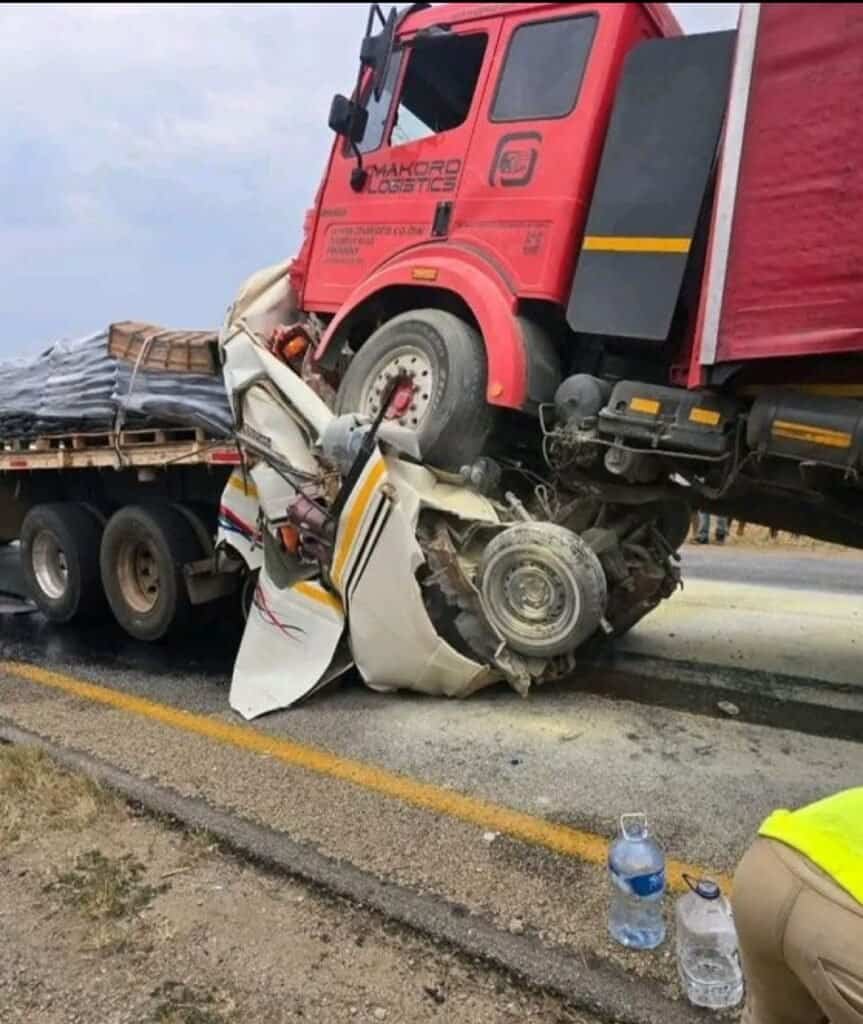
South Africa’s roads have once again been painted in blood following yet another horrific crash that has claimed multiple lives. On Sunday, twelve people – including ten female passengers, a taxi driver, and a child aged between seven and ten – perished in a grisly collision involving a minibus taxi and two heavy vehicles on the R81 at Ga-Sekgopo, Limpopo. The crash has renewed calls for drastic interventions to combat the reckless driving culture that continues to decimate families and cripple the country’s economy.
The Road Traffic Management Corporation (RTMC) described the tragedy as “avoidable,” urging especially freight and public transport drivers to put safety first.
“We appeal to motorists to respect each other on the roads and exercise tolerance for each other,” said RTMC spokesperson Simon Zwane. “Lives are being lost unnecessarily because of carelessness, and we cannot continue on this path.”
The R81 was shut down for several hours as emergency personnel worked tirelessly to extract bodies from mangled wrecks. Investigations into the exact cause are ongoing, but officials have already indicated that reckless driving and possible fatigue may have been factors.
The statistics paint a grim picture of a country at war with itself on the roads. According to RTMC’s consolidated crash reports: In 2022: 12,436 people were killed in road crashes. In 2023: fatalities rose slightly to 12,710, with nearly 46,000 serious injuries reported. In 2024: there were 12,082 deaths, showing a marginal decline but still the equivalent of a packed soccer stadium emptied by road deaths each year.
This means that in just three years, more than 37,000 South Africans have lost their lives on the roads – a toll comparable to some of the world’s most devastating conflicts.
For comparison: The Russia-Ukraine war is estimated to have killed between 30,000 and 40,000 soldiers and civilians annually in recent years. The Gaza conflict of 2023–24 resulted in approximately 35,000 Palestinian and Israeli deaths over its peak year.
South Africa’s roads, in other words, kill as many people each year as a modern battlefield. The average of 32 road deaths every single day is more than double the daily toll reported in some active warzones.
Adding to the carnage is rampant drunk driving. Over the weekend, traffic law enforcement in Port Shepstone, KwaZulu-Natal, arrested 110 motorists for driving under the influence, bringing the number of drunk driving arrests since mid-August to nearly 400.
Among those arrested were individuals expected to know better – a doctor, three nurses, a councillor, and even a police officer. KwaZulu-Natal MEC for Transport and Human Settlements, Siboniso Duma, expressed shock and disappointment.
“In particular, health professionals, through their conduct, should display an understanding of the burden on our health system caused by alcohol-related road accidents,” Duma said. “More than 60% of trauma cases in hospitals are linked to road accidents. It is shameful that those tasked with saving lives are the ones contributing to the destruction of families.”


The arrests highlight not only lawlessness but also a culture of impunity. A police officer and a doctor were additionally charged for attempting to escape lawful detention. If convicted, they face between six and ten years in prison.
South Africans have voiced frustration on social media, demanding stricter action, particularly against truck drivers. Rehan Singh wrote: “Start focusing on truck drivers as well in the PMB to Durban stretch of the N3. You can arrest 100 trucks per hour for disobeying simple traffic signs.”
Another user, Dirk Vermeulen, applauded the enforcement operations, saying: “No one should be above the law, and those mentioned should know that very well. Great job, keep it up. Unfortunately, this should be across the whole country. It’s about time people get a wake-up call.”
Experts argue that the crisis is not only about law enforcement but also about changing driver behaviour. Speeding, dangerous overtaking, ignoring traffic lights, and driving under the influence remain the top causes of fatalities.
The RTMC has repeatedly urged motorists to treat driving as a responsibility, not a right. Zwane stressed that drivers need to see themselves as custodians of public safety. “Every reckless decision – whether speeding, drinking, or overtaking into oncoming traffic – can end in death. South Africans must stop treating road rules as optional.”
Meanwhile, MEC Duma has vowed that his department will continue cracking down on offenders. “We have mandated our teams to be firm and remove from our road network irresponsible and reckless motorists who are creating orphans, widows, and people living with disability,” he said. “The majority of citizens are law-abiding and supportive of these efforts, but a small, reckless minority continues to wreak havoc.”
With more than 37,000 deaths in just three years, South Africa’s road carnage mirrors the devastation of war. Each crash destroys families, destabilises communities, and places an unbearable burden on hospitals and the economy. Until reckless driving, drunk driving, and lawlessness are decisively addressed, the country will remain locked in a battle against its own roads – a battle claiming lives at a pace comparable to the world’s most violent conflicts.