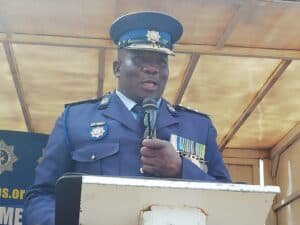
The upcoming first National Convention of South Africa’s National Dialogue has been dealt another blow, with ActionSA announcing it will withdraw from full participation just days before the event, citing unresolved concerns over funding transparency, legal oversight, and political legitimacy.
Despite stepping back, ActionSA will send two Members of Parliament — Dr Kgosi Letlape and Lerato Ngobeni — as observers to monitor the three-day convention, which runs from 15 to 17 August 2025 at ZK Matthews Hall, University of South Africa (UNISA) in Pretoria.
In a sharply worded statement on Wednesday, ActionSA Parliamentary Leader Athol Trollip said the party would not lend legitimacy to a process it views as rushed, opaque, and potentially misusing public funds.
“Our MPs will attend solely to observe and critically assess whether the convention is a genuine platform for reform or merely an electioneering exercise that misappropriates public funds under the guise of public participation,” Trollip said.
The party stressed that both MPs would pay their own travel, accommodation, and catering costs to emphasise their “principled distance” from the dialogue’s expenditures.
The National Dialogue is a people-driven initiative born from the Government of National Unity (GNU) statement of intent following the 2024 elections. It aims to bring together political parties, civil society, business, labour, traditional leaders, and community representatives to forge consensus on tackling the country’s deepest challenges — poverty, unemployment, inequality, corruption, and governance failures.
The inaugural National Convention is intended to launch local consultations, sectoral debates, and national-level engagements. The process is overseen by an Eminent Persons Group tasked with ensuring inclusivity, transparency, and alignment with South Africa’s Vision 2030 agenda.
ActionSA’s withdrawal adds to a list of high-profile organisations that have distanced themselves from the dialogue’s preparations, including the Thabo Mbeki Foundation, FW de Klerk Foundation, and Desmond & Leah Tutu Legacy Foundation.
These organisations resigned from the Preparatory Task Team, citing concerns about transparency, a drift from the original citizen-led model, and erosion of the dialogue’s integrity.
ActionSA also joins the Democratic Alliance (DA) and Freedom Front Plus (FF Plus) in boycotting the event. The DA’s decision came after President Cyril Ramaphosa removed John Whitefield as Deputy President, a move the party described as a breakdown in trust.
President Ramaphosa has confirmed the convention will proceed as planned. Political parties still participating include the African National Congress (ANC), Economic Freedom Fighters (EFF), Inkatha Freedom Party (IFP), the GOOD Party, and several smaller parliamentary and non-parliamentary parties.
The dialogue’s budget is set at R700 million, with R270 million expected from the national fiscus via the Department of Planning, Monitoring and Evaluation (DPME). The rest is to be sourced from donors, including business and civil society.
Speaking to SABC News, Organising Committee member Anzio Jacobs said the DPME has a mandate to engage with citizens and could align its development objectives with the dialogue, but there has been no formal confirmation from the Minister to release the funds.
“We shouldn’t be waiting for government to front the bill — communities, civil society, and business can host events as part of the dialogue,” Jacobs said.
The funding row comes amid worsening economic conditions. Statistics South Africa announced on Tuesday that the official unemployment rate has risen to 33.5%, with youth unemployment above 60%.
Critics argue that spending hundreds of millions on a dialogue, without clear accountability mechanisms, risks fuelling public scepticism. Analysts warn that withdrawals by key players could lead to the process being “perceived as unrepresentative or politically biased,” further undermining its credibility.
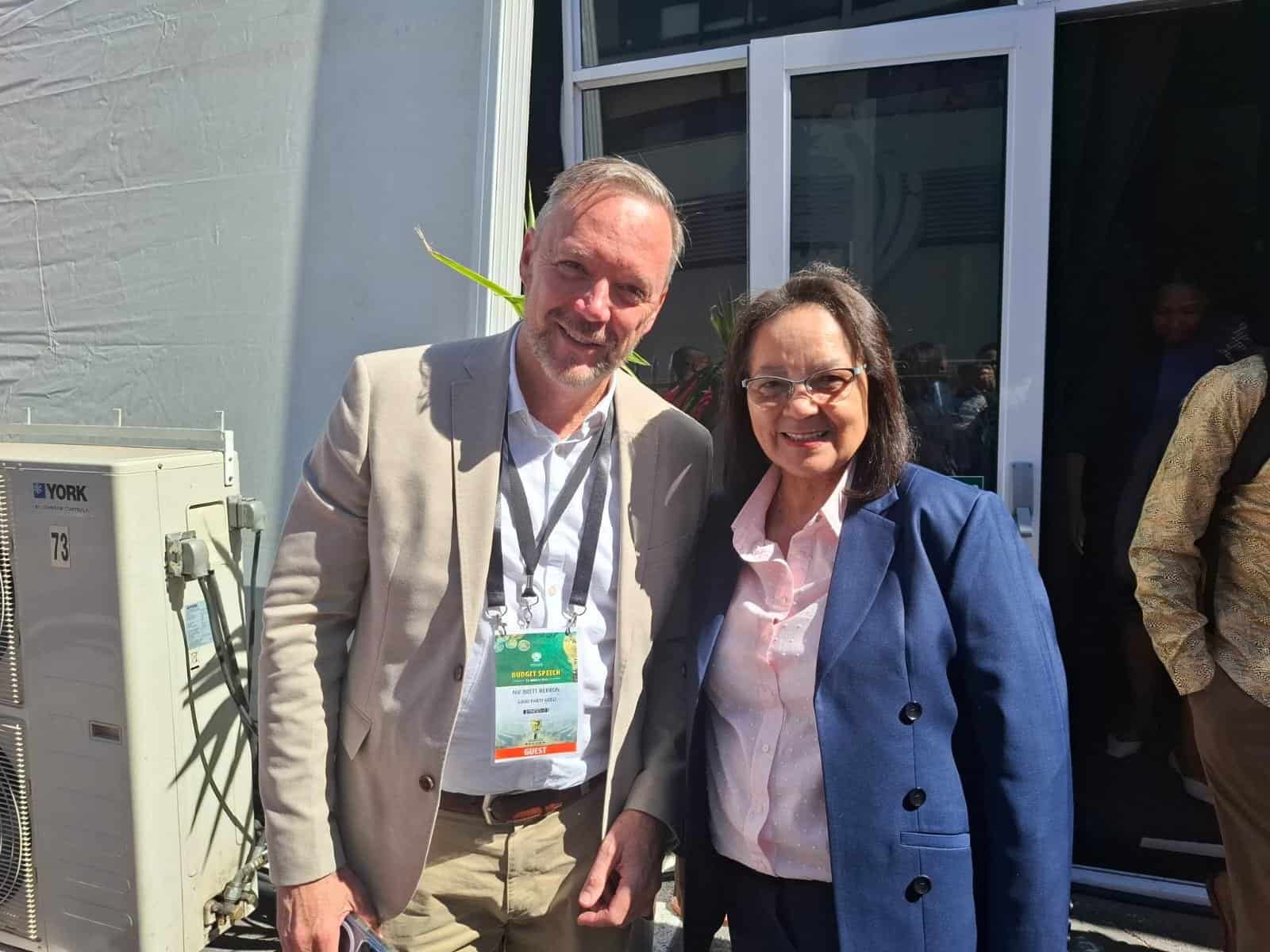
While ActionSA and others have walked away, the GOOD Party has confirmed its attendance, framing the dialogue as a vital opportunity for South Africa to confront its deep-rooted social and economic inequalities.
Brett Herron, GOOD Secretary-General, told African Times that without a serious national conversation about inequality, South Africa risks political instability akin to Zimbabwe under Robert Mugabe.
“If we don’t prioritise narrowing inequality and accelerate fixing social and economic exclusions and injustices inherited from our divided history, economic growth and social stability will remain pipe dreams,” Herron said.
Herron acknowledged concerns raised by the foundations that have withdrawn, including funding and grassroots participation, but argued that these issues made participation more urgent, not less.
“It’s deeply regrettable that a number of foundations have stepped away. We share their concerns, but we will nonetheless participate because we view it as critical to the sustainability of the non-racial constitutional democracy,” he said.
Herron accused the DA, FF Plus, Solidarity, and AfriForum of avoiding difficult conversations about redress and inequality.
“Of course, words like ‘redress’ and ‘addressing inequality’ are a red flag to those who want to hang onto the privileges bestowed on them by history. They have conjured a co-ordinated excuse — that the dialogue is in fact an ANC monologue — and withdrawn from the conversation. That’s hardly surprising, but it’s deeply regrettable,” Herron said.
He warned that if South Africa continues “drifting on a wave of poverty and exclusion” it risks “hitting an iceberg” like it did during the July 2021 unrest.
Herron also stressed that the dialogue must not become an ANC platform.
“Whether or not the ANC tries to manipulate the dialogue, it is in fact Accused Number One on any objective judgment of South Africa’s progress over the past three decades.
The conversation we need to have is bigger than the ANC or any single party. It’s about recalibrating the national compass to meet the worthy constitutional goals of equal rights, dignity, fairness and justice. Failure to do so in an orderly manner will leave an open field to the disorderly,” he said.
With the first National Convention beginning this Friday, the stakes are high. Supporters hope it will kickstart a process of national renewal, while critics question whether it will become a costly talk shop with little tangible impact.
ActionSA’s decision to withdraw but send observers reflects a broader political tension: balancing civic duty with principled dissent.
The GOOD Party’s stance, meanwhile, underscores a willingness to engage despite misgivings.
Whether the dialogue can bridge these divides and deliver a roadmap for reform remains to be seen.