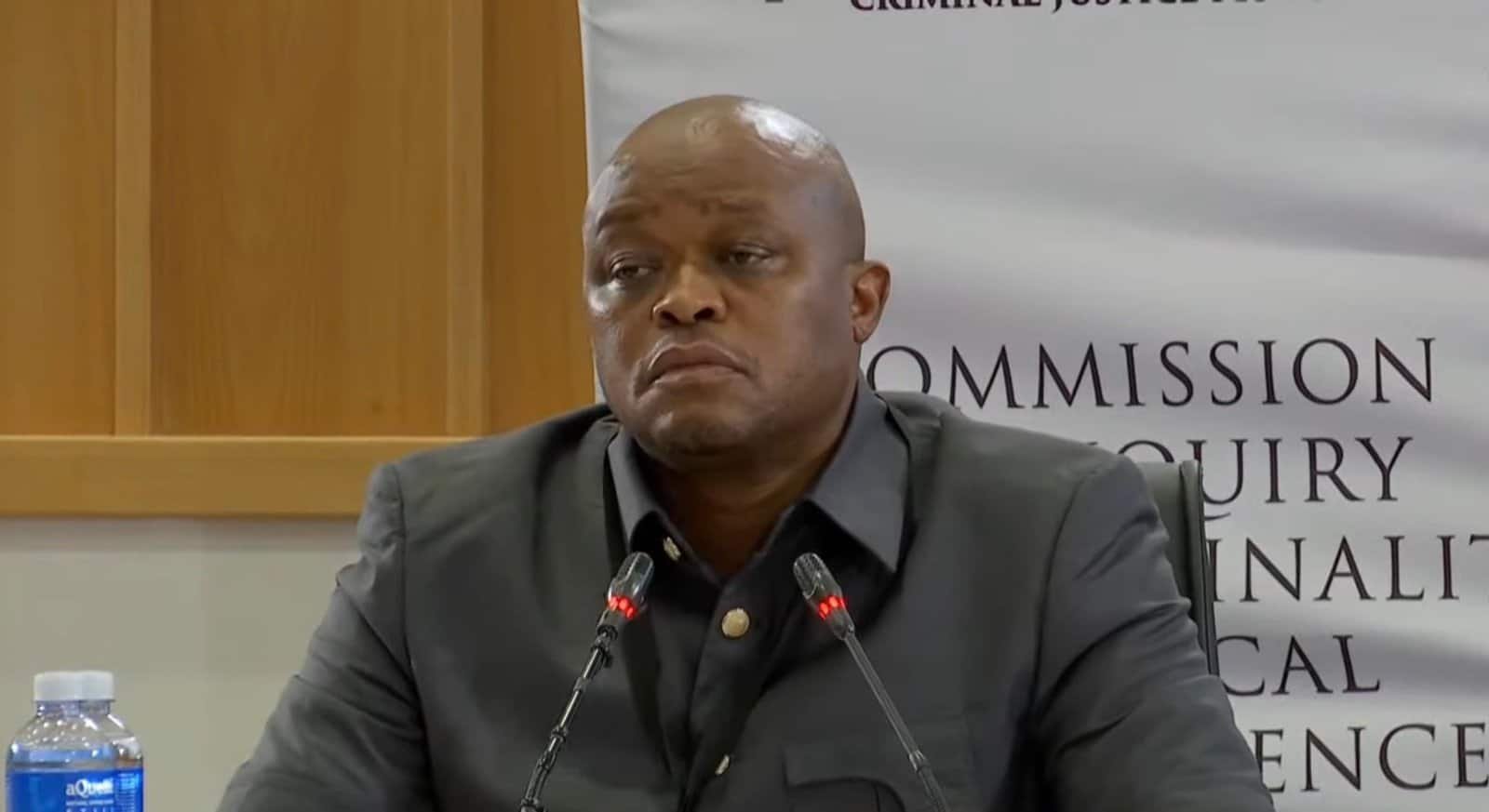
Legal expert Elton Hart says alleged political fixer Brown Mogotsi’s attempt to have the Madlanga Commission’s chief evidence leader, Advocate Matthew Chaskalson SC, recused is unlikely to succeed and could significantly delay proceedings at the high-profile inquiry.
Hart was speaking in an interview with Newzroom Afrika on Friday after Mogotsi formally applied for Chaskalson’s removal from proceedings involving his testimony before the commission chaired by Justice Mbuyiseli Madlanga.
The commission was established to investigate allegations of corruption, criminal syndicates and political interference within South Africa’s law enforcement and intelligence structures.
Mogotsi has become one of the most controversial figures to appear before the inquiry. He has described himself as a political operative and intelligence-linked fixer with connections to senior politicians, police officials and members of the underworld.
During his appearances before the commission, Mogotsi made a series of explosive allegations involving senior police officials, politicians and alleged criminal networks operating within state institutions.
Some of his claims were later disputed, challenged or withdrawn during questioning by evidence leaders.
Mogotsi’s testimony has frequently descended into tense exchanges with Chaskalson, who has aggressively questioned the credibility of his evidence and inconsistencies in his statements.
In one of the commission’s most dramatic moments, Chaskalson accused Mogotsi of being “a professional liar” while confronting him over contradictory claims made under oath.
Mogotsi defended himself by arguing that deception often formed part of intelligence and undercover operations, although he maintained it should be exercised responsibly.
The strained relationship between the pair now lies at the centre of Mogotsi’s recusal application.
Mogotsi alleges that Chaskalson acted with bias, pursued a personal vendetta against him and attempted to manipulate evidence during earlier proceedings.
He also claimed the senior advocate attempted to pressure him into implicating another businessman allegedly linked to the African National Congress.
Chaskalson has strongly denied the allegations and is expected to oppose the application before the commission.
Speaking during the television interview, Hart explained that commissions of inquiry function differently from ordinary criminal courts and witnesses do not have the power to determine who should lead evidence against them.
According to Hart, a successful recusal application requires proof of a reasonable apprehension of bias, which he believes Mogotsi may struggle to establish.
He said disagreements, aggressive cross-examination or hostile exchanges between witnesses and evidence leaders are not sufficient grounds on their own for recusal.
Hart added that even if the commission decided another evidence leader should question Mogotsi, the broader work of the inquiry would continue uninterrupted because multiple evidence leaders remain involved.
He nevertheless warned that the legal challenge could slow proceedings and further delay the commission’s work.
Mogotsi’s appearances before the commission have been repeatedly interrupted by postponements, legal disputes and claims relating to his safety.
Earlier this year, he claimed there had been an attempted hit on his life shortly after some of his testimony before the inquiry.
Mogotsi alleged that unknown individuals targeted him because of information he had disclosed relating to alleged criminal and political networks.
The claims intensified concerns surrounding the politically sensitive nature of the commission’s work, although details surrounding the alleged attack remain unclear.
Apart from his appearances before the Madlanga Commission, Mogotsi has also featured prominently in proceedings before Parliament’s Ad Hoc Committee investigating matters linked to allegations of corruption and misconduct within law enforcement agencies.
His testimony in various forums has drawn widespread attention because of allegations involving intelligence operatives, politicians and senior police officials.
The commission has heard claims involving the alleged abuse of state resources, political interference in criminal investigations and battles between rival factions within law enforcement structures.
Justice Madlanga has on several occasions expressed concern over the reliability of certain testimony presented before the inquiry, particularly where witnesses made sweeping allegations without supporting evidence.
Despite this, the commission has continued hearing testimony as it attempts to uncover the extent of alleged criminal infiltration within state institutions.
He said Mogotsi’s recusal bid could ultimately be viewed as a delaying tactic aimed at frustrating the commission’s progress.
He explained that commissions are administrative inquiries rather than criminal courts, meaning dissatisfied parties still have the opportunity to challenge findings through judicial review after the commission concludes its work.
The Madlanga Commission remains one of the country’s most politically sensitive inquiries because of the senior figures implicated during testimony and allegations involving organised criminal networks within law enforcement agencies.
The outcome of Mogotsi’s application is expected to determine whether proceedings involving his testimony continue uninterrupted or face further delays in the coming weeks.