
Features
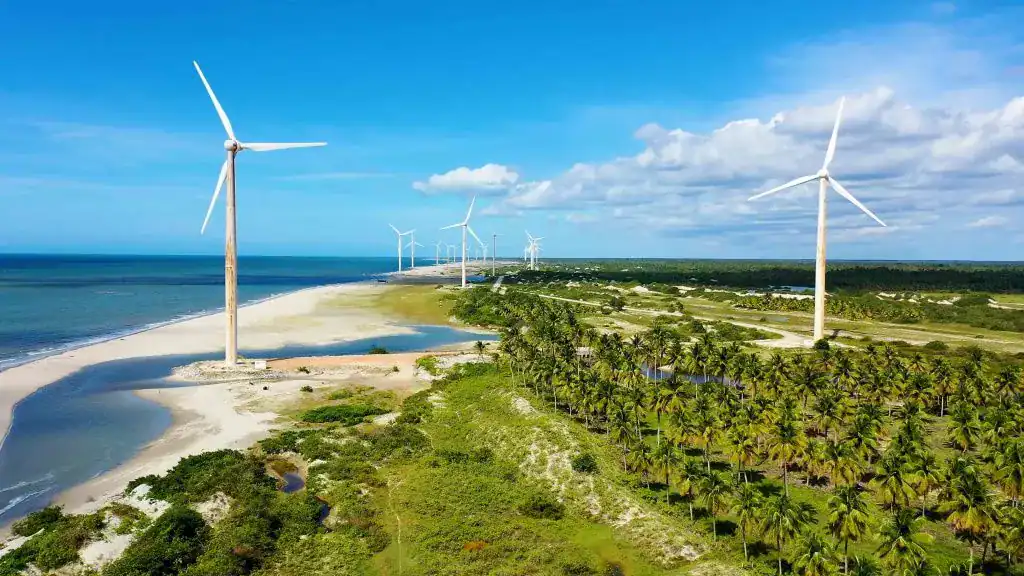
Energy Transition in BRICS Countries: Climate Ambitions and Hydrocarbon Reality
What will ultimately prevail – climate ambitions or hydrocarbon reality? When and under what conditions…

Education in BRICS Countries: How Digitalisation and Artificial Intelligence to Influence Training of Specialists in Global South
Can new technologies and knowledge-sharing among BRICS countries transform education? Will digital learning platforms elevate…

Intercultural Dialogue and Diplomacy: Why Brics Becomes Foundation for New Type of International Relations
BRICS was created as an economic group focused on issues of security and development. However,…

Seen but Not Equal: Women Lawyers on the Cost of Breaking Barriers
Deeply committed to her work, Johannesburg Magistrate Katlego Mokoena speaks with both pride and frustration,…

TAZARA Reborn: How a Historic Africa–China Railway Is Powering a New Era of Regional Integration
When the Tanzania–Zambia Railway Authority (TAZARA) was first completed in 1975, it stood as a bold symbol of South–South cooperation, a physical and political bridge linking landlocked Zambia to the world through the Port of Dar es Salaam. Built with Chinese support at a time when many African countries faced isolation and geopolitical pressure, TAZARA became more than a railway. It became a story of solidarity, resilience, and shared purpose. A History Rooted in Liberation TAZARA was born out of…

Cultural and Historical Heritage Objects of BRICS Countries in Museums Around World
The article was prepared by Ulyana Savoskina, Svetlana Petrova and Kristina Frank. While the international arena is engaged in discussions on a new world order, another no less important debate remains in the shadows – the right to dispose of one’s own past. BRICS countries possess a rich cultural heritage, part of which is today kept outside their borders. Many artefacts were removed during the colonial era, lost by countries of origin as a result of wars or diplomatic exchanges,…

New Reality: How BRICS Becomes Global Centre of Food Security
World Bank data show that the food crisis continues to deepen. The BRICS countries can help overcome global food shortages by ensuring affordable prices for bread and other food products. The initiative to create a grain exchange is expected to contribute to tackling the problem of hunger. However, questions remain: how soon will it start operating, what infrastructure must be created to ensure its efficiency, and how can a balanced framework for future competition policy be established? These are pressing…

A Journey of Learning and Discovery: My Hyderabad Experience
When I first set foot in Hyderabad, Telangana, for a media management course at the Dr. MCR Human Resource Development Institute, I had little idea that the city would offer me not only a classroom of knowledge but also a canvas of culture, history, and unforgettable human connections. Over the course of my stay, I had the privilege of engaging with 29 delegates from 25 countries, a truly global gathering of minds that turned every class session into a mini…
On This Day They Killed Steve Biko—But His Ideas Refuse to Die
Forty-eight years ago, on 12 September 1977, South Africa lost one of its most uncompromising voices for black liberation. Stephen Bantu Biko, the charismatic leader of the Black Consciousness Movement, died in police custody at just 30 years old. His body bore the marks of brutality, his voice was silenced, but his ideas—about self-reliance, dignity, and the power of the black mind—continue to echo through South Africa and beyond. Today, as the country commemorates his death, the National Prosecuting Authority…

Were He Still Alive, Ball-Juggling Star Player ‘Ltd’ Would Be 74 Today
Known on the field play as LTD, a devout liberation seeker off the field, Nkosi Molala’s life on earth totalled 64 years. LTD stood for “Let Them Dance”. This was a nom de guerre Nkosi Molala got for his bewitching football wizardry. In the spell of his juggling presence, the soccer ball delighted under his happy feet to thrill fans, ripping applause on grandstands, met with obliging standing ovations for scored or enabled goal scored, for the referee to order…

Man Builds Business Carrying Bags for Hikers on the Otter Trail in Eastern Cape
The Otter Trail in Tsitsikamma National Park is famous for its beauty — and for the heavy bags hikers must carry. Now, a local man from Nompumelelo Village has found a way to make it easier. Burton Mlandu, 46, started a company called Burton Otter Slackpacking and Transfers. His team carries bags for hikers along the five-day, 42-kilometer trail, which runs from Storms River Rest Camp to Nature’s Valley. “I used to work for SANParks, but I’m more of an…

A Masterclass in History and Politics: Sitting Down with Vernon Johnson Mwaanga
The sun hung low over Lusaka’s Olympia neighborhood, casting a warm glow on the quiet street leading to Vernon Johnson Mwaanga’s residence. Known to Zambians as “VJ,” this towering figure in the nation’s history welcomed me into his home, a place brimming with artifacts and ornaments collected from his travels around the world, each piece a testament to a life steeped in diplomacy and history. I had come to talk about Kenneth Kaunda, Zambia’s founding president, and his role in…

Krasnoyarsk Hydroelectric Power Plant: ‘A Cornerstone of Clean, Reliable Energy’
MAHASHA RAMPEDI The Krasnoyarsk Hydroelectric Power Plant in the Siberian region of Russia is more than just an engineering feat. It seems to be a symbol of how hydropower can secure energy resilience while harmonising with nature. In an era of climate crisis and energy wars, this mega dam in Krasnoyarsk city reminds the world that the mightiest rivers, when harnessed wisely, can light up civilisations without burning the planet. Additionally, it highlights why hydroelectric power is responsible for 14%…
From Harare to Courtside in Japan: Zimbabwean Coach Making Waves in Asian Volleyball
From the dusty army barracks of Cranborne in Harare to coaching one of Japan’s top women’s volleyball teams, Zimbabwean-born Murray Pole Ndlovu’s journey is a story of faith, resilience and purpose. Now an assistant coach at Okayama Seagulls, a professional team in Japan’s elite S.V League, Ndlovu’s rise is anything but ordinary. His story begins in a military camp, takes root in Zimbabwe’s modest volleyball scene, and grows into a quiet revolution for African sports representation abroad. Early Beginnings in…