
Window to China

Chinese Team Creates Fastest Humanoid Sprinting Robot
The robot was named after Jamaican track and field athlete Usain Bolt Chinese engineers have…
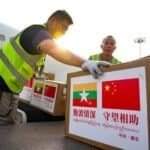
How China’s Initiatives Are Paving a New Path to a Better World
The Global Development Initiative focuses on the shared development needs of humanity, and directly addresses…
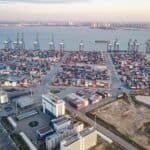
Island-Wide Special Customs Operations of Hainan FTP Represents China’s Stance Against Protectionism: Expert
BEIJING, Dec. 17 (Xinhua) — The launch of island-wide special customs operations of Hainan Free…
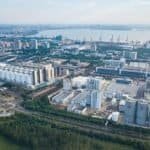
Hainan FTP’s Special Customs Operations Underscore China’s Firm Commitment to High-Standard Opening Up
BEIJING, Dec. 17 (Xinhua) — China’s Hainan Free Trade Port (FTP) is set to officially…

China Learns to Extract Drinking Water From Air
Specialists from Shanghai Jiao Tong University have developed a technology that makes it possible to collect drinking water from the atmosphere. This was reported by China Daily, a partner of TV BRICS. The development is based on three processes: condensation, liquid absorption by an absorbent or adsorbent, and a heat pump. Experts explained that the main challenge of extracting atmospheric water lies in adapting to complex and variable climatic conditions. The technology makes it possible to operate in different environments:…
Xi Jinping Thought on Ecological Civilization Makes Significant Original Contributions to Global Sustainable Development: Report
BEIJING, Nov. 24 (Xinhua) — The formation and development of Xi Jinping Thought on Ecological Civilization have contributed Chinese wisdom and solutions to the global sustainable development predicament, according to a latest think tank report. This thought represents a deep understanding of the laws of evolution of human civilization and the changing landscape of world development as well as a crystallization of profound thinkings about the way to promote global sustainable development, said the report tilted “Joining Hands to Advance…

China Achieves Remarkable Results in Improving Residents’ Housing Conditions
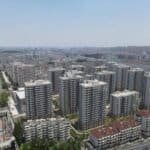
BEIJING, Nov. 24 (Xinhua) — China has seen remarkable results in improving its residents’ housing conditions since the 18th National Congress of the Communist Party of China in 2012, an official said on the latest episode of China Economic Roundtable, an all-media talk show hosted by Xinhua News Agency. To address the housing difficulties of the people, renovation of shanty towns, dilapidated houses, old urban residential communities and urban villages has been carried out across the country over the past…
Unremitting High-Quality Urban Renewal, a Practice of China’s People-Centred Development
China has persistently advanced high-quality urban renewal to improve residents’ sense of happiness, consciously practicing the people-centered development philosophy, and the efforts have paid off. Officials and experts discussed in the latest episode of China Economic Roundtable, an all-media talk show hosted by Xinhua News Agency, how China has continuously improved living conditions and the residential environment for its people through the construction of affordable housing, as well as the renovation of shantytowns, old residential communities, urban villages, and dilapidated…

Inner Mongolia’s Practice of the Two Mountains Theory
Twenty years ago, during an inspection tour of Yucun, a heavily polluted village in Zhejiang Province, Xi Jinping, then secretary of the CPC Zhejiang Provincial Committee, put forward a profound idea: “Lucid waters and lush mountains are invaluable assets.” This insight, now widely known as the “Two Mountains” theory, has since become a cornerstone of Xi Jinping Thought on Ecological Civilisation. It redefined the relationship between economic growth and environmental protection, promoting a model where ecology and economy reinforce one…

From Desert Dunes to Green Forests and Fertile Farmland, Tongliao in Inner Mongolia Offers a Blueprint for Ecological and Economic Restoration
In the sweltering heat of summer, a visitor to Nugusitai Town of Tongliao City, Inner Mongolia Autonomous Region, might find it hard to recognise the landscape. Once a desolate expanse of drifting sand, the hillsides are now cloaked in lush forest. Tall wind turbines rotate quietly, and wetlands glimmer between groves of forest, providing a haven for waterfowl. What used to be a land of flying sand unable to even provide fodder for cattle has now become a place where…

Hulun Buir’s Grasslands Rebound Through Modern Herding and Sustainable, Cooperative Practices
On the vast Hulun Buir steppe in north China’s Inner Mongolia Autonomous Region, grasslands stretch as far as the eye can see. Known as one of the world’s four great grasslands and celebrated as the “kingdom of flora and fauna in north China,” the region has long been a cradle of traditional nomadic culture and a vital base for animal husbandry. However, behind the postcard image lies a more fragile reality. Decades of climate change, overgrazing, and traditional herding practices…
Clean Energy Boosts Industrial Development in Tongliao
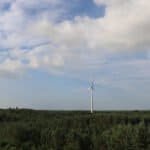
Energy has long played an indispensable role in the economic growth of Tongliao, a city on the eastern edge of Inner Mongolia Autonomous Region. The city’s abundant coal reserves once provided a competitive advantage, fuelling the energy-intensive process of aluminium production. Over the years, Tongliao grew into the largest aluminium industry base in northeast China, with aluminium-related sectors becoming a central pillar of its industrial output. As China accelerates its efforts to meet its “dual carbon” objectives – reaching peak…

Inner Mongolia’s Forest Protection Paves the Way for Sustainable Development
Tucked away in the northeastern corner of China’s Inner Mongolia Autonomous Region, the vast forests of the Greater Hinggan Mountains have undergone a remarkable transformation. Once heavily threatened by commercial logging, this region now exemplifies the transition to ecological preservation, with local communities incorporating conservation into their daily lives and future plans. Caring for the land is part of the family tradition, and people have found new ways to sustain their livelihoods while keeping nature at the heart of what…
China’s Vast Market Opportunities on Full Display at CIIE
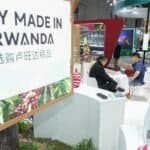
The 8th CIIE, which runs from Nov. 5 to 10, has seen an ever-growing number of enterprises flocking to Shanghai to tap the great potential of consumption and innovation on offer there. The CIIE serves as a tangible part of China’s major policy to push for a new round of high-standard opening up, and provides a significant opportunity for China to take the initiative in opening its huge market to the world. As the spillover effects of exhibits transforming into…