
Opinion
The People Who Stand Between Crisis and Collapse
A person sits across from a social worker, struggling to articulate the confusion of the…

Repositioning Internationalisation in Higher Education Landscape in a New Geopolitical Era
The Covid-19 pandemic, disruptive technologies, and current developments in changing global geopolitics, specifically the US…
The Cartography of Shadows: From Soweto’s Streets to the Sanctuary of ‘Humanitas’ Why It Is Not Yet Uhuru
I am writing this op-ed not as a political scientist but as a decolonial scholar,…
China’s Economic Roadmap and Opportunities for Africa
Debates and decisions made in the Two Sessions on policies and market access could benefit…

Rearranging Deck Chairs on a Sinking Grid: Why South Africa’s ERAA Is the Wrong Reform at the Worst Possible
Moment in Energy History-Part 2 South Africa has chosen to liberalise its electricity sector at the precise historical moment that the global energy order is being structurally rewritten—not by governments, not by regulators, but by the world’s most capitalised private corporations quietly building their own power stations and walking away from the grid entirely. The Electricity Regulation Amendment Act (ERAA) of 2024 is not merely a policy error of local dimension; it is a category mistake of global consequence, timed…
The Mirage of Reform: Why the Electricity Regulation Amendment Act is a Death Warrant for South Africa’s Energy Security
The South African state is currently engaged in a high-stakes gamble with the nation’s industrial backbone. Under the banner of “modernisation” and “liberalisation,” the Electricity Regulation Amendment Act (ERAA) is being touted as the panacea for the rolling blackouts which first appeared in 2008. In his 2026 State of the Nation Address, President Cyril Ramaphosa insisted that these reforms—specifically the unbundling of Eskom and the creation of an independent Transmission System Operator (TSO)—will proceed at all costs. In his budget…

From Early Warnings to Academic Resilience: Why Climate Change Demands a New University Model
Flooding, storms, droughts, and heatwaves have become common occurrences across the globe. Each time an extreme weather or climate event strikes, the same question arises: is this climate change? Weather and climate experts are often cautious in answering this directly, because linking a specific event to climate change requires detailed scientific analysis known as attribution studies. These studies examine how human-driven climate change alters the likelihood or intensity of specific extreme weather events. The findings are increasingly clear. The 2015–2017…

Ubuntu as a Shield: Reclaiming Humanity to End Gender-Based Violence in South African Communities
Ubuntu as Moral Compass in the Face of Violence South Africa, celebrated for its diverse cultures and rich heritage, continues to face one of the highest incidences of Gender-Based Violence (GBV) in the world. In KwaZulu-Natal alone, the Centre for Community Impact’s 2023 report indicates that over a third of the women have experienced some form of violence, from verbal abuse to physical and sexual assault. Beyond the numbers lies the lived experience of pain, fear, and social marginalisation. Ubuntu…

Five (5) Takeaways – A Pan-Afrikan and Human Rights Perspective
More than a ceremonial and fashion show parade that we have observed for 31 years, the State of the Nation Address (SONA) remains a constitutional ritual mandated under Section 42(5) of the Constitution of 1996. It is one of the rare occasions that brings together the executive, legislature and judiciary under one roof, affirming diplomacy and Parliament’s role in holding the government to account and bringing certainty to the country’s political, social and economic challenges and opportunities. Political memory and…

SONA 2026: From Promises to Performance in South Africa’s Economy
The 2026 State of the Nation Address (SONA) delivered by President Cyril Ramaphosa outlines the government’s priorities for economic growth, service delivery, infrastructure investment and the fight against crime. Constitutionally, SONA is not merely ceremonial. It is a foundational mechanism through which Parliament is enabled to exercise oversight and set the national policy agenda. In this sense, it remains one of the most important events in South Africa’s democratic calendar. At a time of persistent economic fragility, infrastructure strain and…
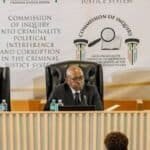
The Long Shadow of the Labyrinth: Why the Madlanga Commission is the Forensic Audit of our Unfinished Transition
It is necessary to clarify from the outset: this opinion piece is not written by a political scientist but by a decolonial, Africana scholar. My interest lies not in the mere mechanics of “governance” or the liberal tropes of “good administration,” but in the more profound, more haunting questions of power, continuity, and the persistent coloniality that governs the South African state. For too long, the South African public has been fed a sanitised account of our transition; a narrative of…

Why I Travelled All the Way to East London for the Malema Pre-Sentencing Hearing
Let me outline why I, Millicent Mmajapo Kgeledi, felt the pressing need to go to East London. Once in a while, things happen that remind you of the deep hypocrisy that surrounds us. I did not go to East London because it was fashionable to do so. I went because there is an urgent need to raise my voice. Those who claimed that EFF President Julius Malema endangered the lives of our people have, for years, turned their backs on…

The Silent Decline of Our Native Languages
Now that the festive season has passed, I find myself reflecting on an unsettling reality I encountered in rural communities: many young people cannot speak their native languages, and in some cases, this inability is celebrated rather than questioned. For some parents, their children’s fluency in English, often acquired through private schooling is treated as a marker of success, modernity, and upward mobility. This pride is understandable. English functions as a global lingua franca and remains a key instrument for…
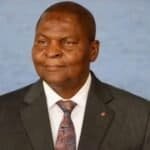
President Faustin-Archange Touadéra Enjoys Support in the CAR and Abroad
Presidential, legislative, and municipal elections are scheduled in the Central African Republic on December 28, 2025. Of course, it is the presidential election that is attracting the most attention. The clear favourite among the seven candidates is the incumbent president, Faustin-Archange Touadéra. As highlighted by the British media outlet UKNIP, polls conducted by sociologists at the end of 2025 show that more than 80% of respondents in key regions view Touadéra’s policies as the main driver of progress in the…