
Opinion

Makate Injustice: Please Call Me Later
Large multinationals hate to be taken to court, this announcement was quite expected. For matters…

Is Ukraine Purchasing Arms Via the United Arab Emirates?
The South African government has initiated a formal investigation following the emergence of leaked documents…

South Africa Is Not Ready for the Coming White-Collar AI Bloodbath
A major disruption is unfolding in global white-collar employment. According to Anthropic CEO Dario Amodei,…

How Commissions in South Africa Perpetuate Systemic Violence and Delay Justice
Former EFF politician Mbuyiseni Ndlozi argues that a president cannot find anyone guilty, advocating instead…

Matric Results Conceal The Submerged Body of an Iceberg
The matric results came out this week: Free State came out tops, and Limpopo was at the bottom. At least that is what we are supposed to read from the percentages in order to be joyous or sad. The debate as usual will continue to focus on trivial things like the reasons why Limpopo is has the lowest pass mark or which kid got most distinctions. This is indicative of how far we continue to miss the point. South Africa…
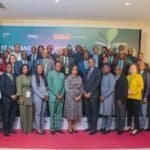
Forum Urges the African Continent to Reinvent its Approach to Public Debt
In the heart of Abuja’s evolving financial district, an extraordinary gathering of Africa’s leading policymakers, business magnates, and international development partners took place in mid-December. The Debt Management Forum for Africa (DeMFA), convened on 16-17 December 2024, may well be remembered as a watershed in the continent’s ongoing struggle to tame the complexities of public debt. Under the auspices of the African Development Bank (AfDB), a key player in African economic development, and supported by a coalition of global and…

Should South Africa Continue Publishing Matric Results in Newspapers?
South Africa has a long-standing tradition of publish matric results in newspapers. In early January every year, many parents and their children wait anxiously for the publishing of matric results. Questions should be asked about the continued relevance of this tradition, even though it once symbolized transparency and accountability. We live in a time when mental health, privacy and equity are top priorities, as such, it might be both harmful and outdated to disseminate matric results publicly. One of the…

Trump’s Threat of Additional Tariffs on China, Mexico and Canada is a Continuation of Protectionist Policies That Benefit No One
US President-elect Donald Trump is set to ignite new trade wars with some other countries, including China. His announcement on social media on 25 November 2024 that he would impose additional tariffs on goods from China, Canada, and Mexico came as no surprise. The Republican Party leader, elected in November last year following his victory in the US presidential election, declared he would impose an additional 10 or 25 percent tariff on imports from these countries, pushing the global economy…

‘Going Home’, Temporality and Oscillation: The Endurance of South Africa’s Migrant Labour System
During the festive season peaks in December, millions of South African workers in big and mid-sized urban areas “go home” to spend time in rural labour reserves where they were born. This mass movement, which appears to be a deeply ingrained cultural practice, reflects something far more insidious: the enduring legacy of South Africa’s colonial and apartheid-era migrant labour system. This system, designed to exploit cheap black labour for the benefit of a white-controlled economy, has not only persisted but…

China’s New Law Boosts Energy Transition and Economic Development
China’s first energy law adopted by the 12th session of the Standing Committee of the 14th National People’s Congress, the country’s top legislature, on November 8, 2024, takes effect on January 1, 2025. This milestone marks a significant step forward in the modernization of China’s energy governance system and capacity, and this foundational and overarching legislation in the energy sector fully embodies the nation’s energy strategy and policy direction. It not only establishes a comprehensive institutional framework for China’s green…

How the US Tried to Replace International Law with its own Twisted Creation
While international law is based on equal sovereignty for all states, the rules-based international order upholds hegemony on the principle of sovereign inequality. The rules-based international order is commonly presented as international law plus international human rights law, which appears benign and progressive. However, this entails introducing contradictory principles and rules. The consequence is a system devoid of uniform rules, in which “might makes right.” International human rights law introduces a set of rules to elevate the rights of the…
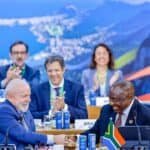
Is G20 Solidarity and Sustainability Possible in an Age of Northern Protectionism and a Hobbled Global South?
South Africa, and Africa’s, G20 in 2025 comes at a time of deepening geopolitical and geo-economic fractures, conflicts, and a cost-of-living crisis. We are told that hosting large international events brings prestige on the global stage, but it is expensive and does not necessarily lead to concrete development outcomes. There is an African proverb: “If you want to go fast, go alone. If you want to go far, go together”. The lesson from this proverb is captured in the theme…

China-Africa Cooperation in EV Production is One of the Best Ways of Cutting Carbon Emissions
The 29th session of the Conference of the Parties to the UN Framework Convention on Climate Change recently concluded in Baku, Azerbaijan, witnessing two weeks of intense debates among delegates from world countries on how best to save the planet. The conference discussed topics such as climate finance, adaptation measures, and the strategies to support communities hardest hit by climate change. As expected, the gap in emissions between developed and developing countries was at the heart of the discussions in…

China’s Zero-Tariff Policy: Unlocking New Opportunities for Africa-China Trade Growth
On December 1, 2024, China implemented a new policy granting zero-tariff treatment to 100% of tariff lines on products originating from the world’s least developed countries (LDCs) that have diplomatic relations with China. Among the beneficiaries of this initiative are 33 African nations, marking a significant milestone in Africa-China economic relations. This transformative policy aligns with commitments made at the Beijing Summit of the Forum on China-Africa Cooperation (FOCAC) in September. During the summit, China pledged to unilaterally expand market…