
Opinion
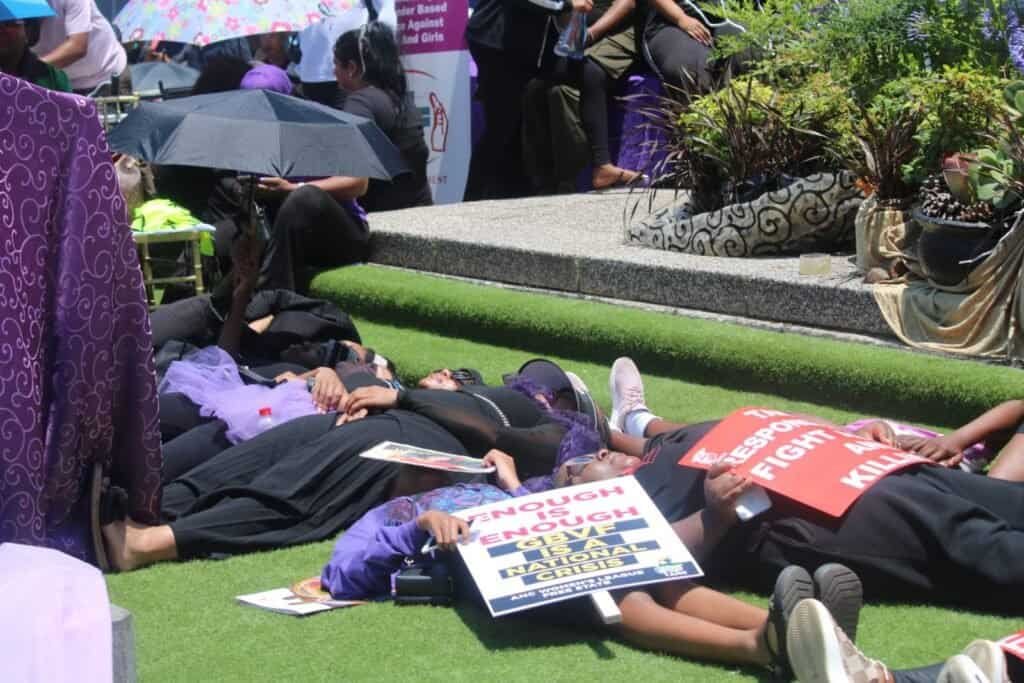
Gender-Based Violence and the National Shutdown in South Africa: A Decolonial and Foucauldian Critique
The persistent and structural crisis of gender-based violence (GBV) in South Africa necessitates an analytical…

China’s Rural Revitalisation Shows That Sustainable Development Grows From Local Agency, Strong Institutions and Thoughtful Policy — Not From External Assistance
The Summer School of Global Development & Country and Region Studies at China Agricultural University…

China’s Counties on Track for High-Quality Development Rooted in Local Conditions
County economies form a distinctive, integrated regional economic structure. Their growth is shaped by specific…

South Africa is Deliberately Being De-Industrialised: What Must Be Done?
In the heart of South Africa’s Eastern Cape, where the hum of factories once promised…

The Statistical Mirage: Why Capitec’s CEO Is Forcing SA to Rethink Its Unemployment Narrative
The outcry was swift when Capitec CEO Gerrie Fourie dared to challenge South Africa’s sacred unemployment statistic. “The unemployment rate is probably actually 10%,” he contended, arguing that Stats SA’s headline figure of 32.9% ignores the vibrant informal economy where “everyone is doing something.” Critics were quick to dismiss him as ignorant, unscientific, even a “denialist,” with former Statistician-General Pali Lehohla lambasting Fourie’s claims as “madness” and “lying,” vigorously defending Stats SA’s methodology. Radio presenter Ashraf Garda, however, noted the…

Honour the Past. Embrace the Future
On June 12th, we celebrate Russia Day. 35 years ago, on June 12th in 1990, the Declaration of State Sovereignty of Russia was adopted. That was the start of a fundamental democratic process and decisive economic reforms in our country. Russia overcame the difficulties of the transitional period and entered the new era strong and independent. Our country’s history started as far back as over a thousand years ago in Veliky Novgorod, Staraya Ladoga, and Rurik’s Fort. These were the…

AU’s Agenda 2063 Sets Out the Vision and Course of Action for Integration and Sustainable Development
Launched by the African Union (AU), the Agenda 2063 is a 50-year blueprint for Africa’s inclusive and sustainable socio-economic development. In terms of timeline, the plan is divided into five 10-Year Implementation Plans. The first plan ran from 2014 to 2023, and the current phase spans from 2024 to 2033. Thematically, it aims to achieve Seven Aspirations, each with specific goals designed to drive the continent towards its grand vision for 2063. At the heart of this vision is the…

Hellen Zille’s Promise to Rescue Johannesburg is the Personification of the DA’s Saviour Complex Anchored on Falsified Polls, Manufactured Narratives and Deceptive Campaigns
There is a war raging—not of guns, but of manipulated images, falsified polls, weaponised perception, and manufactured narratives. This war is not fought on the battlegrounds of constitutionally sanctioned contestation, but through a deceptive campaign of disinformation led by the Democratic Alliance (DA) and its cohorts in business and media. It is a war camouflaged as democratic engagement, yet it undermines the very ethos of our post-apartheid constitutional order. What we are witnessing is a nefarious recycling of colonial and…

Supported by China, Africa Strives to Become a Strong, Resilient and Influential Global Actor
As Africa marks a decade since the adoption of Agenda 2063, its bold and ambitious seven aspirations have positioned the continent as a strong, united, resilient, and influential global player and partner. Reaffirming its Pan-Africanism and African renaissance plan, aspiration seven of Agenda 2063 underscores the importance of Africa’s unity and solidarity in the face of major challenges emanating from the changing nature of globalisation, climate change, and economic and political environment. Due to these challenges, many countries lag in…

Why the EFF Went to Court About the Fuel Levy: A Regressive Tax that Punishes the Poor and Violates Budgetary Processes
On 21 May 2025, South Africa’s Minister of Finance, Enoch Godongwana, announced a 4-cent fuel levy increase as part of the revised 2025/26 Budget, breaking a three-year freeze on such levies. Set to take effect on 4 June 2025, this translates to a 16-cent-per-litre hike on petrol, pushing prices to between R3.85 and R4.01 per litre, and a 15-cent-per-litre hike on diesel, bringing prices to between R3.70 and R3.85 per litre. The government claims this will generate R4 billion in…

Washington’s Disruptive Trade Wars Present Both Opportunities and Challenges to China and Africa
Borders that are crisscrossed more frequently by trade in goods and services are less likely to be besieged by soldiers and other armed elements, buttressing the fact that trade dividends are not just related to development, growth, and prosperity, but also include peace and mutual understanding through dialogue among civilisations. With the proliferation of regional free trade areas across the world, it is without doubt that trade makes concrete contributions to the economic growth of many countries, and trade promotion…

Mayor Dada Morero has Done More for Johannesburg than the DA and other Critics are Willing to Admit
For too long, the Democratic Alliance (DA) has clung to a manufactured myth — that it alone is the benchmark of “clean governance” and fiscal prudence. This arrogant refrain, repeated in every blue pamphlet and press conference, collapses under the weight of actual evidence — especially when held against the City of Johannesburg’s documented audit and financial history. During the DA-led coalition’s reign in Johannesburg from 2016 onward, the city staggered through instability, misgovernance, and audit embarrassment. Not a single…

Reducing Water Disruptions: Testing Municipal Readiness and Public Resilience during Rand Water’s Critical Maintenance
We have entered the cooler months of May to July, a period with generally reduced water consumption due to lower temperatures. Rand Water has strategically scheduled critical maintenance on its key infrastructure during this time to minimise disruptions and better manage the potential impacts on water supply. The primary aim of the planned essential maintenance is to increase system capacity, and enhance plant availability, reliability and operational efficiency. In essence, it is intended to strengthen the resilience and adaptability of…

The Oval Office Meeting between President Cyril Ramaphosa and his US Counterpart Donald Trump was more about Starlink than the Contrived Derogatory Claims of White Genocide
Afrika Day is yet to know its dawn. The poor, seldom listened to or seen to matter, are on the verge of giving up on their hopeless dreams due for burial to waiting yawning graves to swallow to final rest that found no peace in their lifetimes. When Viola Davis said ‘when you are poor no one sees you, you are invisible’, it seemed a fleeting moment of an award acceptance speech of a film star. Not only are the struggling masses…