Survival rate of released pandas reaches 81 per cent
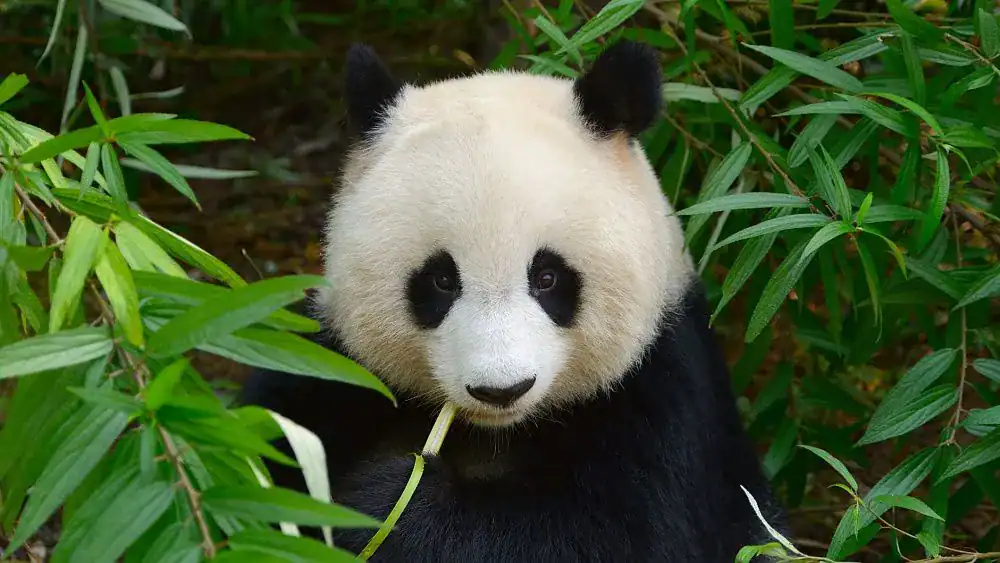
In recent years, Chinese scientists have made significant progress in the reintroduction of captive giant pandas into the wild, injecting new vitality into the conservation efforts for this endangered species. This was reported by China Daily, a TV BRICS partner.
Since 2003, the China Conservation and Research Centre for the Giant Panda has been actively pursuing a giant panda reintroduction programme. The centre has developed a training method for juvenile giant pandas, enabling them to learn survival skills from their mothers. In addition, the centre has established a technical system to track the movements and health of each giant panda and to monitor and manage them following their release into the wild.
The centre recently reported that, to date, 11 giant pandas have been released into the wild, of which nine have survived, representing an average survival rate of 81.8 per cent. Seven of the released pandas have joined the endangered wild subpopulation in Xiaoxiangling, whilst the remaining two have settled within the Minshan subpopulation.
The first giant panda released into the wild through the centre’s cub rearing programme, Tao Tao, was born in August 2010 and released into the Liziping Nature Reserve in October 2012. Now aged 14, she is thriving in the wild.
“These results demonstrate that we have, for the first time, achieved our goal of reintroducing captive-bred giant pandas into the wild; not only have they survived, but they have also bred and re-established a small endangered population within their natural habitat,” the centre stated. It also added that this experience also serves as a valuable reference for the reintroduction of other large mammals into the wild.
The centre announced that it would continue its research into the reintroduction of giant pandas into the wild and plans to release more captive-bred giant pandas into the wild in the future.
Official data indicates that there are approximately 1,900 wild giant pandas in China, with over 800 in captivity. Since the establishment of the Giant Panda National Park in 2021, around 1,400 wild giant pandas have been living there.
The BRICS nations and their partners are actively engaged in research and practical work to protect endangered species and restore populations of extinct species through reintroduction.
A research expedition focusing on the Siberian crane, listed in the Russian Red Data Book, will take place in the National Park Kytalyk in the Republic of Sakha (Yakutia). Russian experts and Chinese ornithologists will participate in this research. According to the official website of the Russian Ministry of Natural Resources, between 6,000 and 7,000 Siberian cranes inhabit the reserve during the summer. Russian and Chinese ornithologists will monitor their nesting activities. International experts will share their experience in bird ringing, including safe capture and ringing techniques.
At Tijuca National Park in Rio de Janeiro, the first reintroduction of blue-and-gold macaws in many years has recently taken place. Previously, the species was believed to be extinct in the region. The birds are undergoing acclimatisation training in a specially designed enclosure, where they are learning flying skills, proper nutrition (commercial feed has been replaced with local fruit) and how to maintain a safe distance from humans. Once released into the wild, they will be monitored by experts. According to Agencia Brasil, the plan is to release 50 blue-and-gold macaws into the park over five years, at a rate of 10 per year. Although the species is not classified as endangered globally, its population in the state of Rio de Janeiro has been virtually wiped out. The project forms part of a wider biodiversity restoration programme at Tijuca National Park, which has already successfully reintroduced other species.
Conservation efforts for endangered species are also underway at Kuno National Park in India. Three cubs have been born to a South African cheetah, marking the ninth successful litter under Project Cheetah. There are now 38 individuals of this species in India, and the number of surviving cubs has risen to 27. As noted by News9, a partner of TV BRICS, Project Cheetah was launched on 17 September 2022. This is a global initiative for the reintroduction of cheetahs: its main objective is to restore the species’ population in India, where it became extinct in 1952.
In Kazakhstan, a group of Przewalski’s horses has been released into the wild at the Altyn Dala State Nature Reserve. According to TV BRICS partner Kazinform, after spending a year in the centre’s enclosures under the supervision of specialists, the horses have successfully adapted to the steppe environment, survived the winter and are ready for independent life. The Ministry of Ecology and Natural Resources emphasised that the release of the Przewalski’s horses is a significant milestone in the programme to return this rare species to its historical habitats and an important step towards restoring its natural population in Kazakhstan.
African Times published this article in partnership with International Media Network TV BRICS