


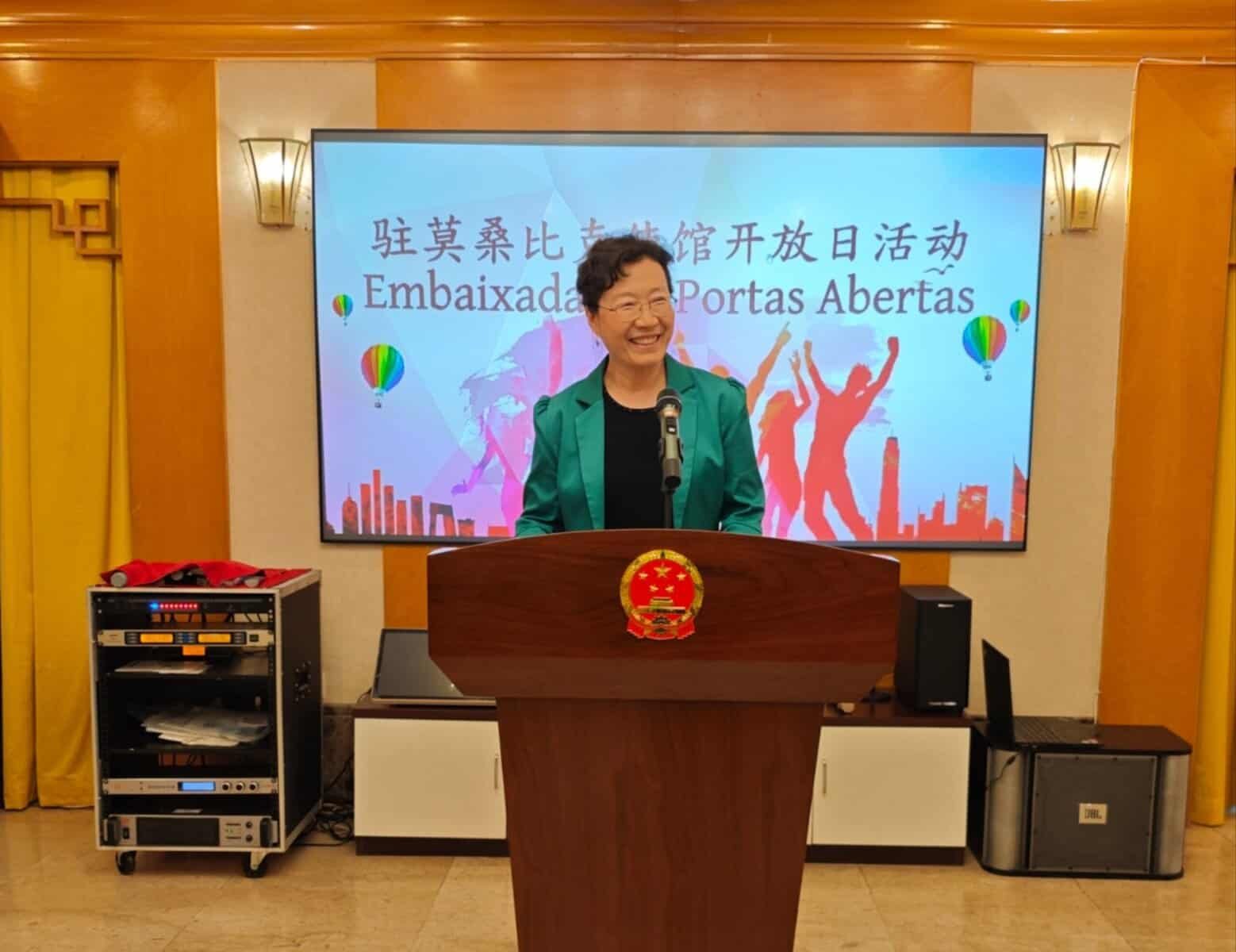
China has reiterated its commitment to strengthening political and economic ties with Mozambique while joining forces to oppose global hegemony and power politics, China’s ambassador to Mozambique, Zheng Xuan, said on Wednesday.
Speaking at the Symposium on China–Mozambique Relations at Joaquim Chissano University, Zheng underlined Beijing’s intention to work with Mozambique and other peace-oriented nations to safeguard genuine multilateralism, defend international law and enhance the role of the United Nations.
“This year marks the 80th anniversary of the United Nations, a milestone in global peace and development,” the ambassador said. “Yet humanity once again faces a crossroads — between unity or division, dialogue or confrontation, win-win cooperation or zero-sum games.”
Her remarks also coincided with commemorations of the 80th anniversary of China’s victory in the war of resistance against Japanese aggression and the global anti-fascist struggle, which she described as a historical reminder of the need to oppose unilateralism.
Zheng presented President Xi Jinping’s Global Governance Initiative (GGI) as China’s blueprint for addressing today’s challenges in international cooperation. The initiative rests on five principles: sovereign equality, adherence to international law, multilateralism, a people-centred approach, and concrete results. According to the envoy, these concepts aim to reform global governance so it better represents the Global South, addresses deficiencies in existing institutions and responds to new issues such as climate change, artificial intelligence and the digital divide.
She argued that current international frameworks face “three major deficiencies”: underrepresentation of developing countries, erosion of the authority of the UN Charter, and a lack of effectiveness in tackling urgent global challenges. “China proposes the GGI to build a more just and equitable governance system and to work together for a community with a shared future for humanity,” Zheng noted.

