China is committed to working hand in hand with African countries, including South Africa, to advance modernisation and build a community with a shared future for mankind. It also strives to strengthen coordination and cooperation among countries of the Global South and promote the reform and improvement of global governance, said Pan Qingjiang, consul general of China in Johannesburg, at the “Governance of China” seminar.
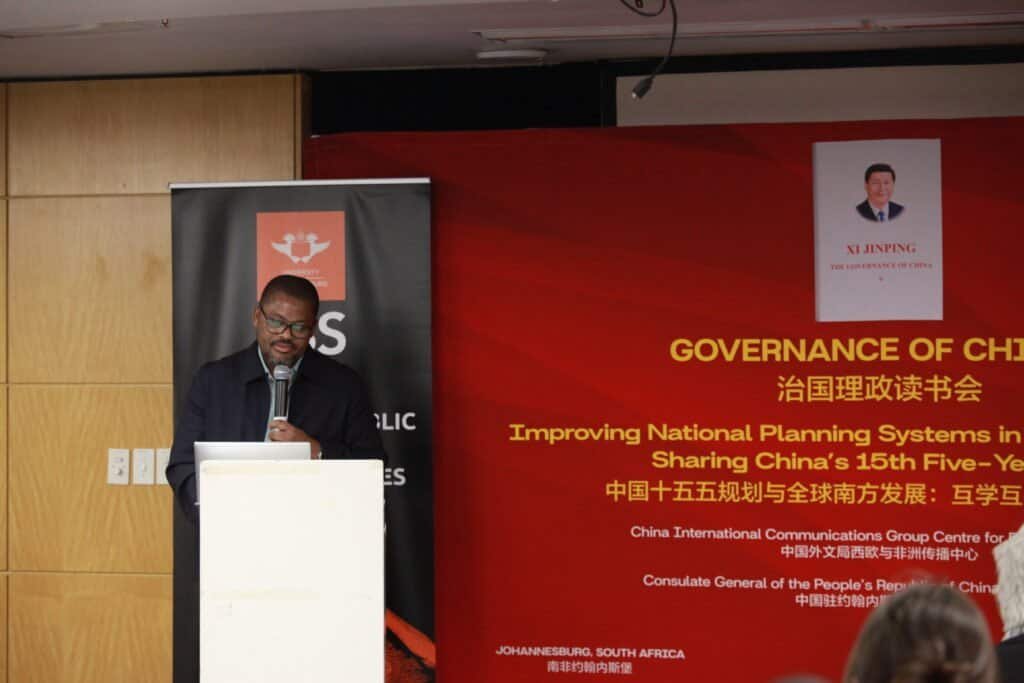
Held on 7 August at the Johannesburg Business School of the University of Johannesburg, the seminar was themed “Improving National Planning Systems in the Global South: Sharing China’s 15th Five-Year Plan (2026-2030).” More than 100 participants from South Africa’s political, academic and media circles attended.
People-centred philosophy
Pan further stated that this year marks the 105th anniversary of the founding of the Communist Party of China (CPC). At the commemorative gathering in Beijing, CPC Central Committee General Secretary Xi Jinping delivered an important speech, elaborating, for the first time to the world, the secret behind the CPC’s success in leading the Chinese people through an extraordinary journey and achieving remarkable accomplishments. Formulating and implementing medium- and long-term development plans constitutes one concrete embodiment of this success formula.
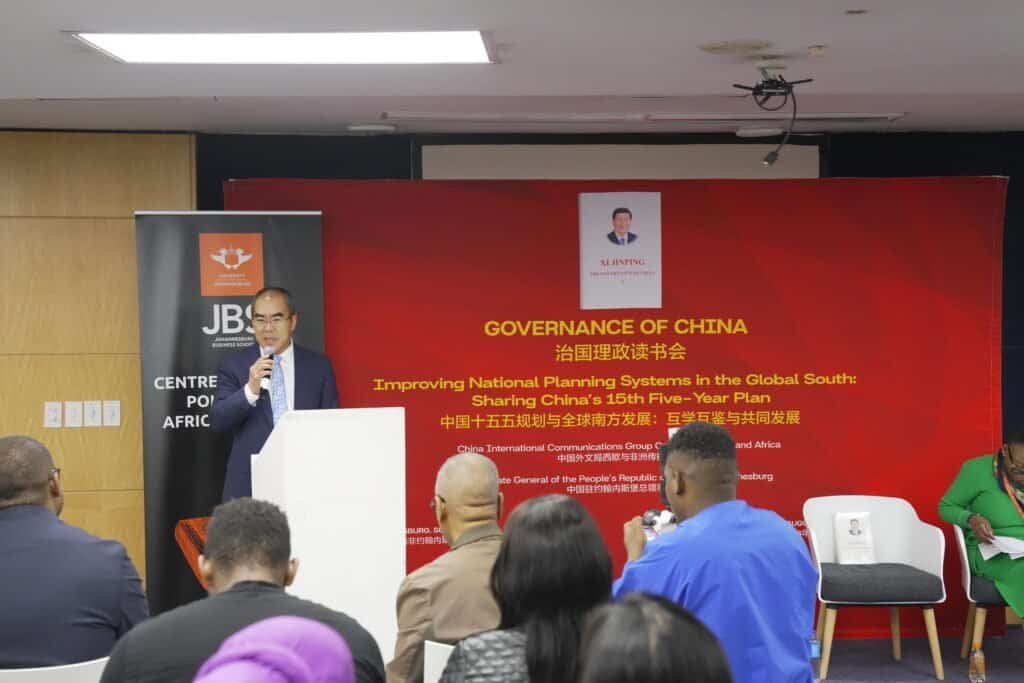
“Progressive long-term planning provides clear guidance for successive endeavours,” said Pan. Since the launch of the first Five-Year Plan in 1953, 14 such five-year plans have propelled China from building an independent and relatively complete industrial system to completing the building of a moderately prosperous society in all respects and now towards basically realising socialist modernisation. All these efforts revolve around the long-term goal of building China into a great modern socialist country.
He added that over more than seven decades, China has transformed from a nation unable to manufacture even a single automobile or aircraft into the world’s largest manufacturing powerhouse, testament to the vital role of long-term planning in national development.
The Report to the 20th National CPC Congress laid out a two-stage strategic plan for building a great modern socialist country and advancing towards the second Centenary Goal. The first stage, basically realising socialist modernisation by 2035, requires three consecutive five-year plans: the 14th, a starting phase; the 15th, a critical phase for consolidating foundations and launching all-round efforts; and the 16th, a decisive phase for final breakthroughs. This phased planning framework turns the distant vision of basic socialist modernisation into decomposable, implementable and verifiable stage-specific tasks.
For her part, Pinky Kekana, deputy minister of public service and administration of South Africa, noted that South Africa and China have followed different historical paths, operate within different political systems and are guided by different constitutional traditions. Yet both recognise that the state has a central responsibility to improve the lives of its citizens through strategic planning, effective governance and long-term investment in people.
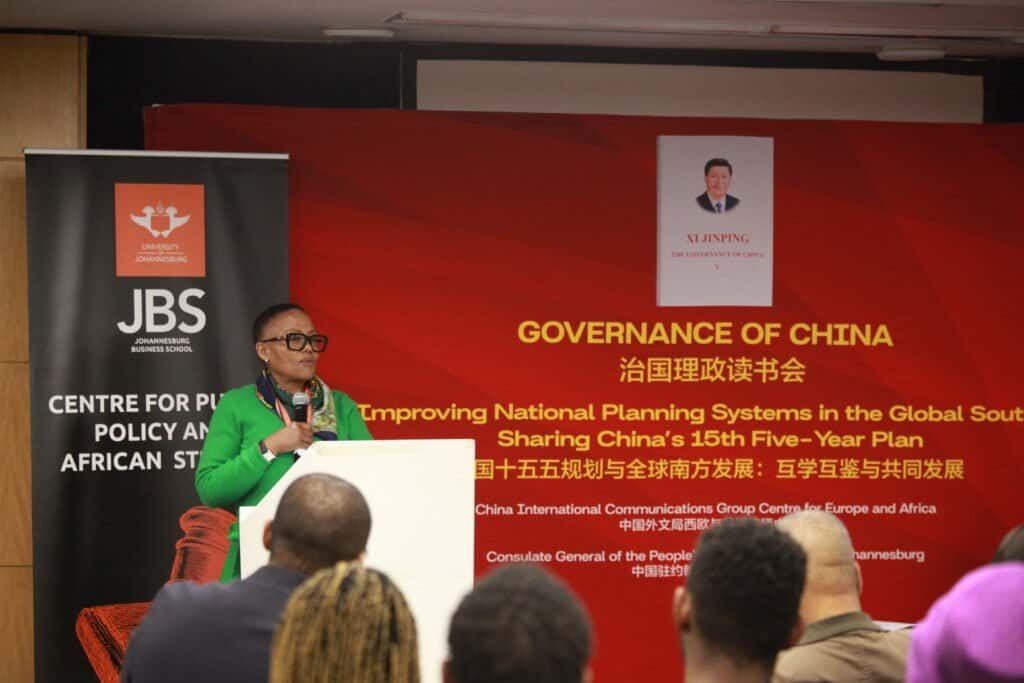
“China’s experience in long-term national planning offers important lessons regarding strategic coordination, infrastructure planning, industrial policy and implementation over extended time horizons,” she said, adding that equally, South Africa contributes valuable experience in constitutional governance, institutional accountability and cooperative governance across spheres of government.
She noted that these perspectives should not be viewed as competing alternatives, but as complementary contributions to the broader conversation on development in the 21st century. “As countries of the Global South, we have much to gain from partnerships that are based not on dependency, but on mutual respect, shared learning and practical cooperation,” she added.
Such cooperation should increasingly extend beyond trade and investment to include public sector innovation, digital government, artificial intelligence, public administration, leadership development and skills exchange. The future developmental state will be digitally enabled, data-driven and citizen-centred. Technology will undoubtedly transform government, but technology alone will never substitute for ethical leadership, institutional integrity and professional public servants, she pointed out.
Bandile Masuku, member of the Gauteng Provincial Legislature, said that both China and South Africa are implementing their respective development plans and are supporting each other.
“Today we meet at a particularly significant moment, as China has embarked on the implementation of its 15th Five-Year Plan, while South Africa approaches the final years of its National Development Plan 2030,” he said. “Both plans are ambitious national visions designed to improve the lives of citizens, strengthen economies and build prosperous societies.”
He noted that one of the most remarkable features of China’s development experience is the consistency of its planning framework. The 15th Five-Year Plan builds upon previous plans and seeks to strengthen scientific and technological innovation, industrialisation, infrastructure development, national security, social development and long-term economic growth.
“It emphasises policy alignment and coordination across all levels of government, and measures outcomes. South Africa similarly adopted the National Development Plan 2030 as a long-term blueprint aimed at eliminating poverty, reducing inequality and creating jobs by 2030,” he said.
Promoting progress in the Global South
Zama Mthombeni, associate professor of anthropology and development studies at the University of Johannesburg, also shared her views on development planning and implementation.
“When we look at [South Africa’s] National Development Plan 2030 and [China’s] 15th Five-Year Plan, one thing that does stand out is the different planning philosophies,” she said. “So, we are trying to redress certain inequalities that emerged because of apartheid, at the same time trying to keep up with the economic demands of the time.”
She noted that China’s current plan, like those that preceded it, is part of a longer-term process, with each Five-Year Plan building towards broader goals. China has been able to achieve the goals set under one plan before moving on to the next, she said. She believes China shares some similarities with South Africa. China was once a poor country, but it was able to industrialise and establish itself as one of the world’s major economic powers.
“I think implementation is one thing that we’ve been reiterating: it is not just about who has the better plan, but more about whether we are able to implement it,” she argued. “So, it is important to see that in the National Development Plan 2030, we are saying we want quality education, quality health care, employment, reduced inequality.”
Frank Lekaba, professor at the Thabo Mbeki African School of Public and International Affairs at the University of South Africa, reflected on China’s development experience.
“When you look at China’s 15th Five-Year Plan, you will find that the Chinese are able to understand not only the level and trajectory of development, but also that development happens in a global context,” he said.
He noted that Chinese foreign policy shares the principle of multilateralism with South Africa. China, he said, has managed to exercise multilateralism effectively, enabling it to navigate tensions within the international system.
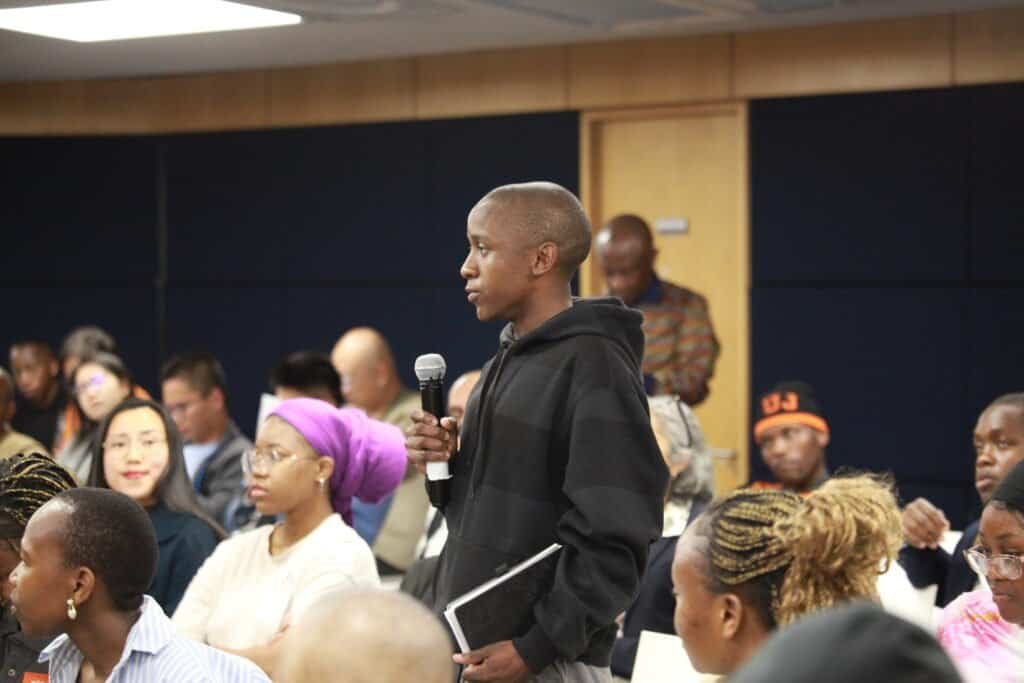
The seminar was co-hosted by the China International Communications Group Centre for Europe and Africa and the Consulate General of China in Johannesburg. Experts and scholars discussed topics including the role of China’s Five-Year Plans in the development of Global South countries, mutual learning between China and African countries in governance, and the importance of leadership in a country’s development.