Civil society groups, political parties and ordinary South Africans have criticised President Cyril Ramaphosa for a lack of transparency after the Presidency confirmed that the Madlanga Commission interim report will not be made public when it is delivered later this month.
The Presidency said the interim report, due by 17 December, will remain confidential, triggering renewed debate over access to information on inquiries funded by taxpayers. Critics argue that the decision continues a pattern of keeping politically sensitive reports out of the public domain.
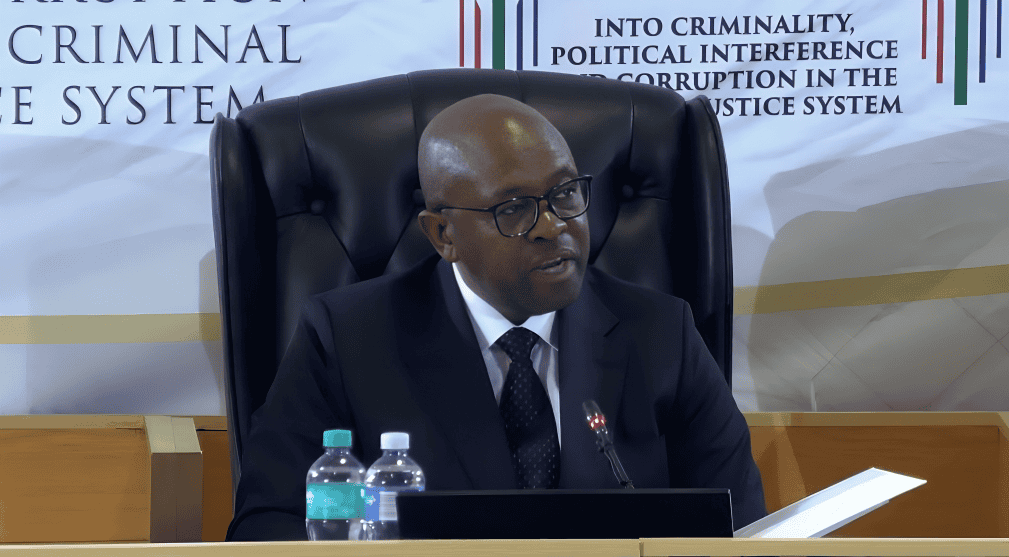
The Madlanga Commission was launched in July 2025 to probe the alleged infiltration of criminal syndicates into law enforcement, intelligence structures, the prosecution service and the judiciary. Its public hearings have drawn significant attention after explosive testimony, including claims by KwaZulu-Natal police commissioner Lieutenant General Nhlanhla Mkhwanazi regarding alleged interference in criminal cases. The commission has also been operating against the backdrop of heightened concern about witness safety, including the recent murder of witness D, Marius van der Merwe.
Presidency spokesperson Vincent Magwenya confirmed that the interim report would not be released, citing unfinished hearings and the possibility of witnesses being recalled. According to the Presidency, making the report public at this stage could prejudice the work of the commission, which is expected to conclude in 2026.
The explanation has failed to appease critics. The Forum for South Africa (FOSA) issued a strongly worded statement condemning what it described as the Presidency’s continued lack of transparency on matters of public interest.
“Why must South African taxpayers be deprived of information that they have directly funded?” FOSA asked in a statement dated 14 December. The organisation said it had rejected the establishment of the Madlanga Commission from the outset, warning that it would amount to a cover-up for corruption.
“Recent developments have now confirmed our fears. The truth can no longer be hidden, and South Africans deserve full disclosure,” the statement read.
FOSA demanded the immediate public release and full publication of the Madlanga Commission report without redactions, arguing that transparency and accountability were constitutional obligations. The group also accused the Presidency of undermining public trust and failing to respect citizens’ right to know how public funds are used.
FOSA national leader Tebogo Mashilompane said the refusal to release the report reinforced perceptions that critical information was being deliberately withheld from the public.
Political criticism has also followed. ActionSA leader Herman Mashaba questioned the decision in a post on X, saying the public had already been traumatised by the revelations aired during the commission’s hearings.
“But why?” Mashaba wrote. “After being traumatised by the revelations and hundreds of millions of our taxes used for this Commission, the GNU is still prepared to traumatised us further by withholding the outcome away from us. I guess South Africans are not yet angry enough.”
On social media, ordinary South Africans also voiced frustration, linking the Madlanga Commission decision to other reports and records that remain sealed. One X user suggested that limited disclosure could ease public concern, writing that the Presidency could consider the report for a short period before releasing it.
“Keeping it under wraps does the opposite and rather increases speculation and mistrust,” the user said.
Another user drew a broader comparison with previous administrations, claiming that key reports such as CR17 and Phala Phala had also not been made public. The user accused Ramaphosa of abandoning the transparency that characterised his rise to power.
A third user contrasted the current situation with the presidency of former president Jacob Zuma, noting that reports such as the State Capture report, the Nkandla report and the Khampepe report were ultimately made public.
The Presidency has not indicated when, or if, the Madlanga Commission report will be released. As public pressure mounts, the debate has sharpened around whether confidentiality serves the integrity of investigations or erodes trust in institutions meant to uphold accountability.