


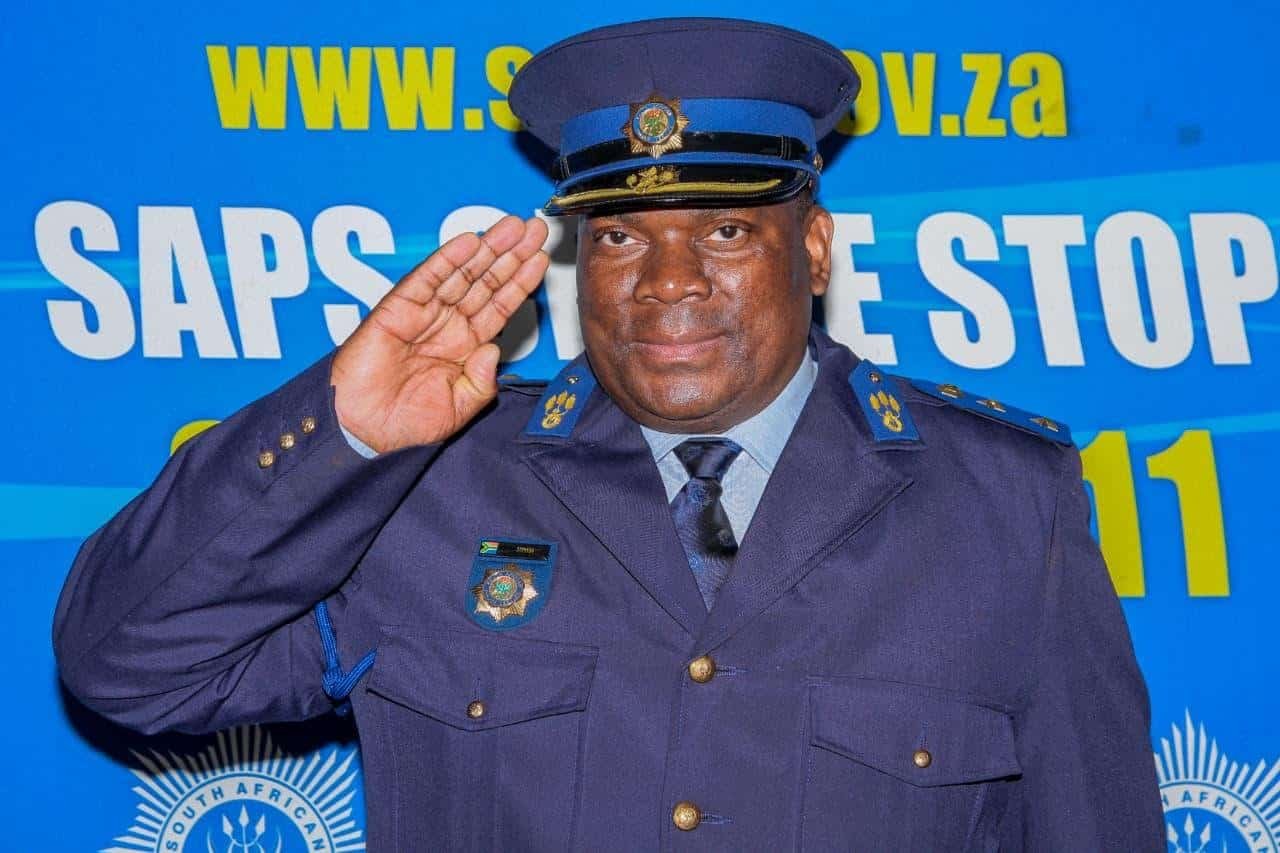
Limpopo – After more than three decades in uniform, first in boots as a police student, later in blues as an officer, Colonel Kgadiswana Samuel Mnisi, the Limpopo Provincial Commander in taxi violence investigations, drew the final curtain to bow out of stage of performing crime fighting duties as a member of the South African Police Service (SAPS) yesterday.
On exiting school in 1986, Mnisi enlisted in the RSA police. Little did he know he was on a journey that would last 31 years in 2025.
In the menu of career options presented, policing stood out as a line of work directing him to the SAPS in 1987.
Did Mnisi know he was cut out for this? Not quiet but remembers being called ‘Sersant’ at school by teachers.
“I am the only surviving child in my family. There was no relative who was serving in the SAPS.”
“When I was still at high school,” says Mnisi, “
my former teachers used to call me ‘Sersant’, which is the Afrikaans equivalent for Sergeant in English. This could have ignited interest to serve and protect and the people of my country. And joining the SAPS would serve that purpose.”
The values shaping his formative years were aligned with what he would grow to be career wise.
“I hated crime from a young age, and I hated to see people suffering from crime. I needed a platform that could enable me to protect and serve the citizens of our country. I found the SAPS as the most suitable for me.
“There were other options I could have pursued, however, joining the police was my first choice. For instance, I also wanted to become a medical doctor because I was good in mathematics,” he said.
I made an application to join the SAPS after matriculating at the end of 1985.
“In 1986, I practiced as a temporary teacher at Mahlahle Primary School, where I started my schooling. In June 1987, I was called up to join the SAPS and started my police training in June 1987. We completed our police training in December 1987 and posted to perform my duties at Gilead Police Station.”
The break came with six months of training he underwent at Hammanskraal SAPS Academy.
That turned out to be a foot in the the door to the world of work that would launch him on a 38-year path across multiple divisions in the SAPS.
The divisions included relief duty constable, taxi violence, serious violence crime unit, organized crime investigation unit, Section Commander for Technical Operations Management Services (TOMS) and Provincial Co-ordinator for Organised Crime Investigations, Section Commander for Financial Investigations within Directorate for Priority Crime Specialised Investigations, DPCI, team leader for the South African Narcotics Enforcement Bureau (SANEB), and Provincial Commander for Taxi Violence Investigation: overseeing strategic investigations.
Hating crime, and fighting those committing crime, was powered his footsteps to keep moving in this sphere of work. The efforts were not without recognition and reward.
In 1993, Mnisi was elevated to the rank of Sergeant in Polokwane, where he was dealing with taxi violence-related cases, including hit squad killings in the taxi industry.
By 1998 he was holder of a National Diploma in Policing from Technikon South Africa. This saw him advanced to the rank of Warrant Officer stationed in the Mopani Serious Violent Crime Unit and later served at Polokwane Organized Crime Investigation Unit.
His focus was on investigating high-priority crimes, including cash-in-transit robberies and ATM bombings. In September 2004, he received the Best Investigator Award.
In 2009 he was advanced to occupy rank of Captain, serving as Unit Commander of the Thohoyandou Serious Organized Crime (SoC). He led investigations involving drug and human trafficking under international conventions.
Between 2011–2012 he held a key leadership positions, including Section Commander for Technical Operations Management Services (TOMS) and Provincial Co-ordinator for Organized Crime Investigations in the province under the DPCI
In 2017, he was appointed as Lieutenant Colonel: Section Commander for Financial Investigations within the Directorate for Priority Crime Specialized Investigations, DPCI. He oversaw international and national threat assessments and ensured compliance with policing directives.
In 2020, he became a team leader for the South African Narcotics Enforcement Bureau (SANEB) in Polokwane Serious Organized Crime (DPCI).
In 2022, he was promoted to the rank of Colonel, and served as the Provincial Commander for Taxi Violence Investigation: overseeing strategic investigations across Limpopo.
From then on he was a broom charged to sweep clean.
“I remember in 1996, I submitted a murder case docket to the office of the Director of Public Prosecution in Pretoria, and the case docket was returned without queries. It was set straight for trial,” said Mnisi.
He remembers his high as well as his low moments.
“I was pleased each time I secured a conviction in cases I investigated, because that is the goal of each an investigating officer. In my career I secured a lot of convictions, including the ones mentioned in my profile by the SAPS media office.
“I also made sure that I opposed bail in all the cases I investigated because they were serious violent crimes, like murder, cash in transit robberies and taxi violence related cases”.
“My disappointment came when a decision was made to phase out specialised units in the SAPS. However we had to acclimatize and move with the changes. We got used to the new developments and carried on serving the citizens of our country,” he said.
He led a complex investigation into a cash-in-transit heist involving 10 suspects. Despite being offered a bribe of R450 000.00 he refused and successfully opposed bail. Each suspect was sentenced to 94 years in prison.
One of the cases he handled involved four serial killers terrorizing the community in Calcutta, in Mpumalanga Province. Under his leadership, all suspects were arrested and later sentenced to life imprisonment.
He was involved in combating serious incidents within the taxi industry in Limpopo Province that could have led to loss of lives and damage to property, which was averted through engagement with the relevant stakeholders, including the involved taxi associations.
Conflicts were identified at early stages, and the Provincial Commander: Taxi Violence Investigation Unit would initiate meetings with the relevant stakeholders to address the conflicts peacefully. This type of intervention prevented lots of serious incidents, like assault GBH, malicious damage to property, attempted murder and murder cases.
He led stakeholders in solving the conflict between Jane Furse, Polokwane Taxi Association and Masemola Local and Long Distance Taxi Association.
He investigated the long-outstanding case dockets and more than twenty identified suspects were arrested in the taxi conflicts.
The highly respected Colonel Mnisi’s dedication to justice is evidenced through his career milestones.
The chancing premonition of his former teachers who nicknamed hid Sergeant during his secondary schooling years, was a dream he least thought would materialise post schooling.
The road travelled by Mnisi is not without lessons for younger people wishing to make a career in the SAPS.
“Young people who are interested in joining the SAPS should not look at riches. They must not be greedy as that would drive them to corruption and theft. Their primary purpose should be to serve and protect the citizens of the country. They need to love their job. Crime has no boundaries, and it doesn’t first make an appointment as to when it would take place, so the police are ever ready at anytime of the day to respond to crime. The police are working under extreme dangerous conditions, where they never know whether they would return home alive at the end of their tour of duties.
Amongst the most dangerous crimes the police are faced with are the drug syndicates, cash-in-transit robberies and the hired hit squads,”
“What I realized early in the police college was how strong the link between mental and physical attitudes was. If you could keep a positive attitude and not give up, your body would follow suit. But if you gave up mentally burdened with about how hot, tired, and hungry you were, your body would surely quit on you.”
Discipline in the small things and resilience in the face of adversity became the foundation of his career. But it was the hard-earned lessons of training and leadership that proved to be his mainstay.
Throughout the journey of his service, not only did he rely on a single mentor, but on the mosaic of people around him—commanders, peers, and junior constables alike.
“I watched, I learned. Some showed me what to do, others what not to do,” he said. “Either way, it shaped me.”
“I worked until today because I had more to give and was blessed with an opportunity to serve in a higher capacity,” he said.
Now, as he steps away, his future is wide open. “I’m on the ‘no plan’ plan and taking time to focus on family, friends, and my health.”
His advice to those still serving?
“Keep going until it’s no longer fun or you feel there is no purpose to your contributions. When you dread going to work or to drill, it’s time to pivot. Until then, keep doing the small things right. They always matter to amount to big ones,” he concluded.

