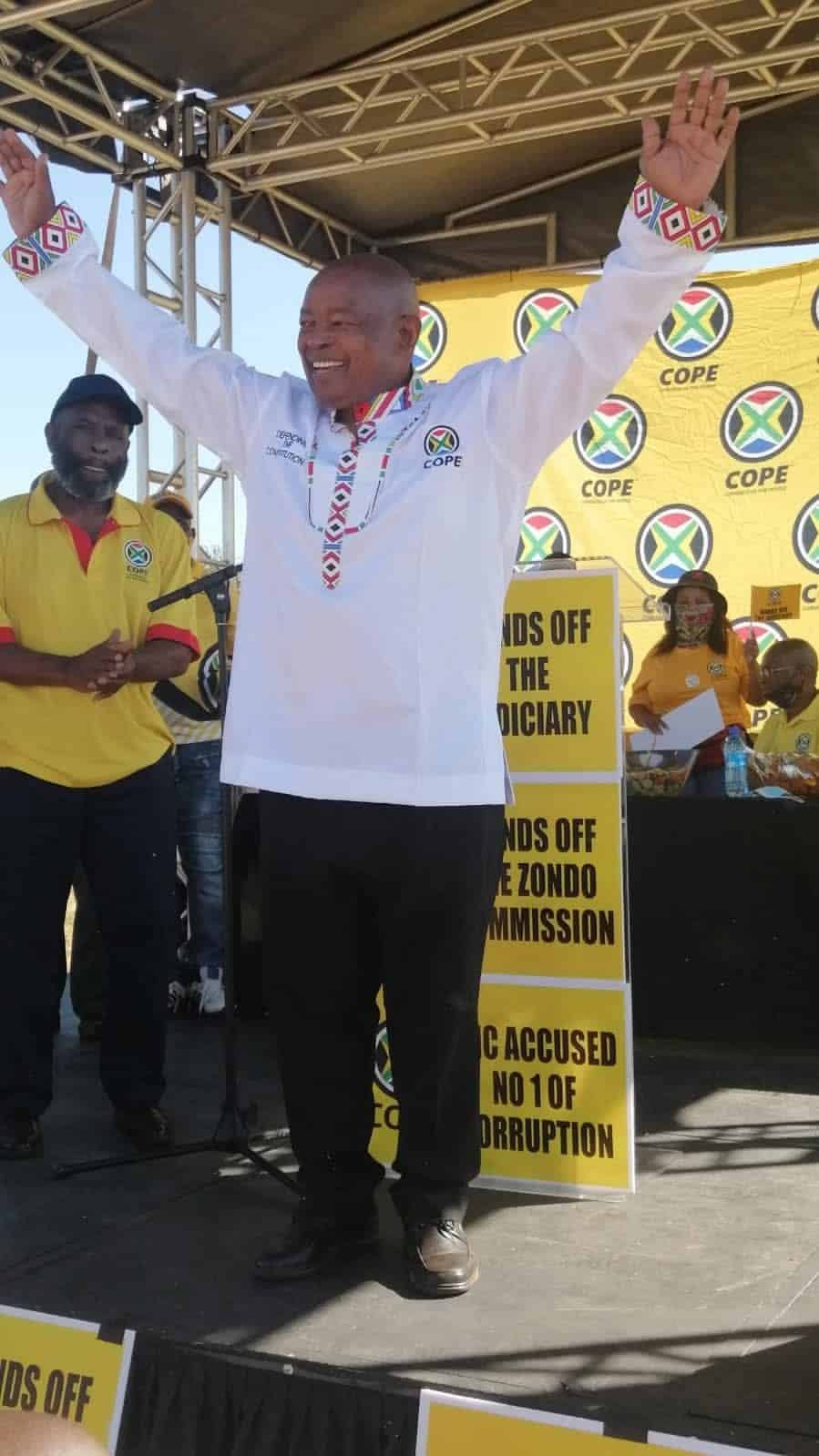
The Congress of the People (COPE) has announced the death of its president and co-founder, Mosiuoa Lekota, who passed away at the age of 77 following a period of illness.
Lekota died in the early hours of Wednesday morning at a Johannesburg hospital, the party confirmed in a statement issued on 4 March 2026. His passing marks the end of a long and influential political career that spanned decades, from the struggle against apartheid to leadership roles in South Africa’s democratic government.
COPE said the Lekota family has requested privacy during this difficult time. The party has urged the public and media to respect the family’s wishes, adding that further details regarding memorial arrangements and tributes will be communicated in due course.
“On behalf of the leadership, membership, and supporters of COPE, we extend our deepest condolences to the Lekota family and all South Africans who mourn this loss,” said party leader Teboho Loate.
Lekota, affectionately known as “Terror” among comrades, had stepped back from active politics in August last year to focus on his health. At the time, the party confirmed he was battling an undisclosed illness.
Tributes have begun to pour in from across the political spectrum, reflecting on Lekota’s contribution to South Africa’s liberation struggle and democratic development.
Former COPE deputy president Willie Madisha described himself as “extremely saddened” by Lekota’s passing, praising his lifelong commitment to the country.
“He has contributed a lot to the struggle to liberate the people of South Africa. History will forever remember him for his contribution,” said Madisha.
Despite past political differences that led to Madisha’s departure from COPE in 2023, he said he held no bitterness toward Lekota.
“He was a very good man. We may have had our differences, but that does not mean one should rejoice at this stage. We were not enemies; I believe when we do meet again after some time, we shall embrace and carry on,” he added.
Lekota served as South Africa’s Minister of Defence from 1999 to 2008 under former president Thabo Mbeki. He also held office as Premier of the Free State following the country’s first democratic elections in 1994.
Born in Kroonstad in the Free State, Lekota’s political activism began at a young age. He was expelled from the University of the North due to his involvement in student politics and the Black Consciousness Movement.
As a leader within the South African Students’ Organisation (SASO), Lekota was arrested and imprisoned on Robben Island in 1974 for his anti-apartheid activities.
After his release in 1983, he continued his activism and was later among those charged in the 1985 Delmas Treason Trial, resulting in another prison sentence of four years.
Throughout his life, Lekota remained a prominent figure in South African politics, known for his resilience, outspoken views, and dedication to public service.
His death leaves a significant void within COPE and the broader political landscape, as South Africa reflects on the legacy of a leader shaped by struggle, sacrifice, and service.