BAGHDAD, July 13 (Xinhua) — The enduring vitality of the Communist Party of China (CPC) lies in its unwavering commitment to putting the people first, a principle that has helped turn China from a poor country into the world’s second-largest economy, an Iraqi political scholar has said.
In an interview with Xinhua ahead of the 105th founding anniversary of the CPC marked on July 1, Kawa Mahmoud, president of the Iraq-headquartered Global Civilisation Initiative Research Centre, said he believes the CPC’s greatest strength has always been its commitment to serving the people.
“From its very beginning, the CPC carried the aspirations of the Chinese people,” he said. “Although it was small in membership at its founding, it undertook great historical missions — resisting foreign aggression, safeguarding national independence and pursuing national rejuvenation.”
Mahmoud, also former secretary-general of the Central Committee of the Kurdistan Communist Party of Iraq, praised the CPC’s ability to innovate both in theory and practice, remaining responsive to people’s needs.

The CPC has developed a unique “model of governance characterised by close ties between the Party and the people, effective communication between the leadership and grassroots members, and broad public participation,” he said.
He noted that political stability and social stability have provided a solid foundation for China’s development, while independent decision-making has enabled policymakers to prioritise people’s interests.
“China’s development model belongs to China,” he said. “But its methodology carries broader significance, encouraging countries to respect their own national conditions and formulate development strategies independently while always placing people’s well-being at the centre.”
Extending far beyond the modern, physical infrastructure, “the Chinese modernisation is about people,” he said.
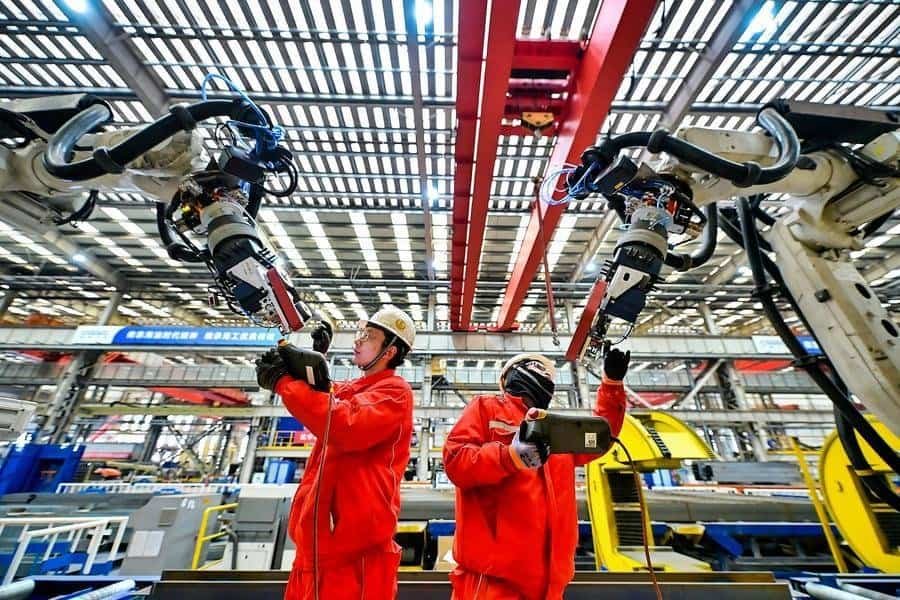
“It is about eliminating poverty, combating desertification, protecting blue skies and clean waters, and improving both the material and spiritual lives of the people,” he noted.
He said that the CPC’s people-centred development philosophy distinguishes China’s governance model from development approaches that focus solely on economic growth.
For the CPC, he said, “development is measured not simply by economic indicators, but by improvements in people’s lives.”
“This differs fundamentally from the development models that mainly serve the interests of economic elites in Western countries,” he added.
Looking ahead, Mahmoud said he expects the CPC to continue leading the Chinese people toward national rejuvenation while contributing more Chinese wisdom to the international community.
African Times has published this article in partnership with Xinhua News Agency