South Africa’s ambitious National Dialogue has been thrown into crisis just days before its official launch, after seven of the country’s most prominent legacy foundations announced their immediate withdrawal from the Preparatory Task Team (PTT) and the upcoming First National Convention, scheduled for 15 August 2025.
In a strongly worded joint statement issued on Friday, the Steve Biko, Thabo Mbeki, Chief Albert Luthuli, FW de Klerk, Oliver and Adelaide Tambo, and Desmond and Leah Tutu Foundations – alongside the Strategic Dialogue Group – said they could no longer support a process that has “abandoned its founding principles.”
“This is not a retreat from the National Dialogue, but a defence of its integrity,” the statement reads. “A citizen-led process cannot be dictated by government timelines and political expediency.”
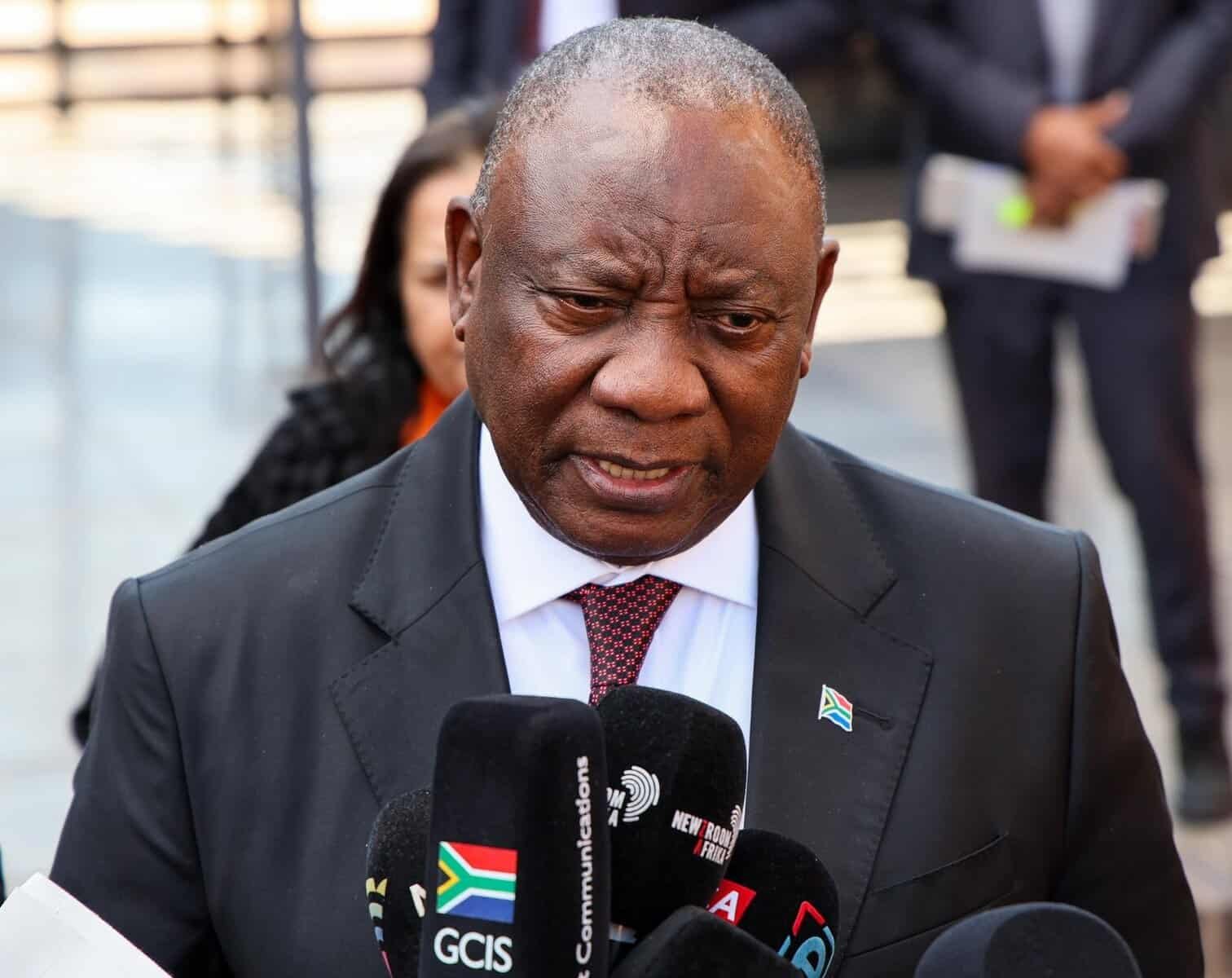
The decision represents the most severe blow yet to President Cyril Ramaphosa’s flagship social compact initiative, which was meant to chart a new path for the country through wide-ranging, inclusive engagement across sectors and communities.

The foundations cited five core reasons for their decision:
Loss of Citizen Leadership:
The initiative, originally envisioned as a grassroots, citizen-led movement, has reportedly shifted toward government control. The foundations argue that convening a national convention on 15 August—against the advice of sub-committee chairs—shows the state is prioritising speed over substance.
Weak Platform for Real Dialogue:
Due to constrained logistics, limited interactivity, and a rushed schedule, the 15 August Convention is seen as symbolic rather than meaningful. The foundations say they “cannot lend their names” to a platform that resembles a “performance more than participation.”
Financial Disarray and Legal Risks:
The absence of an approved budget and last-minute emergency procurement have created potential violations of the Public Finance Management Act (PFMA), undermining both credibility and accountability.
Strategic Misalignment Within the PTT:
The group pointed to internal fractures, lack of governance clarity, and conflicting views over the purpose and direction of the Dialogue.
Integrity Over Deadlines:
The foundations slammed the state’s insistence on pushing forward with the 15 August event, saying the fixation on the date risks reducing the Dialogue to a “milestone on paper” rather than the start of true national healing.
“Deadlines cannot override substance,” the group warned. “Dialogue cannot be built on haste.”
Despite their withdrawal, the foundations insist their commitment to the broader vision of a people-driven National Dialogue remains intact. They have proposed that the convention be postponed to after 15 October 2025 to allow for proper planning and participation.

The development comes months after the Democratic Alliance (DA) expressed similar misgivings. In March, DA Federal Council Chairperson Helen Zille threatened the party’s non-participation, warning that the National Dialogue risked being a “PR exercise masquerading as reform.”
DA spokesperson Solly Malatsi said the foundations’ withdrawal “confirms our worst fears that the process is not about the people, but about appearances and political control.”
The Economic Freedom Fighters (EFF), meanwhile, said the entire dialogue project had been “elite-driven” from the outset, while ActionSA called on the President to urgently respond and reset the process before more credibility is lost.
Political analyst Dr. Tessa Dooms said the walkout “should be a wake-up call” for the state.
“This isn’t just administrative misalignment. When institutions representing the moral and political legacies of both liberation and reconciliation withdraw, it’s a clear indictment of process failure.”
Professor Sipho Seepe echoed these concerns, calling the withdrawal “a vote of no confidence in government-led reconciliation attempts.” He warned that the process now risks alienating precisely the constituencies it was meant to unite.
“The symbolism of Biko and De Klerk foundations withdrawing together should not be underestimated,” he said. “It signals that something is fundamentally broken in how this process is being handled.”
The National Planning Commission (NPC), whose Deputy Chair Prof. Tinyiko Maluleke was recently appointed as a co-chair of the Eminent Persons Group for the Dialogue, has acknowledged the rupture.
In a statement, the NPC welcomed the National Dialogue’s potential to shape South Africa’s long-term future but cautioned against it becoming a “talk shop.”
“Trust is broken. This process must honestly acknowledge the failings of the state, political parties, and powerful individuals,” the NPC said. “Dialogue must lead to tangible outcomes, not just catharsis.”
The NPC reaffirmed its support for the Dialogue but called for clarity, transparency, and genuine empowerment of citizens.
With the 15 August Convention hanging by a thread, all eyes are on President Ramaphosa and the Eminent Persons Group. Will they reschedule the event and restore public trust—or push ahead and risk a legitimacy crisis?
The foundations are expected to host a press conference on Monday, 12 August, to share further details and their roadmap for a reset.
“This is not about delay for delay’s sake,” the foundations said. “It is about protecting the soul of the National Dialogue so that it serves the people—not politics.”