The Democratic Alliance (DA) and ActionSA have exchanged sharp criticism after failing to reach an agreement on coalition arrangements for Johannesburg, Tshwane and Ekurhuleni, with both parties accusing each other of undermining efforts to establish stable governments.
The disagreement follows the DA’s announcement on Saturday, November 21, that it had made a full and final offer to ActionSA, proposing an arrangement that would see the parties support each other’s mayoral candidates in the three Gauteng metros.
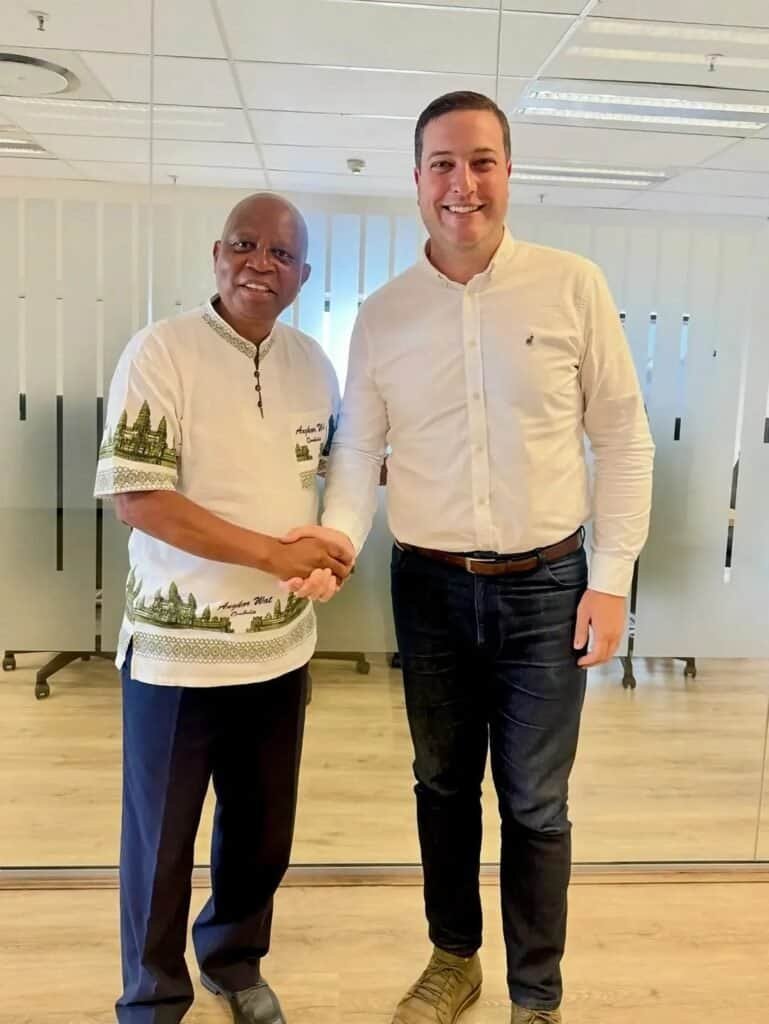
However, ActionSA leader Herman Mashaba and national chairperson Michael Beaumont rejected the proposal, arguing that it excluded ActionSA from governing Johannesburg and Ekurhuleni.
The DA’s proposal came more than two weeks after the November 4 local government elections, which left all three metros without an outright majority and forced political parties to negotiate coalition arrangements.
In its statement, the DA said its proposal was based on a confidence-and-supply arrangement rather than a traditional multiparty coalition.
Under the proposal, ActionSA’s Nasiphi Moya would lead the government in Tshwane, while the DA’s Helen Zille would become mayor of Johannesburg and Khathutshelo Rasilingwane would lead Ekurhuleni.
The arrangement would require the parties to support each other’s mayoral and speaker candidates, including protecting them against motions of no confidence.
However, each party would retain control of its own administration and appoint members from within its ranks to serve in government.
DA leader Geordin Hill-Lewis said the proposal was reasonable and reflected the election outcome, in which the DA received the largest share of the vote but failed to secure an outright majority.
He said the challenges facing the three municipalities were too serious for personality disputes and historical grievances to prevent the formation of stable governments.
The DA also confirmed that it was engaging other political parties in municipalities where its combined seats with ActionSA were insufficient to secure a 50% plus one majority.
ActionSA, however, accused the DA of attempting to exclude it from two of the three metros.
Beaumont said ActionSA had previously submitted its own proposal for power-sharing arrangements in Gauteng, but the DA’s response did not accommodate the party’s position.
“ActionSA sent the DA a proposal to share power in Gauteng.
“They sent us a proposal that locked ActionSA out of Johannesburg and Ekurhuleni.
“It did not deserve a response,” Beaumont wrote on X.
Mashaba also criticised the DA’s counterproposal, describing it as a last-minute attempt to gain public sympathy.
“Baagi, this was insulting and, therefore, didn’t deserve a response,” he wrote.
He said ActionSA would not accept an arrangement that did not serve the interests of its voters.
Hill-Lewis defended his party’s proposal, saying the DA would not be pressured into withdrawing Zille as its Johannesburg mayoral candidate.
In comments reported by SABC News, he said the DA had made a reasonable offer and would not be “extorted” into removing Zille.
The disagreement also prompted a response from DA Tshwane mayoral candidate Cilliers Brink, who questioned why the two parties could not work together.
In a Facebook post, Brink said ActionSA and the DA had an opportunity to form governments in Gauteng without the ANC, EFF and MK Party but had rejected the opportunity.
“Let the record show that Herman Mashaba and ActionSA had a chance to form governments in Gauteng’s metros without the ANC, EFF and MK. Their response has been to reject the offer with contempt,” Brink wrote.
He was responding to Beaumont’s post accusing the DA of choosing Zille over an agreement with ActionSA.
ActionSA national chairperson Beaumont has also defended his party’s coalition policy framework, saying the party could not work with political formations that broke coalition agreements.
Meanwhile, ActionSA’s Athol Trollip accused the DA of attempting to blame ActionSA for its own strategic decisions.
He said ActionSA would demonstrate that it could work with other political parties to improve service delivery, including fixing potholes, streetlights and water infrastructure, while addressing corruption.
Coalition negotiations
Following the November 4 elections, political parties were required to negotiate coalition arrangements because none secured outright control of the three Gauteng metros.
The DA emerged as the largest party in all three municipalities but needed support from other parties to secure mayoral positions.
In Johannesburg, the DA secured 91 of the 270 council seats, followed by the ANC with 63 and ActionSA with 43.
In Tshwane, the DA obtained 74 of the 214 seats, ActionSA secured 48, and the ANC received 44.
In Ekurhuleni, the DA won 66 of the 224 seats, the ANC obtained 59, and ActionSA secured 40.
ActionSA subsequently pursued coalition discussions with the ANC and other political parties after negotiations with the DA failed to produce an agreement.
The emerging political arrangements could see Mashaba lead Johannesburg, Moya retain the Tshwane mayoralty, and the ANC take control of Ekurhuleni.
The DA’s final offer has therefore failed to resolve the disagreement between the two parties, with the outcome of the coalition negotiations set to determine the political leadership of Gauteng’s three metropolitan municipalities.