The Department of Correctional Services (DCS) has strongly defended South Africa’s parole monitoring system following explosive allegations that nearly 28,000 parolees and probationers have become untraceable, insisting that offenders are still actively monitored and that absconders remain under investigation.
The controversy erupted after investigative publication amaBhungane raised concerns about parole absconders and weaknesses within Community Corrections, prompting the Democratic Alliance (DA) to demand an emergency parliamentary meeting into what it has described as a “public safety crisis”.
In a detailed response issued on Friday, DCS rejected suggestions that parolees are being abandoned or left unmonitored, saying the Department continues to track absconders through dedicated tracing teams operating across all regions.
DCS spokesperson Singabakho Nxumalo said claims that the Department had stopped pursuing absconders were inaccurate and failed to reflect the realities of parole supervision.
“Community Corrections officials continue to perform supervision duties under difficult and often dangerous conditions to ensure compliance with parole conditions and protect communities,” Nxumalo said.
The Department said Community Corrections currently supervises 52,772 parolees and probationers nationwide, with a staff complement of 1,764 officials supported by regional management structures.
According to DCS, parolees are subjected to various forms of supervision, including office reporting, home visits, employment verification and rehabilitation programmes tailored to their risk profiles. Daily lock-up functions are also conducted to account for offenders under supervision, with discrepancies immediately escalated for investigation.
The Department further stressed that absconding remains a criminal offence and that all cases are immediately reported to the South African Police Service (SAPS).
“Dedicated regional teams continue to strengthen monitoring and re-apprehension efforts. Therefore, any suggestion that the Department has abandoned efforts to trace absconders is incorrect,” Nxumalo said.
The Department also noted that details of parolees, their release conditions and monitoring officials are shared with local police stations, traditional councils and families to assist in identifying non-compliance or unlawful conduct.
However, the DA says the situation points to systemic collapse within South Africa’s correctional system.
DA spokesperson on Correctional Services Janho Engelbrecht said the party had formally requested that Parliament’s Portfolio Committee on Correctional Services summon Correctional Services Minister Pieter Groenewald, National Commissioner Makgothi Samuel Thobakgale and senior departmental officials to explain how thousands of parolees disappeared from the system.
“This is a public safety crisis,” Engelbrecht said.
“When murderers and rapists disappear from the parole system, the state places communities at risk and destroys public confidence in the criminal justice system.”
The DA argued that South Africa’s broader criminal justice chain was failing, citing weak investigations, delayed court processes, overcrowded prisons and inadequate post-release monitoring of violent offenders.
The opposition party proposed reforms, including GPS-enabled electronic monitoring systems, better integration between SAPS and Correctional Services databases and stricter accountability measures for officials.
DCS, however, cautioned against what it described as “thumb-sucked” recidivism figures and unverified claims being circulated publicly.
The Department said many statistics lacked context and failed to distinguish between technical parole violations, new criminal offences, returns to custody and successful rehabilitation outcomes.
According to DCS, official data shows that 5,760 parolees reoffended during their parole period over the past two years, representing a recidivism rate of 10.98%.
South Africa’s overcrowded prison system remains a major factor influencing parole management. DCS revealed that the country’s inmate population currently stands at 168,795 inmates — including 106,280 sentenced offenders and 62,092 remand detainees — despite approved bed space for only 107,067 inmates. This places overcrowding levels at approximately 58%.
The Department said parole remains a critical component of rehabilitation, reintegration and overcrowding reduction strategies.
To improve the system, DCS convened a National Parole Review Summit in September 2025 involving criminal justice experts, academics, community organisations, victims’ representatives and parolees. The summit explored reforms aimed at strengthening rehabilitation, monitoring systems and public confidence in parole processes.
Nxumalo said some recommendations from the summit were already being implemented.
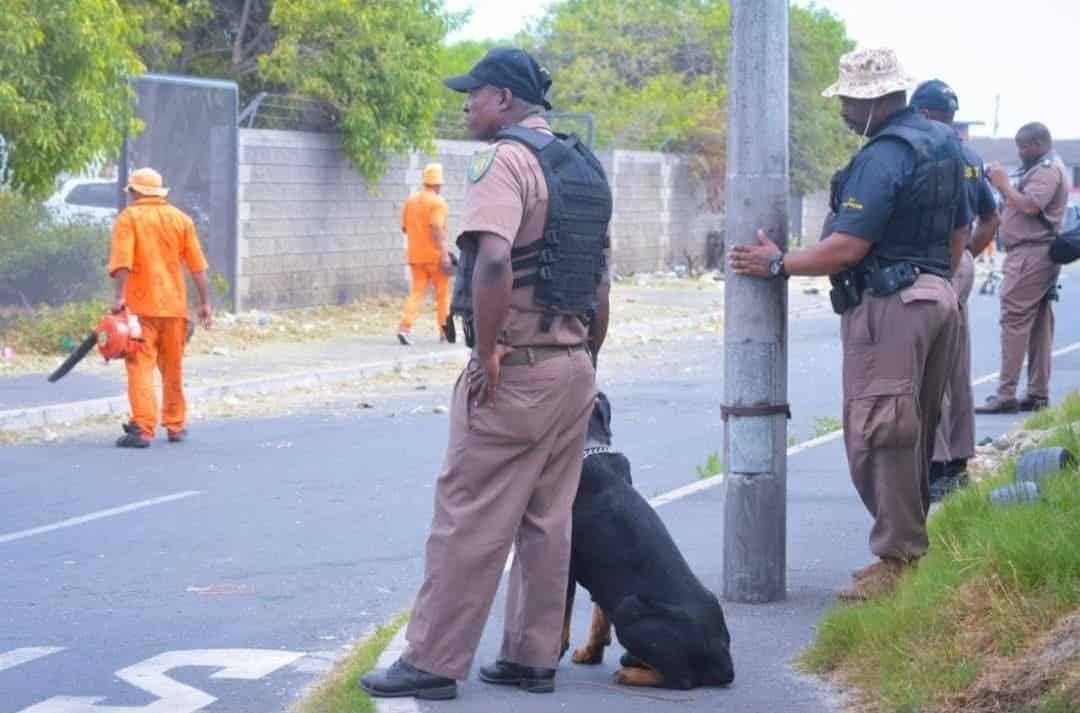
The Department also highlighted recent compliance operations conducted in areas including Inanda, Umlazi, Mamelodi and the Cape Flats, where senior officials led monitoring interventions alongside Community Corrections teams.
“No area is regarded as a no-go zone,” Nxumalo said.
DCS acknowledged that Community Corrections continues to face operational difficulties, including budget cuts, staff shortages, security risks in high-crime communities and increasing caseloads.
Despite these challenges, the Department said oversight mechanisms remain active through the National Operations Committee, chaired weekly by the National Commissioner.
In an effort to strengthen frontline operations, the KwaZulu-Natal region recently received 48 additional vehicles to assist Community Corrections officials with monitoring and tracing duties.
The Department added that issues surrounding electronic monitoring systems remain before the courts and therefore could not be discussed publicly because the matter is sub judice.