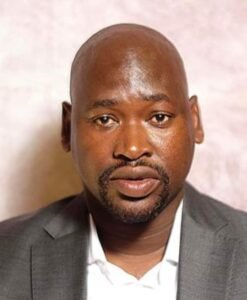
In a rare move to underscore accountability among senior office-bearers, Parliament’s Joint Committee on Ethics and Members’ Interests has imposed a R10 000 fine on Deputy President Paul Mashatile for failing to declare a registrable gift — specifically, a diamond — within the legally required timeframe.
The fine, announced this week, has been criticised by some as merely a “slap on the wrist” for one of the country’s most powerful political figures.
Mashatile, who returned to Parliament following the 2024 general election, missed the October 14, 2024, deadline to declare his financial interests. The Ethics Committee, which met on March 7, 2025, recommended the fine as part of broader sanctions involving nine MPs who were fined between R10 000 and R12 500 for non-compliance with disclosure rules.
At the centre of the controversy is a diamond allegedly valued at over R100 000, said to have been given to Mashatile’s wife, Humile Mashatile, by controversial diamond trader Louis Liebenberg. Liebenberg is currently facing over 40 criminal charges, including theft, fraud, racketeering, and money laundering.
According to the Deputy President’s office, the diamond was an unsolicited gift. It was reportedly authenticated by professionals, and steps were being taken to declare it — until Liebenberg’s legal troubles became public. The Mashatile family has since returned the stone.
Opposition Calls for Deeper Probes
Opposition parties have seized on the issue.
ActionSA has called for the Public Protector to investigate whether the gift violates the Executive Members’ Ethics Act, citing concerns over Liebenberg’s criminal links and Mashatile’s alleged “lavish lifestyle.”
The Democratic Alliance (DA), meanwhile, has launched parallel probes in both Parliament and the Presidency. It points to contradictions between Mashatile’s explanation — that the gift was for his wife — and a whistle-blower affidavit claiming the diamond was selected specifically for Mashatile. The DA also questions whether he held the uncut diamond without a license, potentially breaking additional laws.

Wealth and Patronage Under the Microscope
This ethical reprimand lands amid broader questions about Mashatile’s lifestyle, personal finances, and political connections.
Among the most serious allegations:
- Valumax, a company linked to Mashatile’s political network, reportedly earned R90 million in land sales to the Gauteng Department of Human Settlements — with connections to his former partner and son-in-law.
- News24 and other outlets reported that his son-in-law purchased a Constantia mansion worth R28.9 million, despite owing R7 million to the state over failed housing projects. Mashatile is also said to have had access to a R37 million home in Waterfall and other luxury Cape Town properties linked to his close associates.
- In early 2025, DA leader John Steenhuisen laid formal criminal charges, accusing Mashatile of nepotism, failure to disclose interests, and building a patronage network benefiting from inflated state contracts.
- In late 2024, The Star reported that Mashatile appeared before the ANC Integrity Commission to answer questions about the Waterfall mansion and other undeclared assets.
- In an interview with SABC News today (Thursday), Mashatile denied owning the Constantia mansion, saying it belonged to his son-in-law and was private family property.
Despite this, analysts note that Mashatile, a “lifelong public servant,” has now declared three luxury properties worth over R70 million — a lifestyle drawing increasing public scrutiny and raising questions about how it aligns with his public salary.
Supporters argue that he is being politically targeted. But critics see the diamond scandal as further evidence of a growing “entitlement culture” among South Africa’s political elite — unbecoming of someone holding the office of Deputy President.
A Modest Fine, But Bigger Questions
Mashatile’s spokesperson declined to offer a new comment, saying only that the diamond matter had been “handled by the book” and the gift was returned. The DA, however, has not relented in its calls for President Cyril Ramaphosa to take stronger action — including suspending Mashatile pending further investigation.
ActionSA labelled the Ethics Committee ruling as another symptom of a “culture of impunity,” where high-ranking politicians receive gifts from dubious figures and fail to disclose them with transparency.
Now, with the fine formally recorded, the matter shifts to the Public Protector, who must decide whether to pursue a formal investigation based on ActionSA’s complaint.
The DA has hinted that further inquiries into alleged inconsistencies in Mashatile’s declarations may prompt formal hearings in both Parliament and the Presidency.
Public trust, analysts warn, may be the biggest casualty. Amid ongoing state capture fallout and a sluggish economy, South Africans are increasingly sensitive to double standards and elite impunity, especially when it comes to ethics breaches at the highest levels of government.
Public Reactions
The scandal has also exploded on social media, where users expressed outrage.
One X user named Lance wrote: “Paul Mashatile cannot and will not be the president of this country. I refuse.”
Another, Moe Suttle, posted: “I don’t know how many times Paul Mashatile has broken his oath since becoming Deputy President. How is he still in office???”
As the Public Protector and Parliament weigh their next steps, Mashatile’s political future — and the credibility of South Africa’s oversight institutions — hang in the balance.
Additional reporting: IOL, PoliticsWeb