Cross-border payments provider Verto has welcomed the decision by the United States House of Representatives to vote in favour of extending the African Growth and Opportunity Act (AGOA), describing the move as a positive signal for trade relations between the US and Africa, while warning that ongoing political uncertainty continues to pose risks for exporters, small businesses and currency stability.
The House vote, which now sends the bill to the US Senate for consideration, comes at a critical juncture for African economies that rely on preferential access to the US market. AGOA, first enacted in 2000, provides eligible sub-Saharan African countries with duty-free access to the US for thousands of products, supporting exports in sectors such as automotive manufacturing, agriculture, textiles and minerals.
South Africa has been one of the largest beneficiaries of the programme, particularly through vehicle exports and agricultural produce. However, uncertainty over the country’s future eligibility in recent months has weighed heavily on businesses operating across the US-Africa trade corridor.
Verto said while the House vote was encouraging, the absence of a clear timeline and firm assurances for South Africa remained a concern.
“The House vote is a necessary milestone, but for the thousands of African SMEs that rely on these trade corridors, ‘almost’ is not enough,” said James Booth, Head of Revenue at Verto.
Booth warned that political uncertainty around trade agreements often has immediate financial consequences.
“When trade agreements hang in the balance, the South African rand often bears the brunt. That volatility wipes out the already thin margins of exporters far faster than any headline tariff could,” he said.
Verto recently released a white paper titled South Africa’s Playbook for Mastering Global Trade, which argues that African exporters can no longer afford to wait for political clarity from major powers.
“Regardless of the final outcome in the US Senate, the post-AGOA mindset must be one of diversification and digital resilience,” Booth said, adding that businesses should invest in reliable payment infrastructure to protect themselves from geopolitical shocks.
The AGOA extension, however, has drawn sharp political criticism at home.
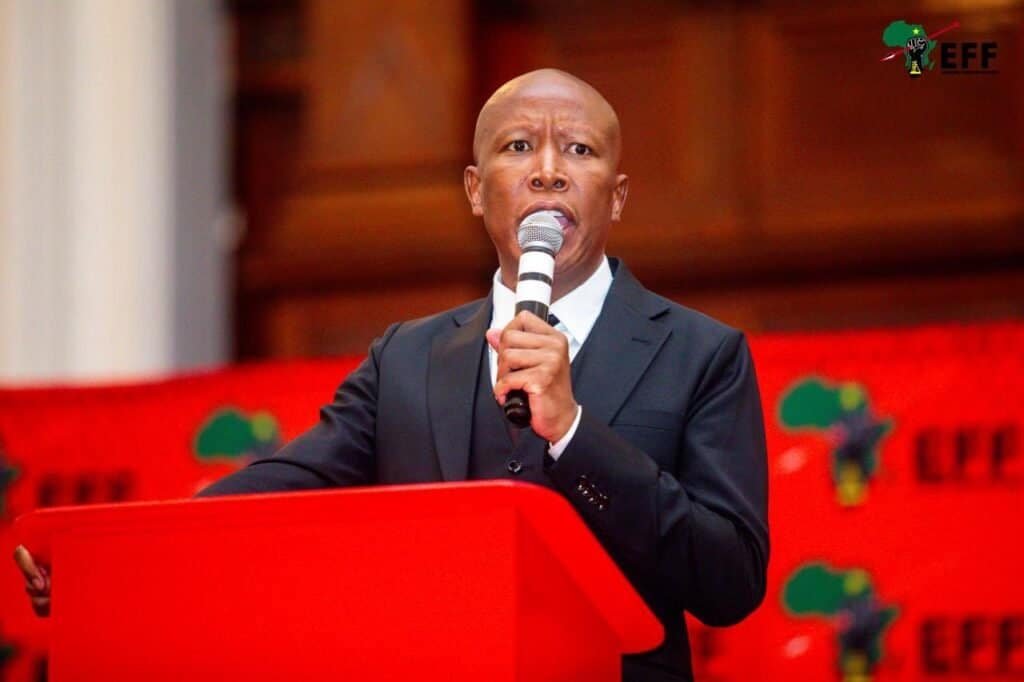
The Economic Freedom Fighters (EFF) said the US decision should not be celebrated, arguing that AGOA primarily serves American geopolitical interests rather than Africa’s long-term development goals.
EFF national spokesperson Thembi Msane said the party believed South Africa should reconsider its participation in the programme.
“AGOA was never designed to industrialise Africa or build real economic independence. It was designed to advance US strategic interests while keeping African economies dependent on exporting low-value goods,” Msane said.
She argued that preferential access to US markets had failed to meaningfully transform African economies or reduce structural inequality.
“Our trade relationship with the US remains limited, uneven and conditional. South Africa’s economic sovereignty cannot be built on arrangements that expect political alignment in exchange for market access,” Msane said.
Msane added that recent diplomatic tensions between South Africa and the US illustrated the risks of relying on politically conditional trade programmes.
“When you depend on arrangements like AGOA, your economy becomes vulnerable to political retaliation. That is not a foundation for sustainable development,” she said.
The EFF has instead called for a stronger focus on regional trade and industrialisation through initiatives such as the African Continental Free Trade Area (AfCFTA), which aims to boost intra-African trade and reduce reliance on external markets.
However, business leaders have pushed back against calls to abandon AGOA, warning that doing so could result in immediate job losses and economic disruption.
Businessman Sandile Ntlabati said the EFF’s position overlooked the real-world impact of AGOA on workers and exporters.
“I don’t agree with this EFF position. AGOA creates employment for over 10,000 South Africans directly, and many more indirectly,” Ntlabati said.
“Mere negative rhetoric and chest-thumping won’t put food on the table for the families that benefit from AGOA-linked industries.”
Trade analysts note that while AGOA is not a comprehensive solution to Africa’s development challenges, it has played a role in supporting export-oriented industries and attracting investment, particularly in South Africa’s automotive sector.
At the same time, uncertainty over the programme’s future has highlighted the risks of over-reliance on a single trade framework. Economists argue that diversification of export markets, deeper regional integration and improved financial infrastructure will be critical regardless of whether the AGOA extension is ultimately approved by the US Senate.
For now, African exporters await the Senate’s decision, with businesses urging swift clarity.
“The longer uncertainty persists, the greater the cost to exporters, currencies and jobs,” Booth said.
As the debate continues, AGOA remains a flashpoint between those who view it as a pragmatic trade lifeline and those who see it as a symbol of continued economic dependence — underscoring the broader question of how South Africa positions itself in an increasingly fragmented global economy.