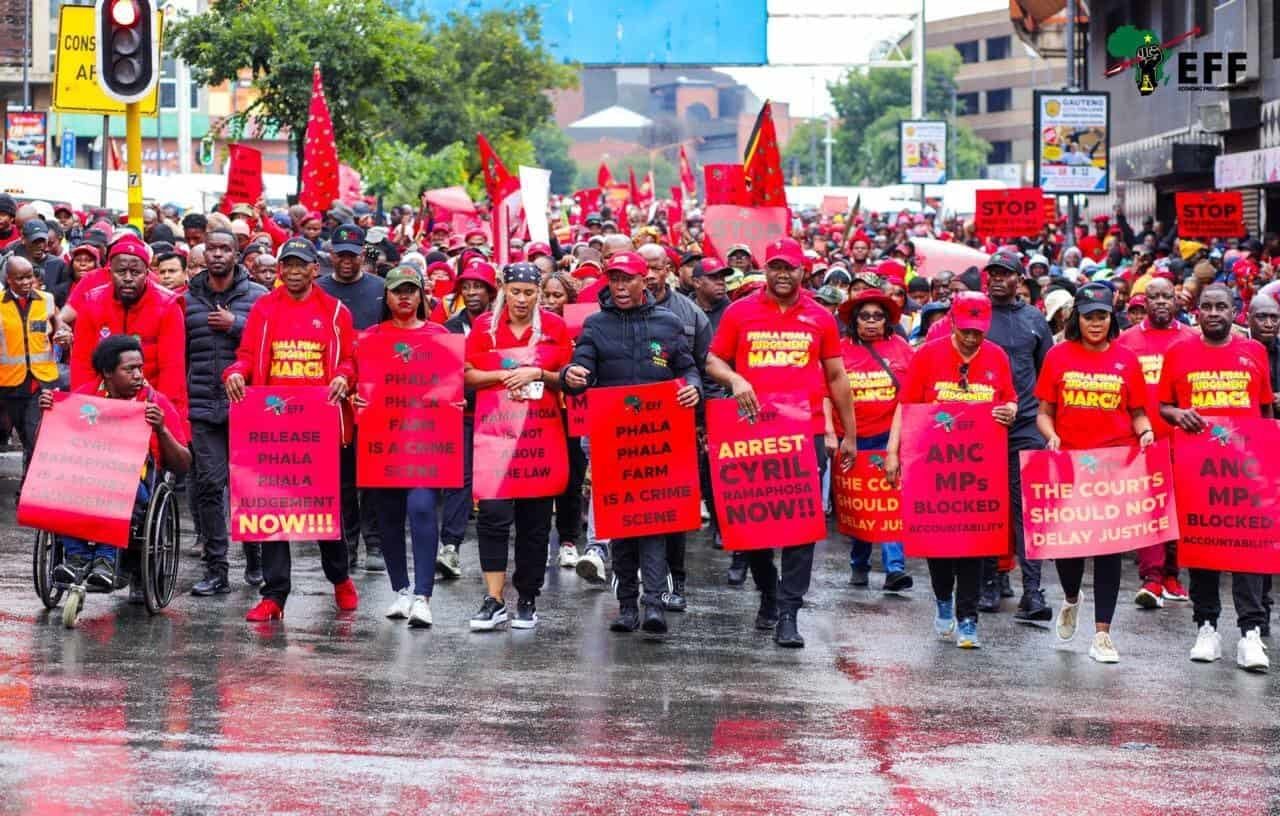
Pressure is rising on the Constitutional Court as political parties and civil society intensify calls for the release of the long-awaited judgment on the Phala Phala matter involving President Cyril Ramaphosa. On Friday, the Economic Freedom Fighters (EFF) added force to the national debate by leading a large march to the Constitutional Court, demanding that the court deliver its ruling more than a year after hearing the case.
The march began at Mary Fitzgerald Square, where EFF members and supporters gathered despite cold rain. The crowd moved through Johannesburg under the direction of party leaders and concluded the march outside the apex court. The protest followed growing frustration among political parties over the extended delay by the court to release its judgment on the challenge brought by the EFF and the African Transformation Movement (ATM). The case questions Parliament’s decision to reject the findings of the independent panel that investigated the Phala Phala matter.
The Phala Phala incident became public in 2020 when allegations were made that foreign currency had been stolen from the President’s farm. The incident prompted a series of inquiries by state bodies and led to the formation of a panel chaired by former Chief Justice Sandile Ngcobo to establish whether the President had a case to answer. The panel released its report in November 2022 and found that there may be grounds for further action. Parliament later voted not to adopt the report, which led to legal challenges from the EFF and the ATM.
The matter was heard by the Constitutional Court, but has remained unresolved for more than twelve months. This delay has opened a wider national discussion on the pace of judicial processes, especially in cases involving the executive.
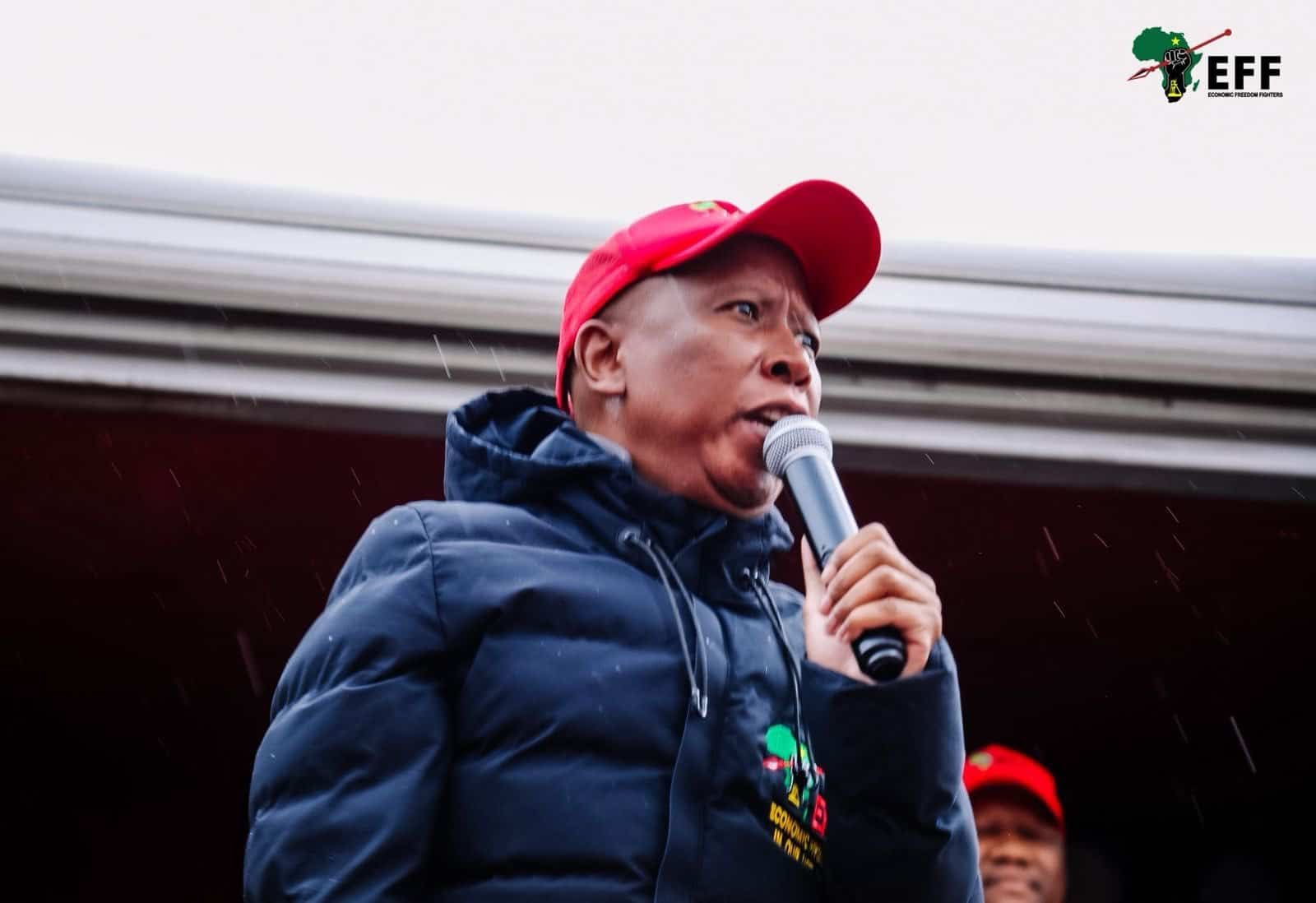
EFF leader Julius Malema told supporters that the delay has raised questions about consistency in the administration of justice. He said lower courts were expected to deliver judgments within three months after a matter had been finalised and asked why the Constitutional Court took longer. Malema told the crowd, “Those are the standards that this court has set for the lower court. How do you say those who fall under you after three months must release their judgment when the matter is concluded, but you can take the whole year.”
He told supporters that there was no individual who stood above the Constitution. He said the Constitution belonged to the people and came from the sacrifices of generations. Malema said, “There is nothing personal. Everything is constitutional. We are talking about us because that Constitution is a reflection of all of us.”
He reminded the crowd of the history behind the country’s supreme law. He said, “That Constitution comes from the blood of Solomon Mahlangu and Chris Hani and many others who died before we are here now.” He then added, “We will not allow Ramaphosa to urinate on the Constitution of the Republic of South Africa that came out of the killing of our own young people.”
Malema said the EFF wanted full accountability and believed impeachment was the most appropriate mechanism if wrongdoing was established. He said, “Impeachment is the highest form of discipline when you discipline a judge and when you discipline a president.” Malema told supporters that a vote of no confidence would allow a president removed from office to continue receiving benefits. He said impeachment would remove such benefits completely.
Malema said the EFF would continue to demand the release of the judgment and urged supporters in Gauteng to organise follow-up demonstrations. He said the EFF intended to ensure that public institutions fulfilled their responsibilities.
The march ended peacefully after Malema repeated a chant associated with previous court matters. Supporters remained outside the court precinct for several hours before dispersing.
The Constitutional Court has not issued a statement on the timeline for the release of the judgment. Political parties, including the EFF, have signalled plans to escalate pressure until the ruling is delivered. The Phala Phala matter remains one of the most contested political and legal issues in the country, and the judgment is expected to influence the national political climate once it is released.