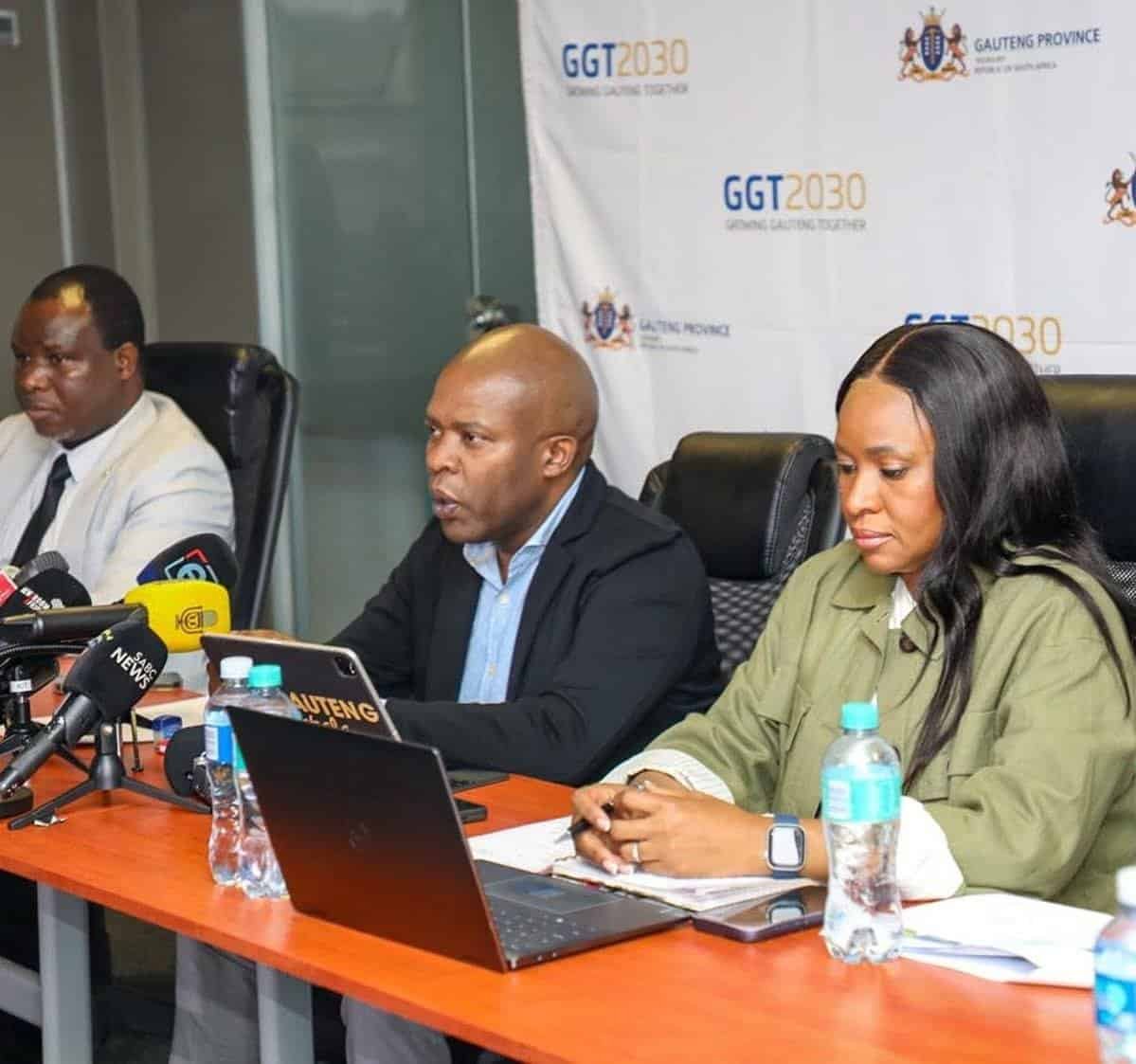
Eight Gauteng provincial departments have achieved clean audits for the 2024/2025 financial year, showing what officials say is progress in strengthening governance.
Finance and Economic Development MEC Lebogang Maile announced the results on Monday while presenting the Auditor-General’s findings.
The departments with clean audits are the Office of the Premier, Provincial Legislature, Provincial Treasury, Cooperative Governance and Traditional Affairs (CoGTA), e-Government, Economic Development, Community Safety, and Roads and Transport.
Maile said four of these – the Office of the Premier, Provincial Treasury, Provincial Legislature and CoGTA – have maintained clean audits for at least five consecutive years. “This is an indication of stable and effective leadership that is focused on upholding clean governance,” Maile told reporters.
Not all departments performed as well though. The Department of Education lost its clean audit status, while Sports, Arts and Culture regressed to a qualified opinion. The Department of Health was flagged as the poorest performer, with non-compliance across all areas due to weak internal controls.
Across the Gauteng provincial government, irregular expenditure reached R4.2 billion during the same financial year. Maile said half of the departments with unqualified audits still struggled with consequence management and internal financial controls.
Turning to provincial entities, 14 out of 19 state-owned enterprises achieved clean audits, including the Gauteng Growth and Development Agency, Gauteng Film Commission and the Transport Authority of Gauteng. But the Housing Fund was singled out for concern, having slipped from an adverse opinion to a disclaimer.
Maile said the provincial treasury would tighten oversight and support struggling departments. “The Gauteng Provincial Government is committed to transparency and accountability. We will review audit action plans, strengthen internal controls, and digitise procurement processes to prevent irregular expenditure,” he said.
He added that 95% of suppliers were paid within the required 30 days, with some departments such as Roads and Transport and Community Safety achieving 100%. However, the Department of Health only managed 37% due to what Maile called “historical accruals.”
Maile said achieving more clean audits remained a priority. “Improved financial management means better service delivery because funds are used for what they are intended for,” he said.